Frenkie de Jong: Hero or Villain of Flick's Barça?
Frenkie de Jong is perhaps the most controversial key cog in Hansi Flick's machine. So, is he underrated or overrated? Let's find out.

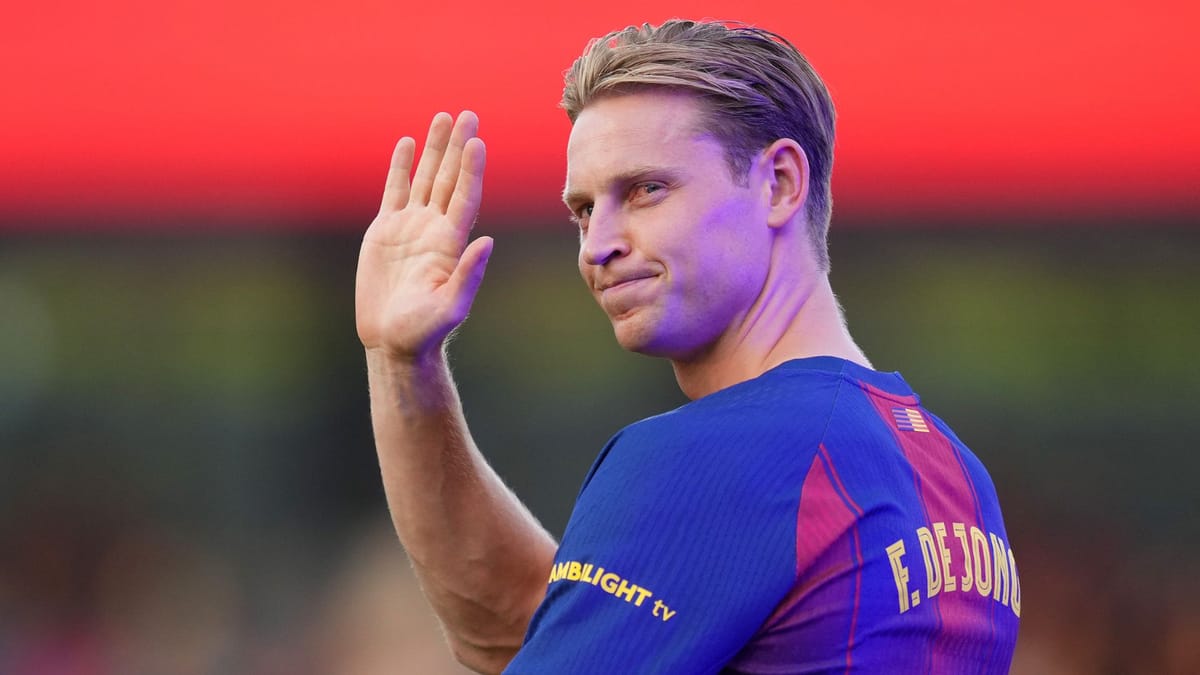
In the hyper-structured, data-driven world of modern football, where intricate systems operate like finely tuned algorithms and every square metre of pitch is contested with ruthless precision, there exists a player who seems to live just outside the script: Frenkie de Jong.
At 28, the Dutch midfielder remains a rare, almost poetic anomaly, a figure whose elegance and intuition cut through the mechanistic frenzy of the elite game. He does not merely execute tactical instructions; he interprets them, bends them, and occasionally rewrites them altogether. For better or worse. This scout report traces the singular architecture of his game: from his press-resistant sorcery and symbiotic bond with Pedri to his evolving role under Hansi Flick, the internal competition that has recently challenged his starting status, and the complex relationship he has endured with parts of Barcelona's passionate fanbase. It is the story of a player who has journeyed from misunderstood outsider to (still controversial) contracted cornerstone, yet who continues to navigate merit-based selection in a squad brimming with depth and youthful energy.
Let's go.
The Maverick Midfielder
Six years into his journey in Catalonia, after a rollercoaster tenure marked by injuries, tactical mismatches, and financial scrutiny, De Jong has secured his long-term future. Finally, many would say.
On 15 October 2025, he signed a contract extension until 30 June 2029, a deal that reflected both his resurgence under Hansi Flick and the club's desire to retain one of its most uniquely gifted, yet most interestingly controversial assets.
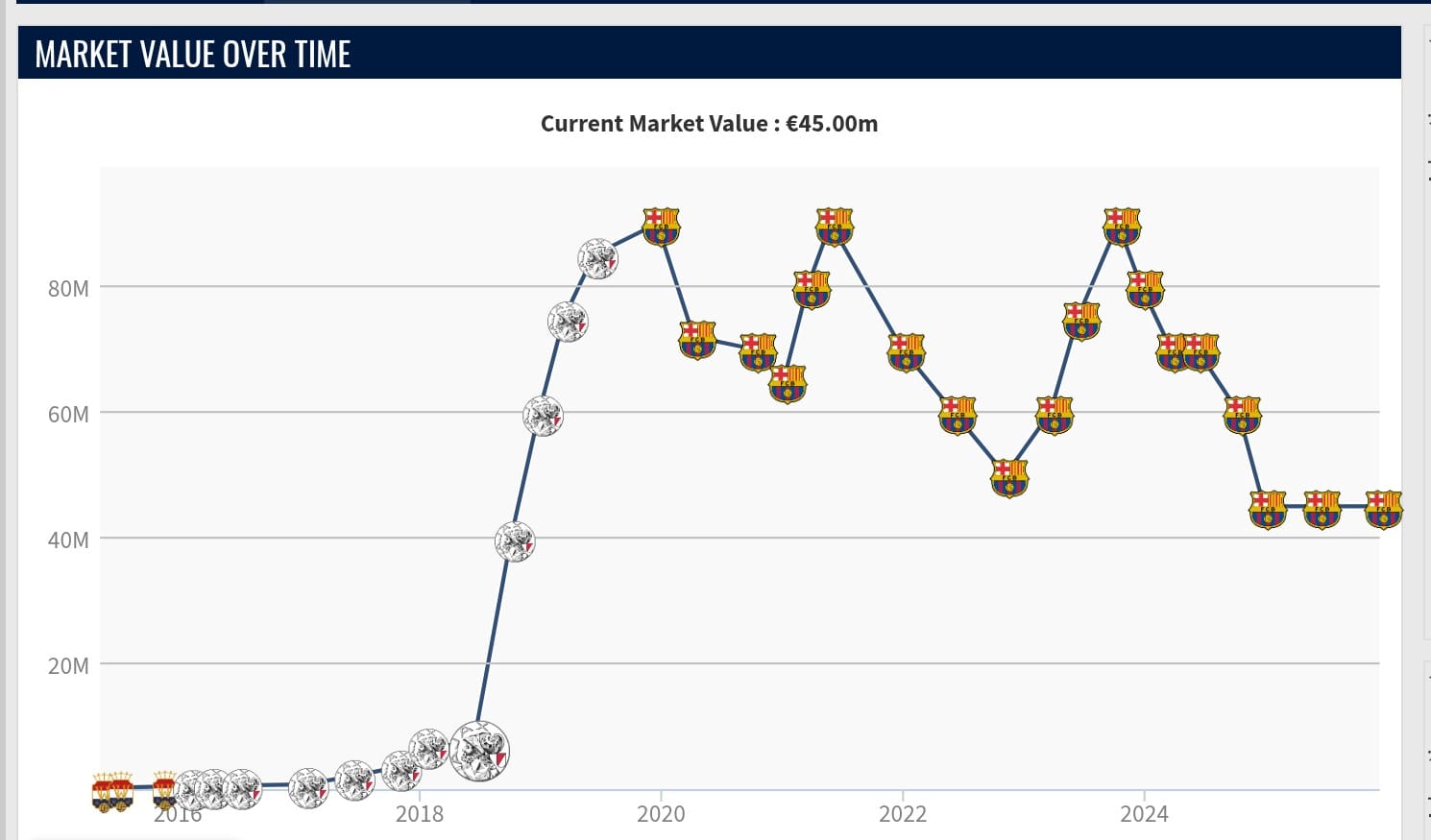
His current market value hovers around €45m according to Transfermarkt, a figure that belies his intangible influence on the pitch but also underscores both his age and inconsistent brilliance. Still, nothing about him is simple.
Nominally a central or defensive midfielder, De Jong defies easy categorisation. He is equally comfortable dropping into a back three out of possession or surging forward as a box-to-box engine in an interior role. That's exactly what makes defining him so difficult.
On one hand, we have an heir-apparent to a prime Andrea Pirlo for his rhythmic control, or even to Toni Kroos for his buildup mastery, and on the other, a somewhat surprising but still apt shout to Jude Bellingham or Paul Pogba for his athletic box-to-box potential.
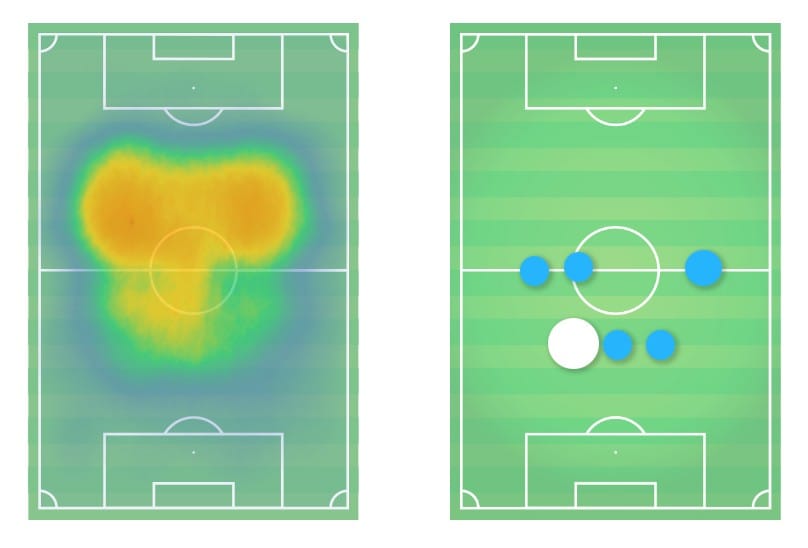
Yet none quite capture his essence: a player who combines Dutch technical refinement with deceptive physical power and an almost improvisational intelligence.
Sounds almost perfect, right? Well, not everyone would agree.
The Dilemma of the Unwanted Genius
De Jong's Barcelona chapter has never been entirely straightforward off the pitch. His lucrative contract, signed in the Bartomeu era and inflated by deferred COVID wages, became a lightning rod amid the club's financial abyss.
For years, he was portrayed as a salary-mass obstacle, a player the club needed to sell to register new signings. His steadfast refusal to leave, driven by genuine love for the badge, was sometimes cynically reframed as financial opportunism, earning him the unkind label of 'leech' among certain Spanish supporters. Tactical frustrations compounded that resentment, however. Under previous regimes, particularly Xavi's, he was seen as a disruptor of positional purity, even booed on certain substitute appearances and judged harshly against Sergio Busquets' impossible legacy. Whistles echoed at Montjuïc in late 2024, and even into early 2025 as pockets of discontent lingered amid inconsistent form and injury setbacks.
Fortunately, Flick's era and the October 2025 extension have significantly shifted perceptions. Consistent excellence when selected, coupled with the club's public commitment, has quieted many critics, albeit understandably not all.
As of right now, however, executives still view him as pivotal; his peak-age blend of experience and intelligence remains cherished with the higher-ups and, seemingly and most importantly, among peers and Flick himself.
While lingering scepticism persists in some quarters, and will undoubtedly remain so, exacerbated by recent benchings due to competition, the narrative has somewhat turned: from financial burden to loyal cornerstone, a player whose dream of Barcelona glory aligns with the club's ambitions.
So what underpins that alignment?