Everyone wants to be Blaugrana, La Masia creates a Philip Lahm and does Araujo have a path to redemption?
The transfer rumours and team observations that tell you everything about where this project is heading

The Circus Comes to Town
Inside the annual summer madness where every footballer in Europe — and a few from Argentina — somehow ends up linked to FC Barcelona
It begins, as it always does, with a single whisper. A trusted source. A journalist with a four-digit Twitter following and a confident emoji. And then — overnight — half the continent is apparently packing their bags for Barcelona.
Welcome to transfer season. That magical time of year when the rumour mills spin faster than Lamine Yamal on a breakaway, and Deco's phone supposedly rings off the hook with calls from agents everywhere. The season isn't even over. The Champions League quarter-finals haven't been played. But already — already — the 2026 summer window has taken on a life of its own.
And this year, more than most, it feels like everyone wants in.
THE WISHLIST
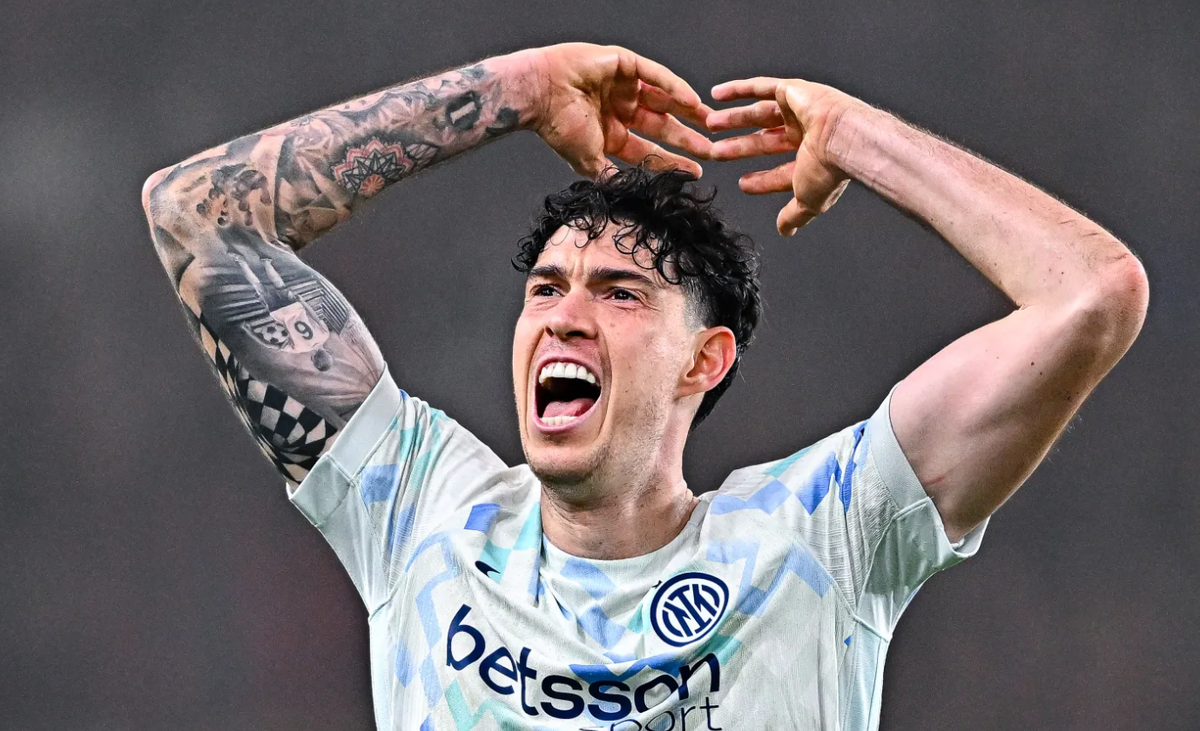
Let's start with what we actually know — or at least, what the reliable voices are telling us. Hansi Flick has reportedly made his position clear to the board: three marquee signings, minimum. Alessandro Bastoni at centre-back. Julián Álvarez as the new number nine. And Bernardo Silva — a man who has been linked with Barcelona for so many consecutive summers that he may as well have a locker at the Ciutat Esportiva — in midfield.
The Bastoni pursuit is the most credible of the three. Deco has apparently named him his top priority, sources close to Inter are cautiously optimistic, and the Italian himself is said to be 'fascinated' by the possibility of joining. His partnership with Pau Cubarsí — two ball-playing centre-backs who love a progressive pass — has been whispered about in coaching circles like it's some kind of football fairy tale waiting to happen. Whether Inter agree to let him go is another matter entirely.
Álvarez is the headline grab. The Argentine has been exceptional at Atlético this season, which makes the whole thing wonderfully awkward given that Barça are about to play them in the UCL quarter-finals. Imagine trying to kick him up in the air in the first leg while simultaneously negotiating his transfer fee with Simeone. The Spanish press would combust. Atlético, for their part, are reportedly ready to make him their highest-paid player to keep him — which tells you everything about how serious Barça's interest has become.
And then there's Bernardo. Free transfer. Proven quality. Reportedly decided to leave Manchester City. The stars may finally be aligning — though we've said that before. Twice. Maybe three times.
THE FOG OF RUMOUR
Now we get to the fun part. Because beyond the credible tier lies a fog so thick you'd need a GPS and a dedicated SPORT journalist to navigate it.
Pedro Neto is on the radar — apparently as a Rashford alternative — which means we've somehow arrived at a timeline where Marcus Rashford himself needs an alternative. Victor Osimhen, currently at Galatasaray after his Napoli odyssey, has been added to the striker shortlist as 'Plan B.' Which means there's a Plan B, a Plan C (Dušan Vlahović), and possibly a Plan D from the Strasbourg reserve squad.
At fullback, Barça are apparently tracking six — six — candidates. Alejandro Grimaldo, left-footed and technically everything Flick wants in that role, is the name that generates the most excitement. Andrea Cambiaso of Juventus — versatile, progressive, can play either flank — is being actively monitored. For the right side, Juanlu Sánchez from Sevilla and Monaco's Vanderson have both been scouted.
Then there's the Tottenham corner of this particular circus. Micky van de Ven has reportedly told his representatives he wants out of a Spurs side currently fighting relegation, and has made no secret of the fact that Carles Puyol was his idol growing up. The Camp Nou-to-relegation pipeline has never been more crowded. Meanwhile, Xavi Simons — a genuine La Masia product who left as a teenager and never quite settled at Tottenham after joining from Leipzig — reportedly wants to come home. Barcelona see his €40 million price tag as 'acceptable.' Tottenham, understandably, see it differently.
And because 5 goalkeepers were not enough , Deco has held talks with the representatives of Álex Remiro of Real Sociedad. The 31-year-old, whose release clause has dropped to somewhere between €10–15 million, is reportedly open to joining as Joan Garcia's deputy. Remiro's response when asked about the rumours was the most honest thing said in Spanish football all week: 'You never know.'
The three-word philosophy of every Barça transfer window since forever.
A 16-year-old from Hertha BSC. A free agent from Man City. A striker from Galatasaray. At some point, the Barça transfer rumour list stops being a transfer list and starts being a guest list.
THE MOST EXCITING PROJECT IN EUROPEAN FOOTBALL
Here's the thing underneath all the noise, and it's worth pausing on: the reason every agent in Europe seems to be pinging Barcelona right now is precisely because of what this squad has become under Hansi Flick.
Four points clear in La Liga with nine games remaining. A Champions League quarter-final against Atlético Madrid on the horizon. A squad of young, hungry, technically extraordinary players who've rediscovered what it means to play with joy. The 7-2 against Newcastle wasn't just a result — it was a statement that travelled around the world and landed in every agent's inbox the following morning. This is the most attractive project in European football right now, and the market knows it.
Players who once might have chosen the money of the Saudi Pro League or the profile of the Premier League are now asking their representatives a different question: is there a way into that Barça squad? Is there a door? Even Xavi Simons — who left the club as a teenager because he wasn't getting minutes — reportedly wants to come back.
The circle of life, Barcelona edition.
Even João Cancelo, on loan from Al-Hilal, is apparently ready to walk away from his Saudi salary to stay permanently. That is the pull of this project. When a player turns down more money, you know something real is happening.
THE ONES LEAVING THE PARTY
Of course, the summer will not only be about arrivals. Robert Lewandowski — who has given Barcelona three genuinely extraordinary seasons and deserves far more credit than the transfer circus allows — is out of contract in June. Chicago Fire are sniffing. Juventus have been mentioned. His camp has been quiet, which in football usually means the conversations are happening away from the cameras.
Ferran Torres looks set to be moved on, freeing up wages and space for whoever Deco decides is the next piece of the puzzle. Alejandro Balde — injured and with his future murmured about — may also see his role reassessed. And the goalkeeping department, somehow, still has six keepers under contract. Six. Someone, somewhere, is going to have a very uncomfortable end-of-season conversation.
THE BOTTOM LINE
The summer window doesn't open for months. The season still has everything to play for. Bastoni hasn't said yes, Álvarez hasn't said anything, and Bernardo Silva has been 'deciding his future' since approximately 2022.
But in the meantime, every morning brings a new name, a new graphic from a transfer account with a lightning bolt in the bio, and another wave of collective Culer anxiety dressed up as excitement.
The circus is in town. The trapeze artists are warming up. And somewhere in the rafters, Deco is watching, taking notes, and waiting for June.
Grab the popcorn. It's going to be a long summer.
The BarcaFutbol Podcast. Latest Episode
Subscribe to the Pod! In this episode we talk about whether Barca should keep Marcus Rashford come the summer transfer window.
The Weight of the Warrior
Ronald Araújo divides the fanbase like no other player at Barcelona. In the process, he probably carries more stick than he deserves.
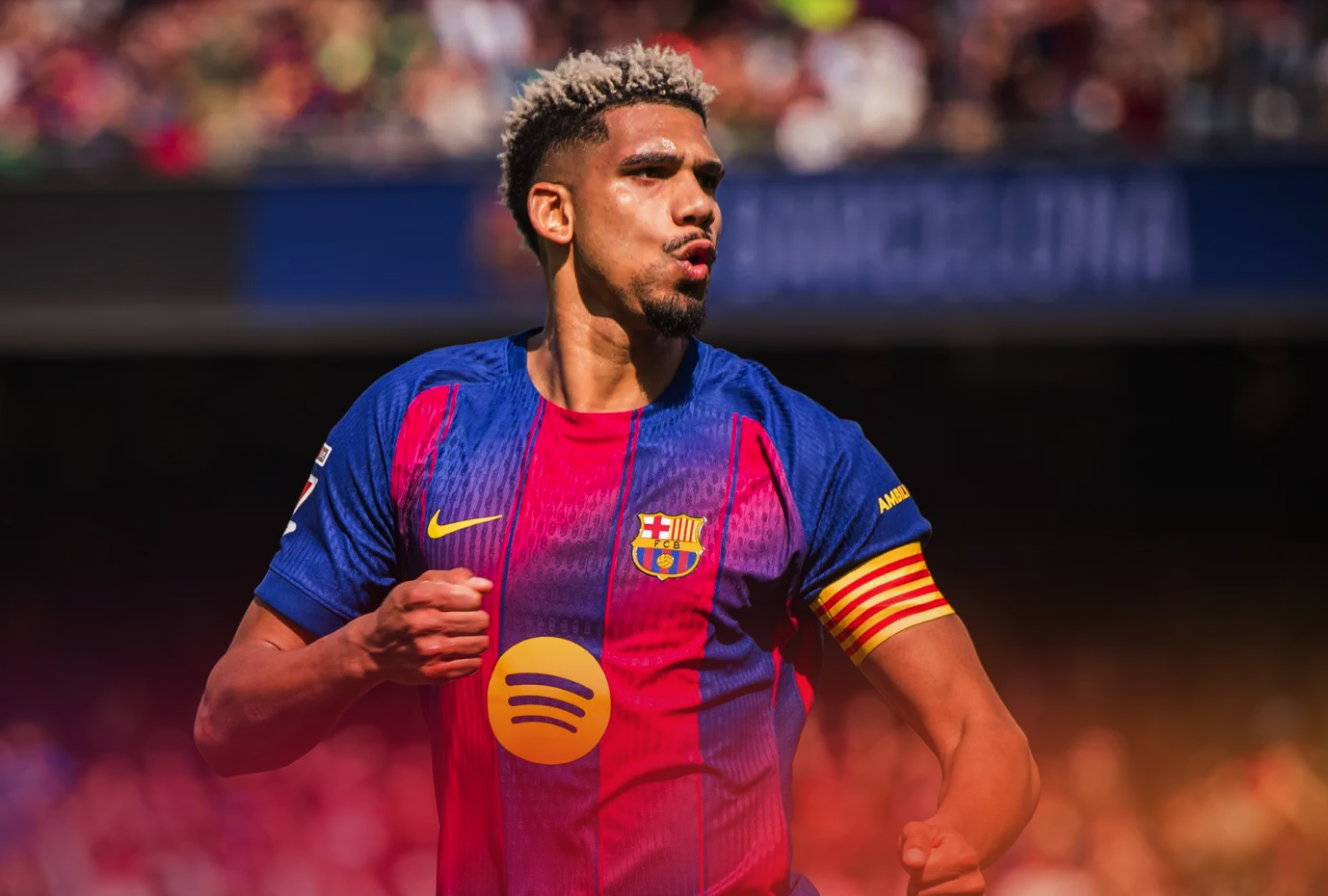
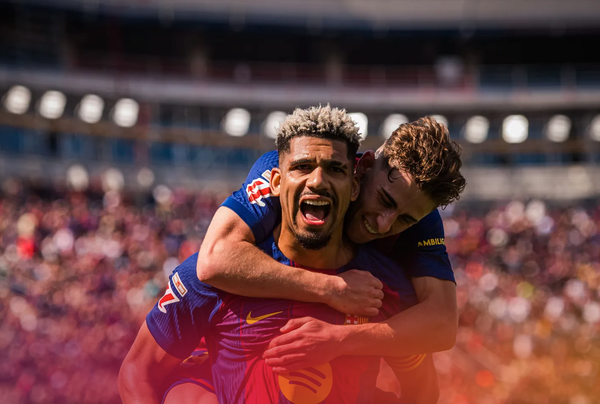
The 24th minute. A Cancelo corner, outswinging, dropping into the six-yard channel. One step. Full commitment. A downward header that clipped the inside of the post, kissed the turf, and crossed the line. Ronald Araújo wheels away, arms spread wide, face open in a way you don't always see from him.
The Camp Nou roared. Seven points clear. Fifth consecutive league win.
For Araújo, though, the goal was never really about the goal. It was about the fact that he was there to score it at all.
THE LONG WAY BACK
Rewind four months. November 25, 2025. Champions League group stage, Chelsea at Stamford Bridge. Araújo receives a red card in the first half of a match Barcelona lose 3-0. It is a bad night. It is not, in isolation, a catastrophic one — the kind of thing that happens in a long season, a moment of poor decision-making, nothing more.
But for Araújo, it was the moment the wall came down. He had been carrying something for eighteen months — a weight he had tried to manage alone, playing through it, training through it, performing through it. Anxiety that had, quietly and without announcement, deepened into depression. Not after the Chelsea red card. Not because of one bad result. But accumulating, slowly, over a year and a half of high-stakes football, relentless scrutiny, and the specific cruelty of being the man who always seemed to be in the wrong place at the wrong moment.
"I'd been suffering from anxiety for a year and a half, which turned into depression, and I was playing like that," he said in February, speaking to Mundo Deportivo in his first interview since returning. "That doesn't help, because on the field you don't really feel like yourself."
"I didn't think about giving up playing, but you consider a lot of things, because I wasn't feeling myself."
The leave of absence that followed was both necessary and extraordinary. He travelled to Jerusalem on a spiritual pilgrimage, reconnecting with a faith that had always been central to his identity. He returned to Uruguay to train alone over Christmas. He worked with mental health professionals, at the club's full support and expense, for as long as he needed. When Hansi Flick was asked about the timeline for his return, the answer was simple: "He has to decide how quickly he wants to progress."
It is worth pausing on that. In a business that fetishises availability, that treats injuries and absences as liabilities, that measures players by minutes played and market value, Barcelona gave one of their captains as long as he needed. And Flick — a manager whose emotional intelligence has been as important to this squad as any tactical system — sent messages through it all.
Take your time. The most important thing is to get through it well.
WHAT THE DATA SAYS
Here is what tends to get lost in the discourse around Araújo: on the days when he is good, he is very good. The match against Rayo on March 22 was one of those days.
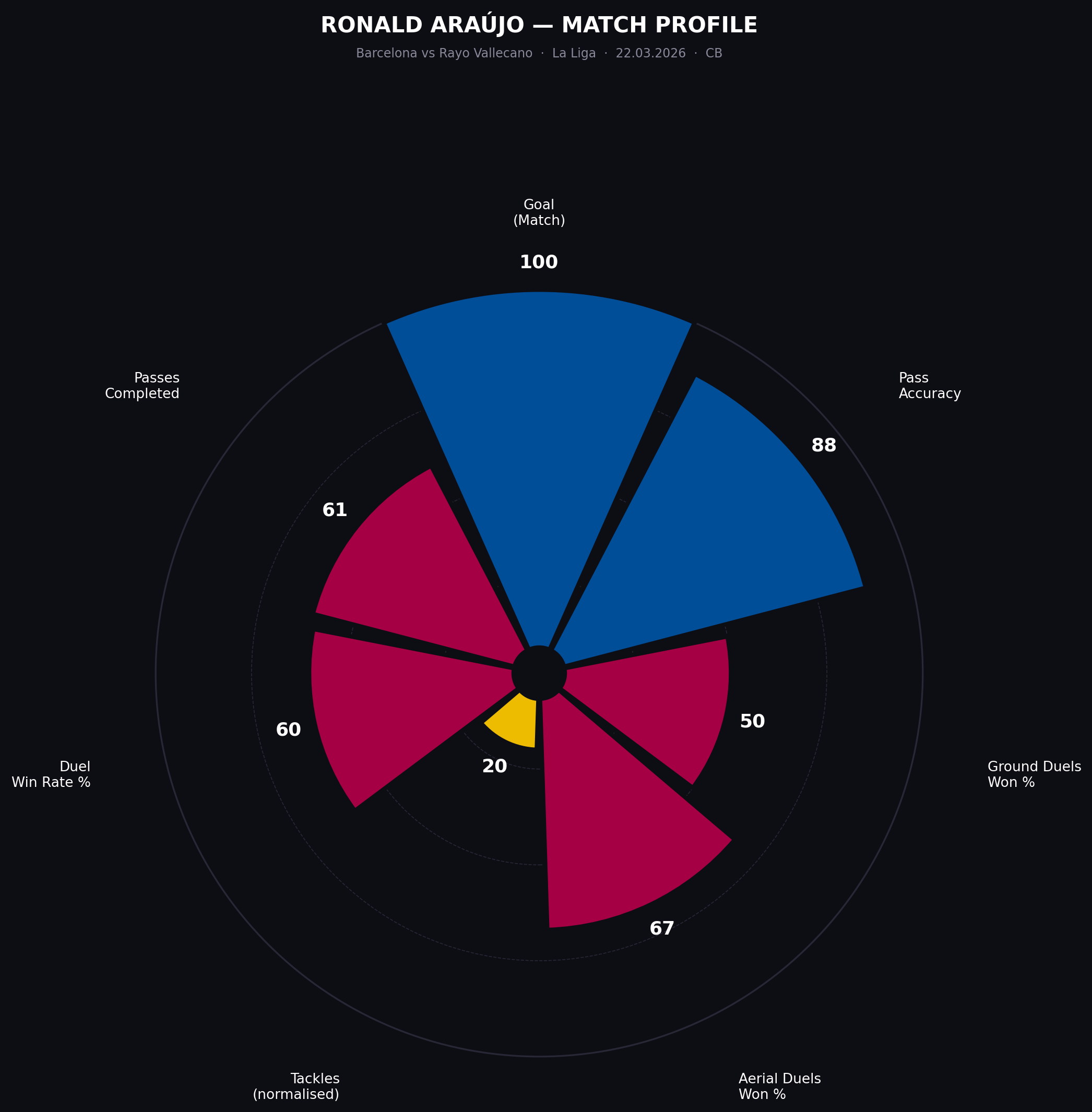
His game profile from that afternoon tells a story that his critics rarely engage with. Six aerial duels. Three won — a 50% aerial win rate in a match where Rayo specifically targeted the channels in behind and frequently delivered balls into the box. Two ground duels won. One tackle. And crucially, the organisational contribution that doesn't appear in a stat line but defines whether a defensive structure holds or collapses: calling runners early, covering García's sweeps, reading Rayo's second-half delivery patterns and adjusting before they became problems.
Look at the wider match context. Rayo created chances of higher quality than the shot map suggests — their xG per chance was considerably higher than Barcelona's, and for long stretches of the second half they had the better of the contest.
Araújo was the one who kept it together.
His duel intensity across the full ninety minutes — confirmed in the scatter analysis that plots all outfield players by duel win rate vs minutes played — puts him alongside Cancelo and Pedri as the Barça players who never let their level drop.
On the days when he is good, he is very good. Against Rayo, he was the one who kept it together.
A PLAYER WHO DIVIDES OPINION
The difficulty with Araújo, from a fan perspective, is that his most visible moments have tended to be his worst ones. The red card against PSG in the 2024 Champions League quarter-final, when Barcelona were on the verge of eliminating the holders. The costly error against Inter in the 2025 semi-final that led to a devastating comeback in extra time. The Chelsea sending-off. Each one amplified, replayed, debated. Each one becoming the shorthand for a certain kind of criticism: that he is too reckless, too high-risk, too liable to unravel when the stakes are highest.
What that reading misses is the context of everything in between. Araújo, when fit and settled, is a dominant aerial presence, a technically capable ball-player for a centre-back, and one of the faster defenders in La Liga. He is also, by every account from within the dressing room, a leader — someone Flick trusts to organise, to communicate, to carry the defensive structure on his back when others around him are struggling.
The online discourse, particularly on social media, has never been kind to him. He spoke about it in February with a clarity that was striking: "I understand that there are two worlds, a real world and a virtual world. And in the real world, I feel the support of the fans, the Barça supporters, and the club." The distinction he drew — between the real and the virtual — is one more footballers should be encouraged to make.
He also said something else that deserves to be heard: "Ultimately, we are people beyond just footballers. It's not all about money, it's not all about fame. We also suffer because of the things that happen on the pitch." There was nothing performative about it.
It was a man describing, plainly, what the job actually costs.
THE VERSION WE NEED TO SEE MORE OF
The Araújo who headed in against Rayo — purposeful, dominant, back to leading the defensive line with the authority of the player Flick always believed was in there — is the version this squad needs over the final stretch of the season. La Liga wont be easy in the final run. But it's the Champions League where Araújo's story this season will ultimately be written.
Barcelona face Atlético Madrid in the quarter-finals. Araújo's most damaging moments have come in the knockout rounds of Europe. His most important contribution this season — the goal that kept four points between Barça and Real Madrid with nine games left — came from a set piece against a mid-table side on a Sunday morning.
The stage is about to get much bigger.
Flick will trust him. The dressing room will trust him. The data, when stripped of its most dramatic headlines, will support him. The question — as it has always been with Araújo — is whether Araujo can believe in himself. If he can, the conversation will shift from what he costs to what he provides.
Against Rayo, for ninety minutes, Araujo stood up. He made it count.
Now he only has to make it count on the biggest stage the club has left to play on this season.
Sant Joan
How a kid from Sallent became the most important goalkeeper in Spain — and the most irreplaceable player at FC Barcelona
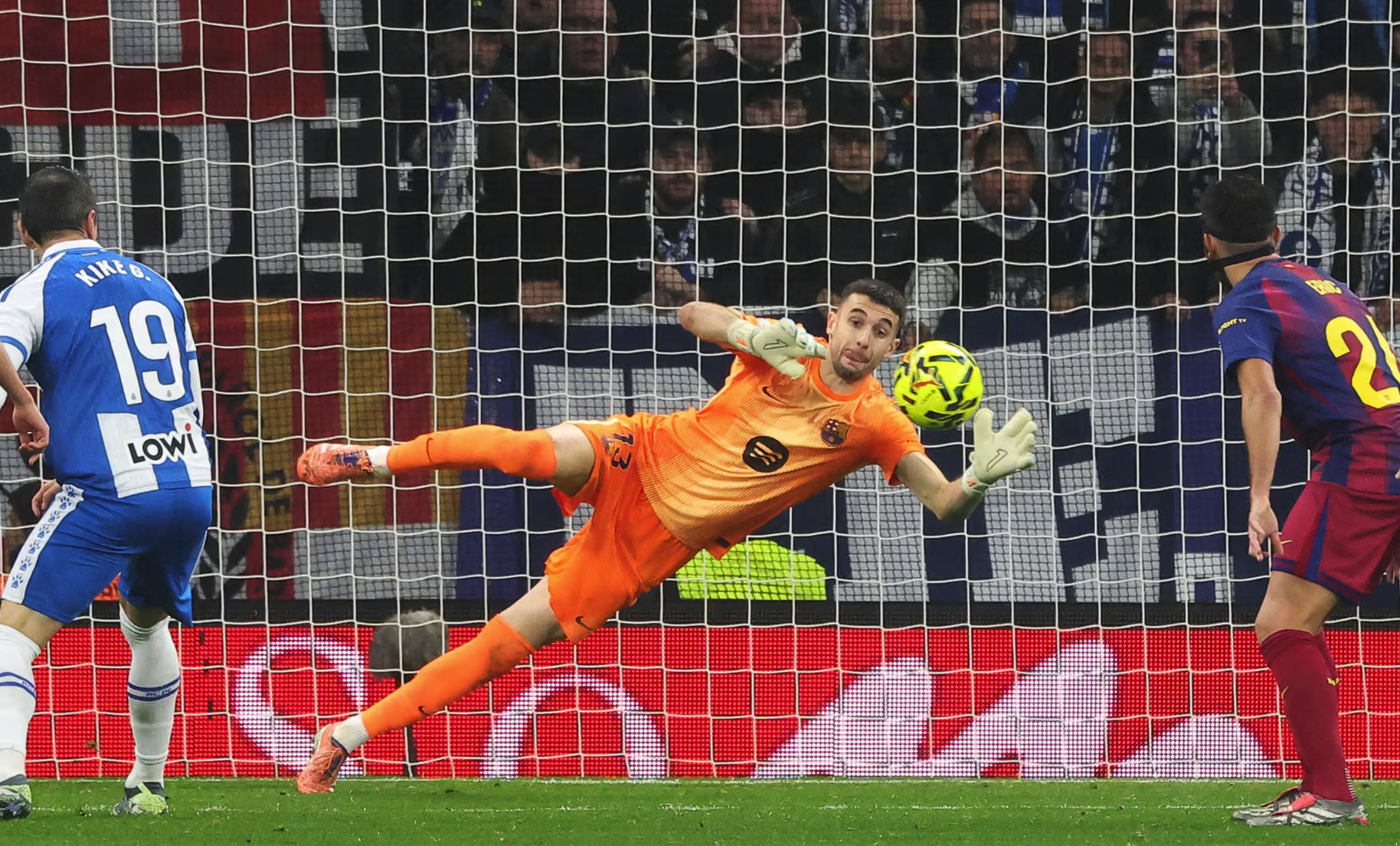
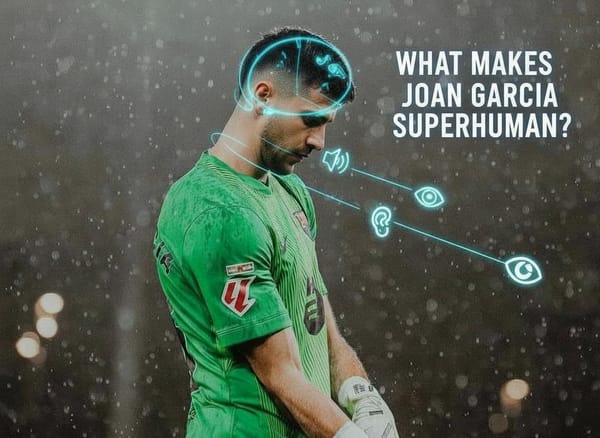
It was the first minute of the match. Rayo Vallecano, pressing Barcelona's high defensive line immediately, played a ball in behind. Carlos Martín received it in the box, turned, and fired from close range. Most goalkeepers hope. Joan Garcia read it before the shot left Martín's foot, spread himself at an angle most keepers don't reach, and palmed it away.
The Camp Nou hadn't warmed up yet. Neither had García. It didn't matter. This is what he does.
Three more saves followed across ninety minutes — Unai López's header tipped over, Jorge de Frutos' low drive smothered, a scrambling intervention from a Rayo corner that drew gasps from the stands and a standing ovation that lasted until the whistle.
Hansi Flick, in the post-match press conference, delivered the clearest possible summary: "This is why we signed Joan García."
FROM SALLENT TO THE CAMP NOU
Joan García Pons was born on 4 May 2001 in Sallent de Llobregat, a town of roughly 7,000 people in the Bages region of inland Catalonia. He started as an outfield player. His older brother was a goalkeeper, and García — watching, copying, wanting what his brother had — picked up the gloves at around five or six years old and never put them down.
From Sallent to Manresa to Damm to Espanyol's academy at 15. The path was local, unglamorous, and quietly relentless. He made his Espanyol first-team debut in December 2021 at the age of 20, but it was not until the 2023-24 season that he genuinely became the story: playing every minute as Espanyol won promotion from the Segunda División, recording 12 clean sheets in 21 appearances, winning the club's Player of the Season award by a distance. Then came the 2024-25 campaign — Espanyol back in La Liga, fighting relegation for the entire season, García as the only thing standing between them and the drop.
The numbers from that season are what attracted Barcelona. He made 146 saves — more than any other goalkeeper in La Liga. His goals prevented figure, calculated from expected goals on target against actual goals conceded, was +8.59. He was expected to concede 58.59 goals. He let in 50. That is not an anomaly. That is a pattern.
That is a goalkeeper whose influence on results is, in advanced metrics terms, the highest in the division.
Barcelona activated his €25 million release clause in June 2025. It was, by any measure, the signing of the summer.
In 2024-25, García was expected to concede 58.59 goals for Espanyol. He let in 50. Goals prevented: +8.59 — the best in La Liga.
n La Liga 2025-26, across 22 appearances for Barcelona, these are his numbers averaged across multiple sources
| Metric | Value | Context |
|---|---|---|
| Clean sheets | 11 from 22 apps | 50% clean sheet rate |
| Save percentage | 77.6% | Best among La Liga's top three clubs' keepers |
| FotMob rating | 7.83 avg | Highest among La Liga keepers |
| Goals prevented (PSxG) | +9.47 | Best in La Liga |
| Inside-box saves | 55 | High-quality chance handling |
| Sofascore rating | 7.45 | Ahead of Oblak (7.08) and Courtois (6.92) |
That PSxG figure of +9.47 deserves particular attention. Post-shot expected goals accounts for shot placement, not just shot volume — it tells you how many goals a goalkeeper should have conceded based on where the ball was aimed, not just whether it was on target. García is preventing nearly ten more goals than statistical expectation demands. Jan Oblak, one of the finest goalkeepers in La Liga history, is at +6.2. Thibaut Courtois, a two-time Champions League winner, is lower still. García leads them both. At 24.
Behind Barcelona's high defensive line — a system that deliberately sacrifices depth in favour of pressing triggers, and that turns every ball in behind into a footrace the goalkeeper must win — García has been not just good but functionally essential. When he picked up a knee injury in September 2025 and missed seven weeks, Barcelona conceded 17 goals in nine games across all competitions and kept zero clean sheets. The before-and-after could not have been drawn more starkly.
THE PROFILE FLICK NEEDED
Ask García what Flick demands of him and the answer is specific in ways that reveal how carefully Barcelona profiled this signing. "The coach asks me to be alert to passes behind the defense. With the ball, he asks me to be confident, not to overcomplicate things," García said in November. "Above all, he asks me to help the defensive line as much as possible. We know that when you do it so many times, statistically speaking, it's possible that sometimes it won't work out."
That self-awareness — acknowledging the risk inherent in the system, accepting it, and performing at elite level within it anyway — is not something every goalkeeper can offer. The sweeper-keeper role that Flick's Barcelona requires is genuinely rare. García has 45 successful runs out in La Liga this season. He commands his penalty area. He wins aerial duels when teams try to expose the space with crosses rather than through balls.
His distribution has improved markedly too. At Espanyol, tasked with getting the ball long to a side defending deep, his passing metrics were functional but unremarkable. At Barcelona, operating within a build-up system that revolves around short passes and positional superiority, his pass accuracy in the defensive third consistently runs above 80%.
"The coach asks me to be alert to passes behind the defense. We know that statistically speaking, it's possible that sometimes it won't work out." — Joan García
THE DERBY, AND WHAT CAME AFTER
On 3 January 2026, Barcelona returned to the RCDE Stadium to face Espanyol in a La Liga fixture that carried an edge no neutral could miss. García had left his boyhood club — the club that raised him — in favour of their direct rivals, activated via a release clause that Espanyol could not block. The atmosphere was hostile.
García made six saves. Barcelona won 2-0. He was voted Player of the Match for the second time as a Blaugrana. The cameras, inevitably, found Marc-André ter Stegen in the stands, watching the goalkeeper who had displaced him — watching from the stands because there was nothing else to do.
The Zamora Trophy conversation has been running since January. García's 0.68 goals conceded per 90 minutes puts him in genuine contention. At 24. In his debut season for a club whose defensive system he had to learn from scratch.
Then came the Spain call-up. Luis de la Fuente took the unprecedented step of including four goalkeepers in the squad for the final international break before the World Cup. García was one of them — his first senior call-up.
Flick was blunt: "I'm happy for him. He deserves to be in the national team."
THE IRREPLACEABLE ONE
Barcelona have, in the space of nine months, completed a generational handover in goal that few clubs manage without turbulence. Ter Stegen is on loan at Girona and set to leave permanently. Szczęsny is at the end of his contract and likely to retire. The sixth goalkeeper on the roster is a 23-year-old from the reserve team.
The handover happened cleanly because García arrived not as a project or a gamble but as the finished article: a goalkeeper who was, by multiple advanced metrics, the best in Spain before he even played for Barcelona.
Lamine Yamal, who does not waste words, described his teammate in a social media story after the Rayo win: "He is crazy." It is, in the way only a teenager who has grown up around football his entire life can deliver it, the highest possible compliment.
From Sallent de Llobregat, through Espanyol, through the hostility of returning to the RCDE Stadium, to the Camp Nou and the Spain squad. Joan García is 24 years old. He is already the most important goalkeeper in the country. And he is, by every metric available, just getting started.
The D Team Player
Xavi Espart was never in the A team. He played for the D team, with the older kids, because the generation he was born into was simply too good. That tells you everything you need to know about him — and about what is happening at La Masia right now.
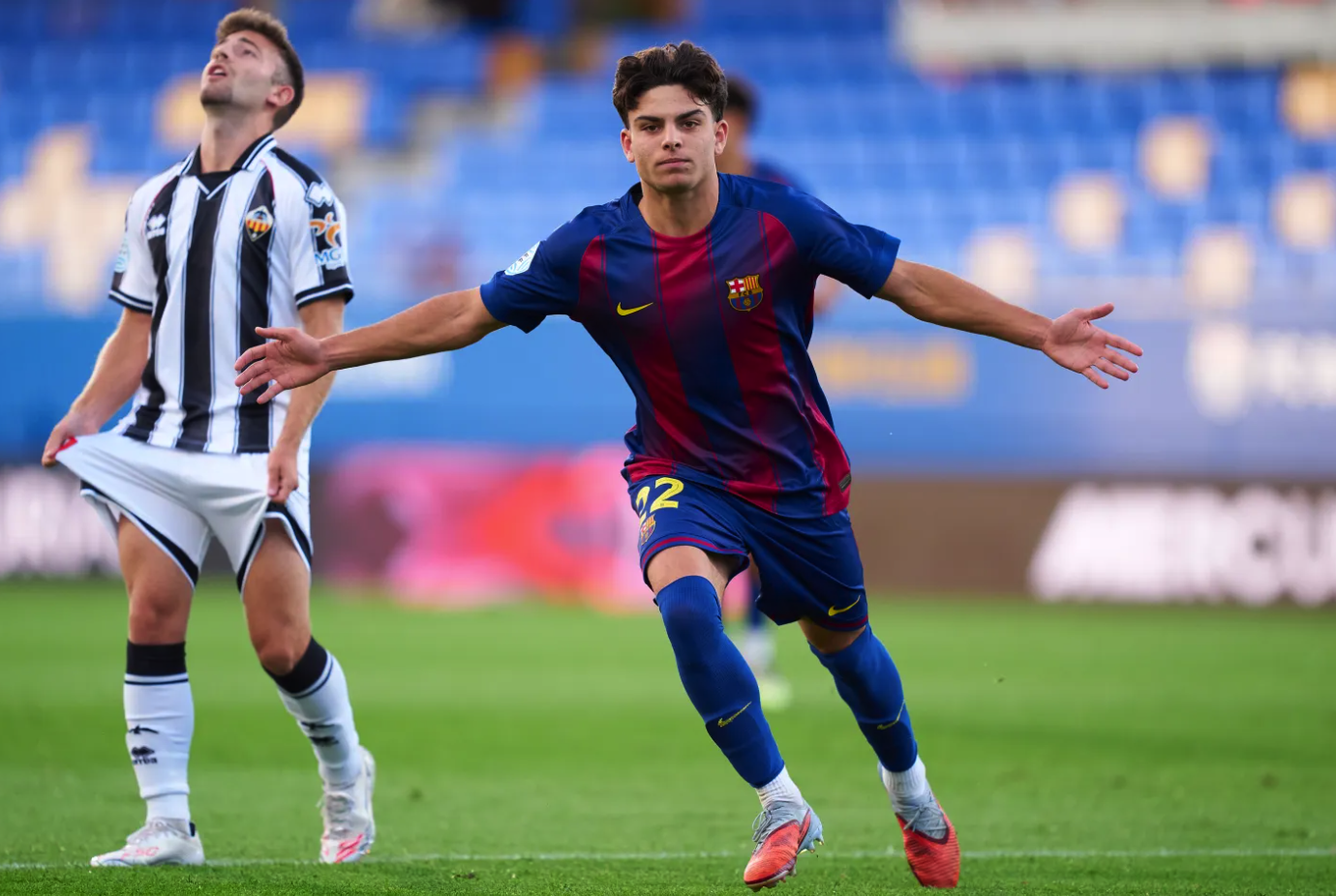
St. James' Park, 86th minute. Barcelona 1-1 on aggregate, Newcastle pushing for a second goal, the tie in genuine doubt. Hansi Flick reaches for the touchline and shouts a name.
Not Rashford. Not Dani Olmo. Not anyone already in the squad rotation. He shouts: 'Xavi.'
At the bench, an 18-year-old from the reserve team — officially a Barça Atlètic player, registered in the fourth tier of Spanish football — grabbed his training gear, rushed to the fourth official, and ran onto the pitch at St. James' Park in the Champions League round of sixteen. Xavi Espart Font had been a Barcelona player for ten years. He had been waiting for this moment, in one form or another, for most of those ten years. He would have the minutes between the 86th and the 90+6th minute to show what he was made of.
He made a slide tackle on Joe Willock. He won a block in midfield. He kept his position, kept his shape, kept his nerve. Lamine Yamal scored in the 96th minute and the tie was level. Espart left the pitch smiling. His sister — who had come from Manchester, where she is studying, the only family member present because nobody had expected this to happen — was somewhere in the stands.
It was, in miniature, the Barça story. The kid who nobody expected, doing exactly what was needed, exactly when it mattered.
D FOR DIFFERENT
There is a photograph, taken in 2020-21, of Barcelona's Cadet A squad. In the front row, from left to right, you can find Juan Hernández, Pau Cubarsí, Marc Bernal, and Lamine Yamal. These are not ordinary names in hindsight. Cubarsí has made over 118 senior appearances for Barcelona. Bernal is considered the club's most complete young midfielder since Busquets. Yamal has already won the Euros, a La Liga title, and scored a goal against France that physicists are still trying to understand. And in that same photograph, second from the left in the front row, is Xavi Espart.
They are all born in 2007. All products of the same extraordinary La Masia generation. But it is worth knowing what this photograph does not show you: for much of their shared time in the academy, Espart was not in the A team. He was in the D team — separated from Yamal and Bernal and the rest by a physical development gap that, at youth level, carries enormous weight. The teams were graded from A to D. The best players, and the oldest, went to A. That is where Yamal went.
"Espart's physical development played a big part in him being selected for the D team," confirms Pau Moral, the youth coach who worked with him during that period, now at an academy in Qatar. "Don't get it wrong — the team was fantastic and won the league comfortably. But in this generation, there was a crazy amount of talented players in midfield."
The D team won the league. Comfortably. Against kids a year older. And Espart — technically gifted, tactically advanced, reading the game at a pace Moral describes as "faster than anyone else" — kept working. He never stopped. He was scouted initially by Isidre Gil, the same man who identified Yamal at a local club in Rocafonda. But where Yamal's rise was immediate and galactic, Espart's was measured, patient, and entirely his own.
"He understood every concept in seconds and read the game at a faster pace than anyone else. Mentally, for me, he's a beast." — Pau Moral, former La Masia youth coach
THE ACCIDENTAL RIGHT BACK
For most of his youth career, Espart played as a central midfielder. It was his natural position. He is technically polished, comfortable under pressure, quick with his decisions — the profile La Masia builds its entire philosophy around. The position change came by accident.
Three years ago, in the Under-16s, coach Iván Carrasco had no right-backs available. He moved Espart across in an emergency. The trial became permanent. And in one of those decisions that only makes sense looking backwards, it turned out that Espart was not just a decent right-back filling in — he was a player whose entire technical profile translated perfectly to the modern inverted full-back role that the best coaches in Europe are now desperate to fill.
This is why Hansi Flick's comparison carries such specific weight. It was not a vague compliment. Flick chose Philipp Lahm with precision. "When I watch Xavi Espart play, I really like his confidence on the ball," Flick said. "He reminds me of Philipp Lahm, who could play as a six or as a right-back. I enjoy watching him both with and without the ball."
Flick managed Lahm for years at Bayern Munich and with the German national team. He knows exactly what Lahm's profile looked like and what it was worth. The comparison is not decoration. It is a blueprint.
Lahm's genius was the same thing Espart's coaches now describe: the ability to operate in two fundamentally different positions without sacrificing quality in either. At right-back, Lahm was a defensive anchor and an attacking outlet simultaneously. In midfield, he was a ball-winner and an organiser. The thread connecting both roles was the same intelligence — the reading of space, the anticipation of what was about to happen, the willingness to give the ball simply to a teammate in a better position rather than force something that wasn't there. There was never an ego in the way. There was never a chest puffed out at the wrong moment.
Marc Bernal, who has been Espart's friend since they were children in the academy, responded to his debut with a single word on Instagram: "Philipp." Not as a joke. As the most accurate thing he could think of to say.
WHERE HE PLUGS THE HOLE
To understand what Espart offers Barcelona right now — not just for the future, but right now — you have to understand the crisis the club is managing at the back.
Jules Koundé suffered a hamstring injury in the 13th minute of the Copa del Rey semi-final against Atlético Madrid in early March. Alejandro Balde came on to replace him and was himself forced off 58 minutes later with an identical injury. In a single night, Barcelona lost both starting fullbacks. Andreas Christensen, meanwhile, has been out since December with an ACL injury sustained in training. Eric García has been managing physical discomfort. At the start of the decisive phase of the season — UCL quarter-finals against Atlético, a title run that needs winning and managing simultaneously — Flick has had to rebuild his entire defensive structure from what is available.
What is available, it turns out, is remarkable. Gerard Martín, originally a left-back, has moved to centre-back alongside Cubarsí and is winning 98.4% of his aerial duels — a figure that places him, statistically, alongside Virgil van Dijk and Antonio Rüdiger in that specific metric. João Cancelo, on loan from Al-Hilal, has covered the left. And at right-back — the gaping hole left by Koundé — has come Xavi Espart.
Espart is right-footed. He presses with intelligence rather than chaos. He is comfortable stepping inside into a midfield role, creating the positional overload that Flick's system is built on. He sits into the half-space, receives between the lines, and circulates the ball to Pedri or Bernal before quickly getting back into his defensive shape. His positioning under pressure — the thing Flick called out with the word 'confidence' — is the attribute that allows him to survive, and occasionally thrive, in a system that punishes hesitation immediately and without mercy.
"You are seeing the same thing I am," Flick said before the Rayo game. "He is a player with confidence. I love the calm with which he plays — it seems like he has a very low heart rate."
"I love the calm with which he plays — it seems like he has a very low heart rate." — Hansi Flick
THE GERARD MARTÍN MIRROR
Watch what has happened to Gerard Martín under Flick and a trajectory emerges that is instructive for understanding what Espart might become.
Martín arrived at Barça Atlètic in 2023 as a left-back. He was used as emergency cover in the first team when Balde was suspended or unavailable. Nobody particularly expected him to become a starter. Then Flick moved him to centre-back — first out of necessity, then by design. The position was not totally unfamiliar from his youth career, but in top-flight football it required an entirely different calibration. Martín did the calibration. He started seven of the last nine games of 2025, passed 2,200 minutes of football in 2025-26, and is now posting the kind of aerial duel numbers that get you mentioned in the same breath as the best centre-backs on the continent.
Flick described it simply: "Gerard is an example that with mentality, effort and attitude, everything is possible." It is almost exactly what he said about Espart when the comparisons started. The pattern is clear: Flick sees something in a player, gives them minutes they cannot yet fully justify on paper, and then watches what happens. With Martín, what happened was a transformation.
The reason this matters for Espart's ceiling specifically is what Martín's evolution reveals about Flick's system. Defenders at Barcelona under Flick are not static. The right-back inverts. The left-back inverts. Centre-backs step into the midfield press. Positions on the pitch are starting points, not fixed coordinates. The player who can read all of this — who can execute the first instruction and then adjust when the game moves — is the player this system elevates. Martín found that bandwidth at centre-back. Espart has it natively, by virtue of spending the first half of his academy career as a holding midfielder.
THE CEILING
Ask Pau Moral about Espart's ceiling and the answer is careful but unambiguous. "In those seasons in the D team, he was in a tier below because of physical development. But he has always been working. He has been adding. And in the end he has arrived because he had talent and because he has worked hard." Moral then pauses. "Mentally, for me, he's a beast."
That word — beast — lands differently when it comes from a youth coach talking about mental attributes rather than physical ones. What Moral is describing is not aggression or physicality but the internal quality that separates players who have ability from players who do something with it: the refusal to be intimidated by the gap between where you are and where you want to be; the patience to wait for the gap to close; the composure to perform when the gap finally does.
Espart has three senior appearances. He was on the pitch for nine minutes in his debut, ninety in his first start, and a cameo in the second Newcastle leg. Three appearances across Newcastle, Sevilla, and Rayo Vallecano — a Champions League knockout game, a La Liga fixture, and a European match at one of the most atmospheric grounds in England. He has not looked out of place in any of them. He made one mistake against Sevilla, a mental lapse that led to a goal. He did not repeat it.
What he is not yet is a first-choice defender in a Barcelona squad that will soon have Koundé and Balde back. That, too, is part of the timeline. Espart is 18 years old, registered with the reserve team, contracted until 2028 after an extension signed in August 2025. The club blocked a loan to Racing de Santander in January. Deco and Flick see him here, training with the first team, accumulating experience in the moments that present themselves.
The generation Espart belongs to — Yamal (18), Cubarsí (19), Bernal (18) — made their senior debuts at 15, 16, and 17. Espart came later, at 18, less celebrated, from the D team, via the reserve side in the fourth tier.
He has spent his entire development in the shadow of names brighter than his own.
And yet here he is. Calm heart rate. Flick shouting his name at St. James' Park. Nine years in the academy, and counting.
The Barça Weekly · © BarcaFutbol