La Masia: The Idea that became an identity
The farmhouse that became the most influential idea in modern football — not because of the players it produced, but because of what it taught them to think.

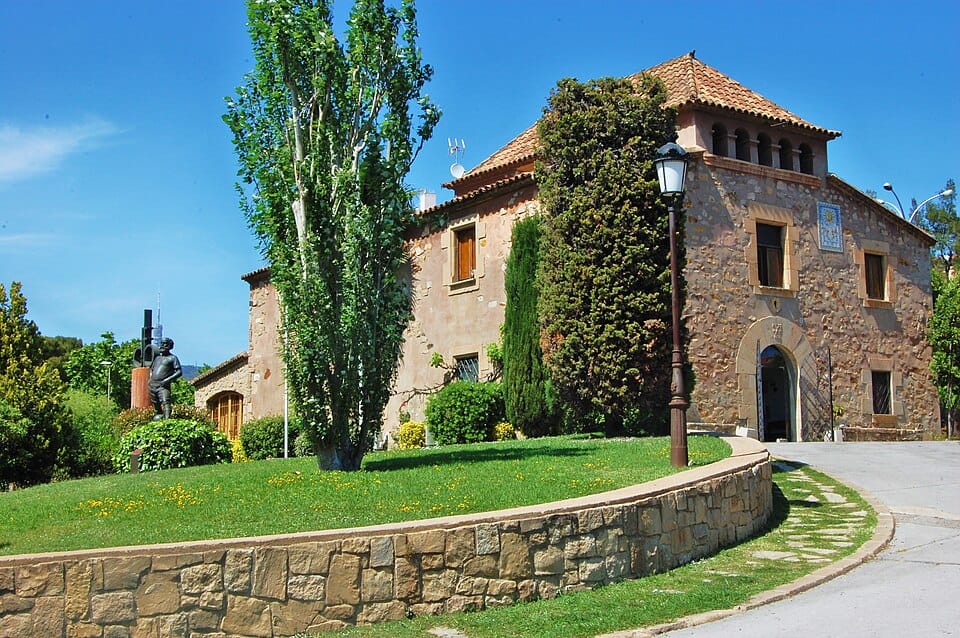
In 1979, FC Barcelona converted an 18th-century farmhouse into a dormitory for young footballers. What happened over the next thirty years was not accidental. It was the result of a specific philosophy, applied with uncommon patience, by people most football fans have never heard of. This is the story of how Barcelona built not a talent factory, but a thinking machine.
The building, before the idea
The farmhouse was built in 1702. Catalan farmers called buildings like it a masia — a country residence tied to the land around it, defined by thick stone walls and a particular kind of permanence. By 1957, when Barcelona opened the Camp Nou directly beside it, the old masia had become the club's social headquarters: meeting rooms, administrative offices, the bureaucratic machinery of a large sporting institution. Nobody was thinking about youth football.
The conversion came on 20 October 1979, under club president Josep Lluís Núñez. The idea was proposed by Jaume Amat Murtra, with Oriol Tort put in charge of the facility. On that first day, eleven young players moved in: Romà Albarrán, Betriu, Pep Boada, Òscar Lausín, José Fernández, Guillermo Amor, Esteve Castañer, Manuel Bautista, César Redondo, Manolo Muñoz, and Ricardo Arnal. Spain's first dedicated residential football academy was not launched with a press conference or a visionary manifesto. Eleven boys moved into a farmhouse. That was it.
The conceptual inspiration, according to Wikipedia's sourced account of the academy's history, was Ajax's youth system — specifically the Dutch model that had produced Johan Cruyff, who had come to Barcelona as a player six years earlier and won La Liga in his first season. The irony embedded in La Masia's founding is this: Cruyff was not involved. The building was ready, the dormitory was open, the boys had moved in — and the philosophy that would eventually fill it had not yet arrived. It would take nearly a decade for La Masia to find its purpose. The container existed before the contents.

The scout nobody saw
Before the philosophy, there was the scout. And the scout, for most of La Masia's early history, was Oriol Tort.
Tort was a pharmaceutical representative by day. He had played for Barcelona's youth teams as a young man, joining the club in 1946, but an untreatable hip injury ended his playing career by 1956. He began coaching youth teams the following year. By 1979, Núñez had assigned him the most important and least glamorous role in Spanish football: talent spotter for the new academy.
What Tort did for the next twenty-five years was stand on the touchlines of amateur junior matches, unannounced and unnoticed, notebook in hand, watching. He worked particularly at under-13 level. In a good season he attended between fifteen and twenty matches a week. He watched thousands of children. He brought very few of them to Barcelona. The methodology was simple and unforgiving: watch a boy once, know within minutes whether he was the right kind of player, and move on.
The Barcelona Metròpolis profile of Tort describes one such moment. After work one evening, he attended a match at Gimnàstic Manresa. A slight young midfielder caught his eye. Tort watched him for the duration and came away certain. The player was Xavi Hernández, then aged around ten. "Oriol Tort represents that anonymous person who nevertheless is crucial to all clubs," former Spain coach Vicente del Bosque said years later. It is a description that fits precisely.
Tort was not simply selecting players. He was also the first person many of them encountered when they arrived, often far from home, often frightened. He had lunch with them in La Masia's dining room. He took the most homesick ones home at weekends and treated them as members of his own family. The training centre that opened in 2011 to replace the original farmhouse is named in his honour: La Masia — Centre de Formació Oriol Tort. He died in 2009, before its opening.
His partner, from 1980 onward, was Joan Martínez Vilaseca. Where Tort focused on players under fourteen, Martínez worked the older age groups. It was Martínez who discovered Carles Puyol — arriving at La Masia at seventeen, the outer limit of what was considered viable — and Cesc Fàbregas, and Bojan Krkić. Together, Tort and Martínez operated out of what Martínez called el despatxet — the little office — above the club's ice rink, and built what Barcelona Metròpolis describes as "a veritable factory of home-grown players." Neither of them managed it from behind a desk. Tort wore out his shoes on the touchlines of Catalonia. That was the method.
What the building was missing
From 1979 to 1988, La Masia worked. Players were scouted, housed, educated, and trained. Some reached the first team. But the system lacked the one thing that would make it exceptional: a unified idea of how the game should be played, consistent from the youngest age group to the senior squad, maintained regardless of which coach happened to be in charge of the first team.
That gap had produced a decade of inconsistency at Barcelona. Rinus Michels had instilled Total Football during his earlier coaching stint, then left, and so did the philosophy. Terry Venables arrived, won La Liga in 1985, and brought a British tactical sensibility entirely different from anything La Masia was teaching. Venables left. Luis Aragonés arrived, was 23 points behind Real Madrid by April 1988, and was replaced in circumstances that can only be described as a player revolt — the Hesperia Mutiny — in which most of the squad openly rebelled against club management.
Into this situation, in the summer of 1988, walked Johan Cruyff. It was his second act at Barcelona— but for La Masia, the specific thing he did was this: he insisted that every team in the club, from the youngest age group to the first team, played the same style of football. From 1988 onwards, as multiple histories of the period confirm, every Barcelona team shared similar training routines built on quick attacking football, positional play, and pressing. The language was the same at every level. Promotion from the academy became a continuation rather than a reinvention.
The consequence was not immediately obvious. It takes years — sometimes a decade — before you can see what happens to children who begin their football education inside a unified system at the age of ten and do not leave it until they are twenty. But the consequence eventually became impossible to ignore.
"Some youth academies worry about winning," Xavi told The Guardian's Sid Lowe in 2011. "We worry about education."
What they were actually teaching
The philosophy has a name — joc de posició, positional play — but the name is misleading. It is not about positions. It is about space.
In Cruyff's system, which descended from Rinus Michels's Total Football and was adapted into La Masia's curriculum, the central insight is spatial rather than tactical. When your team has the ball, the job of every player is to make the pitch as large as possible — to spread wide, to create passing angles, to ensure that the player in possession always has at least two options. When you lose the ball, the job reverses: make it as small as possible, as quickly as possible, pressing collectively to recover possession before the opposition can organise.
This sounds straightforward. It is not. The difficulty is that it requires every player to think constantly about space rather than the ball. The ball is easy to see. Space is invisible until you understand how to read it. Teaching a ten-year-old to see space — to look before receiving, to know where the pass will go before the ball arrives — is the central challenge of La Masia's entire educational programme. La Masia's head of methodology, Sergio Vallecillo, has described this to theScore in an on-site visit using three words that have become the academy's footballing pillars: Possession, Position, Pressing. "It's our DNA," he said. "We believe the ball should belong to us all the time. And when we lose it, we try to recover it as soon as possible."
The training method that most completely captures this ambition is the rondo. A rondo is a circle of players keeping the ball from a smaller number of players in the middle. But at La Masia, it is not a warm-up game. It is a philosophy in miniature. "Everything that goes on in a match, except shooting, you can do in a rondo," Cruyff explained. "The competitive aspect, fighting to make space, what to do when in possession and what to do when you haven't got the ball, how to play one-touch football, how to counteract tight marking and how to win the ball back." The rondo appears in every training session at every age group. A six-year-old at La Masia and a thirty-year-old in the first team do the same exercise. The same muscle memory. The same instinct.
The other critical change Cruyff imposed was on recruitment criteria. Before 1988, the physical requirements for La Masia candidates had included minimum height thresholds. Multiple histories of the academy confirm that Cruyff removed this bias, prioritising technical ability and football intelligence over physical stature. The implications of this single change took fifteen years to fully manifest — which is roughly how long it takes for a thirteen-year-old recruit to reach the peak of his career.
One of those recruits came from Albacete. He was a twelve-year-old from Fuentealbilla, a village of fewer than 3,000 people. He arrived at La Masia in 1996 having been spotted in a junior seven-a-side tournament. He "cried rivers" leaving his family behind. He was very shy, kept to himself, and rarely spoke. He made no noise. His game made all the noise anyone needed.
Shortly after Andrés Iniesta arrived, Pep Guardiola — then the first-team captain — watched the new boy in a youth session and took the seventeen-year-old Xavi aside afterwards. "You're going to retire me," Guardiola told him. "But this kid is going to retire us all." The story is confirmed across multiple sources including Barca Universal and has passed into club folklore precisely because it is literally true: Iniesta and Xavi went on to form one of the most celebrated midfield partnerships in football history, and then Iniesta outlasted them both.
The Argentine on the napkin
The story that most precisely captures what La Masia actually was — and what made it so unique — is not the story of all the players who thrived there. It is also the story of one player who probably went on to define football in the modern era and thereby defined the masia philosophy.
In September 2000, a thirteen-year-old from Rosario, Argentina arrived for a trial at Barcelona. His name was Lionel Messi. He had a growth hormone deficiency that Newell's Old Boys — his club in Argentina — had stopped funding. River Plate had seen him and declined. Barcelona's own board was divided: he was too young, too small, and too expensive a medical commitment.
The man who saw him and was certain was Charly Rexach, Barcelona's technical director. On 14 December 2000, at the Pompeia Tennis Club in Barcelona, Rexach had lunch with Messi's father Jorge, agent Horacio Gaggioli, and transfer advisor Josep Minguella. The family needed a firm commitment. There was no official contract form to hand. Rexach reached for the nearest available surface and wrote, in blue ink:
"In Barcelona, on the 14th of December of 2000, and in the presence of Messrs Minguella and Horacio, Carles Rexach, FCB's sporting director, hereby agrees, under his responsibility and regardless of any dissenting opinions, to sign the player Lionel Messi."
The surface was a paper napkin. On 17 May 2024, Bonhams auctioned this document on behalf of Horacio Gaggioli, and it sold for £762,400 — the most expensive football document ever sold at auction. At the time of its signing, one of Barcelona's directors was so furious at the commitment being made without board approval that he tore up the official contract when it was finally produced. Rexach had it rewritten and signed it again.
The argument against signing Messi was reasonable on paper: thirteen years old, Argentinian, physically underdeveloped, requiring funded medical treatment for years before he could play competitively. The argument for signing him was also reasonable: as Rexach told reporters at the time, "We had here, at the club, a kid very different from anything we had seen before. It was, I don't know, like a gift." La Masia's post-Cruyff recruitment criteria — intelligence and technique over physicality — meant the club had built a system capable of developing exactly the kind of player that every other club had turned away.
Messi moved to Barcelona in February 2001. He did not live in La Masia's dormitory — his father negotiated a separate family apartment, an exception to standard practice. But he trained inside the system. He moved through each age group as if it had been built for him. His first-team debut came on 16 November 2003 in a friendly against Porto, at sixteen. His competitive debut followed on 16 October 2004 against Espanyol, when he was seventeen years, three months, and twenty-two days old — Barcelona's youngest ever first-team player in official competition at that point.
The napkin was not an anomaly. It was La Masia's values made visible: see the player clearly, commit without hesitation, trust the system to do the rest.
The proof: 10 January 2011
There are moments when a number of things arrive simultaneously, and the convergence is so extreme that it stops looking like coincidence and starts looking like something was built for this purpose.
On 10 January 2011, France Football announced the 2010 Ballon d'Or result. The winner was Lionel Messi. Second place was Andrés Iniesta. Third place was Xavi Hernández. All three were La Masia graduates. All three had arrived at the farmhouse as children — Xavi at eleven from Terrassa, Iniesta at twelve from Albacete, Messi at thirteen from Rosario — and had passed through the same system, the same rondos, the same philosophy of space and possession, the same insistence that how you play matters as much as whether you win.
It was the first time in the award's history that all three finalists came from the same club. It has not happened since. The achievement is not reproducible by accident. You cannot create it by buying the three most talented players in the world and putting them in the same dressing room. You create it by teaching the same language to children over twenty years and waiting long enough for the words to become instinct.
That same year, seven of the players in Spain's World Cup-winning squad were La Masia graduates. As FC Barcelona's own 40th anniversary piece confirmed, the seeds of Spain's 2008–2012 dominance — two European Championships and a World Cup — were not planted in the national team's training camps. They were planted in a farmhouse in Les Corts.
The proof reached its purest expression on 25 November 2012 against Levante. After Dani Alves was substituted with an injury in the 13th minute, Barcelona played the remaining sixty minutes with eleven players who had all come through La Masia: Víctor Valdés, Martín Montoya, Carles Puyol, Gerard Piqué, Jordi Alba, Sergio Busquets, Xavi, Andrés Iniesta, Cesc Fàbregas, Pedro, and Lionel Messi. Eleven players. One academy. One system. One idea about how football should be played.
What it was, beyond football
There is a dimension to La Masia that pure football analysis does not capture, and it is the Catalan dimension.
The academy's intake has always reflected a deliberate commitment to the region. Roughly 70 percent of La Masia's players over its history have been Catalan — from the region, trained by Catalan coaches, within a club that has been the most visible expression of Catalan cultural identity since Franco banned the language and suppressed the flag. For a community that spent the better part of four decades denied the right to publicly express who it was, the Camp Nou became the only place where it could. La Masia became the pipeline that ensured the first team would, in perpetuity, contain players who were of Catalonia, not merely at Catalonia.
The values embedded in the academy are inseparable from this context. The acronym HEART — used in FC Barcelona's official descriptions of La Masia's curriculum — stands for Humility, Effort, Ambition, Respect, and Teamwork. They are values that seem generic until you understand that they are also, specifically, a reaction against the kind of football — and the kind of culture — that La Masia was implicitly opposed to. The club's opponents were not called enemies. Referees were shaken hands with on the way off the pitch. Celebrations were measured. The system taught that how you conduct yourself on the pitch is an expression of who you are off it.
"La Masia changed me forever," Iniesta said at his retirement ceremony in October 2024. "It is the best place where I could be to enhance the values that must be had in life. And I am grateful to all the people, teachers, teammates. It is a stage that undoubtedly marked our lives." He was forty years old when he said it. He had been in the professional game for more than two decades. La Masia came first.
The honest complication
No institution that produces this level of success gets to keep it indefinitely without disruption.
The problem, when it came, was structural rather than philosophical. The money that poured into European football after 2010 changed the mathematics of squad-building. The transfer market offered shortcuts that required less patience than La Masia demanded. Under presidents who prioritised immediate results over long-term development, the first-team squad filled with players bought for large fees — Neymar, Luis Suárez, Philippe Coutinho — who had not grown up inside the system and did not naturally speak its language. FourFourTwo's 2020 investigation into La Masia's decline documented the consequences: academy coaches cashed out and took jobs in the Gulf and Japan; scouting networks contracted; the pipeline between youth teams and the first team narrowed.
The irony is instructive. La Masia had been built precisely to give Barcelona an alternative to the transfer market — a sustainable source of players who were already fluent in the club's language. The moment the club stopped trusting that alternative and returned to buying, the system began to atrophy. You cannot run an academy like La Masia in parallel with a transfer policy that ignores what it produces. The academy is not a supplement to a squad. It is a way of thinking. It either permeates the whole club or it does not.
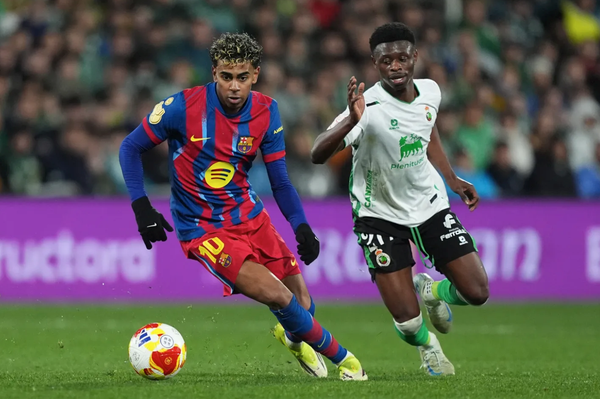
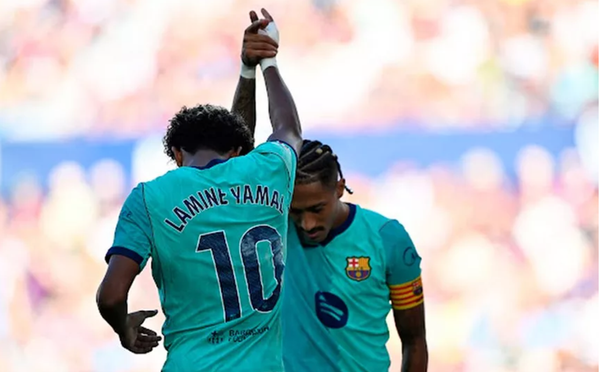
The recent years — Xavi's return as manager, then Hansi Flick's appointment — have brought La Masia back to prominence. Lamine Yamal, Pau Cubarsí, Marc Casadó, Fermín López are the current generation. The pipeline, under financial pressure that has made buying expensive players increasingly difficult, has been reopened by necessity. Whether by choice or constraint, Barcelona have returned to the method.
What the farmhouse was really for
The building closed on 20 October 2011 — exactly thirty-two years after it opened. The last residents moved to the new facility at the Ciutat Esportiva Joan Gamper in Sant Joan Despí, a five-storey structure that cost €11 million and can house 83 athletes. It has state-of-the-art classrooms, sports science laboratories, and recovery pools. It is infinitely better equipped than the old farmhouse.
What it cannot replicate — what no building can replicate — is the continuity of a philosophy applied with patience over thirty years, by an anonymous pharmaceutical representative who spent his evenings on touchlines watching children, by a Dutch coach who understood that the way players think can be taught if you start early enough, by a technical director who wrote contracts on napkins rather than let the right player slip away.
La Masia was not built to produce Messi, Xavi, and Iniesta. It was built to create the conditions in which players like them could develop. The distinction matters, because conditions are replicable and genius is not. Every club in Europe has since tried to build its version of La Masia. Very few have succeeded. The ones that have failed have usually made the same mistake: they imported the drills without importing the patience.
"It's not a coincidence," Xavi told Sports Illustrated in 2012. "It's not, 'Oh look, what a surprise.' There's an idea, a foundation of many years."
The farmhouse is still there. Next to the Camp Nou, where it has always been. It is a car park now, and a few administrative outbuildings. But the idea that filled it — the one that Cruyff carried from Amsterdam, that Tort scouted for on a thousand touchlines, that Iniesta absorbed while crying rivers from homesickness, that Messi was committed to by ink on a napkin — that idea is still running somewhere in every Barcelona player who lifts his head before the ball arrives and sees the space before it opens.
That is what La Masia created. Thinkers who played with their feet.
Sources & Further Reading
- FC Barcelona — La Masia is 40 years old (official 40th anniversary piece; opening day, first eleven residents)
- FC Barcelona — Official La Masia facility description, new and old buildings
- FC Barcelona — Rondo around the world (rondo as La Masia philosophy)
- FC Barcelona — La Masia youth teams learn about Johan Cruyff (rondo origin, Barça DNA)
- Wikipedia — La Masia (founding, philosophy, graduates, 2010 Ballon d'Or, 2012 XI)
- Wikipedia — Johan Cruyff (coaching revolution at Barcelona, La Masia overhaul)
- Wikipedia — Xavi Hernández (joined La Masia aged 11, career record)
- Wikipedia — Andrés Iniesta (joined aged 12, "cried rivers", Guardiola quote)
- Barcelona Metròpolis — Oriol Tort: the soul of Barça's La Masia (primary profile)
- These Football Times — Oriol Tort: how one man helped turn La Masia into a bastion of talent
- ESPN — Oral history of the Messi transfer (napkin contract; Rexach, Gaggioli, Minguella, Gaspart)
- Bonhams — Official press release: napkin sold 17 May 2024 for £762,400
- Goal.com — Messi's napkin contract details and first-team debut record
- The Guardian / Sid Lowe — Xavi interview February 2011 ("we worry about education")
- theScore — Inside La Masia: Learning the three Ps (Possession, Position, Pressing)
- Barca Blaugranes — Iniesta retirement: "La Masia changed me forever"
- Barca Universal — Guardiola to Xavi: "You're going to retire me. This lad is going to retire us all."
- These Football Times — The allure of the rondo (Cruyff quote on rondo's purpose)
- FourFourTwo — The inside story of the decline of La Masia
- Sports Illustrated — Xavi: "It's not a coincidence. There's an idea, a foundation of many years."