Barcelona’s Billion-Euro Paradox: Stronger, Richer and failing in a chase called Julian
What is Barcas’ actual financial situation? Why Atlético refused to sell Julián? Can Gabriel Jesus rediscover his Pep years and is Hamza Abdelkarim is ready to become Barcelona’s wild card at No. 9?

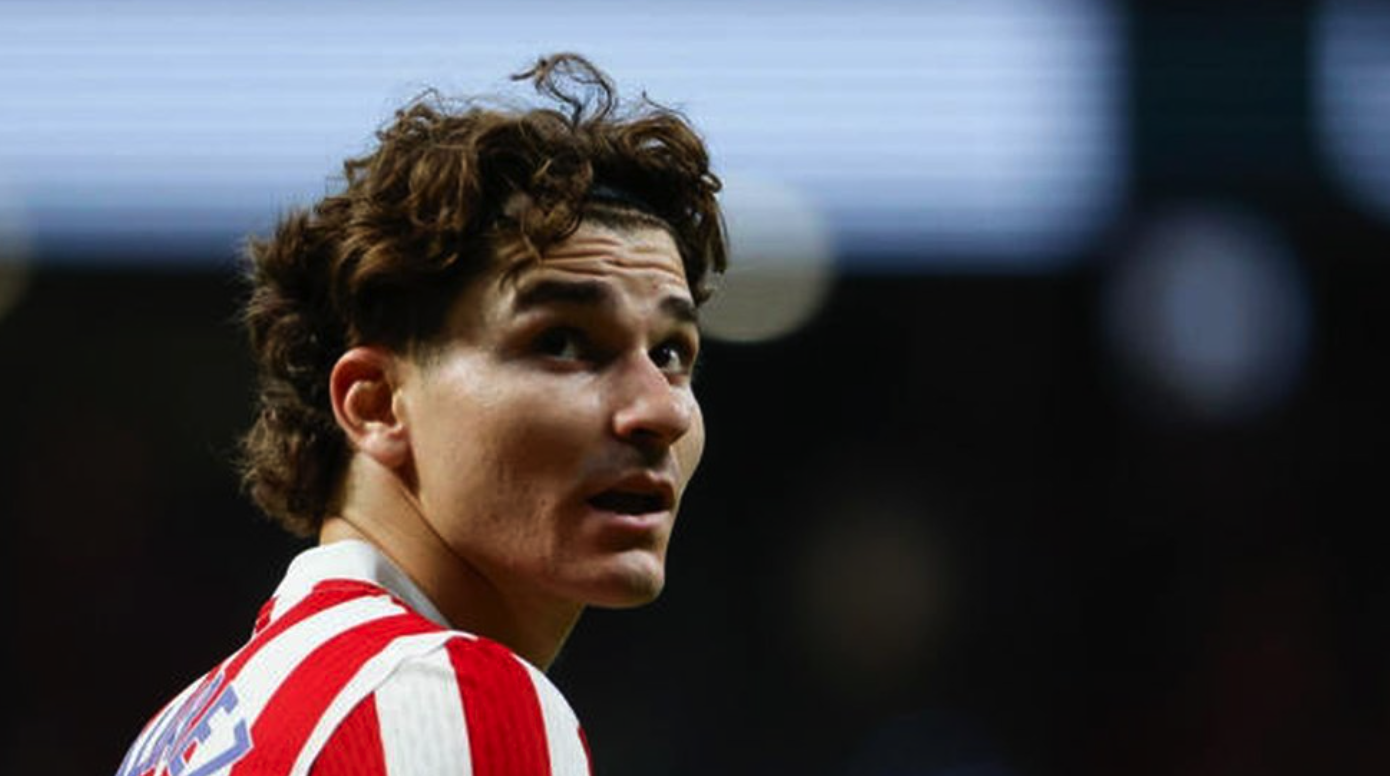
Barcelona chased Julián Álvarez all summer. And failed. But were there any real winners or losers from this summer-long saga?
The saga cost both clubs a summer of noise, left Barcelona without the striker it wanted and Atleti with a forward who wants to leave. The social media banter was legendary, but the outcome helped no one.
Barcelona spent most of the summer trying to sign Julián Álvarez, and Atlético Madrid spent most of the summer making clear it would not sell him to Barcelona at any price. In July, Atlético chief executive Miguel Ángel Gil Marín put a number on it: “We did not accept the €100 million offer, nor will we accept one of 150 or 200.” He went further, addressing Joan Laporta directly: “He said his offer wasn’t infinite. Our answer is infinite: we don’t want to transfer him.”
None of that stayed inside the two boardrooms. Atlético and Barcelona fans spent the summer trading insults across social media, the latest round in a rivalry that has been fraying for years over exactly this kind of transfer standoff. Spanish sports media covered the war of words as its own story, separate from whether the transfer would happen at all.
By deadline day, Atlético supporters were angry enough at Álvarez himself over perceived disloyalty. Arsenal was floated throughout as the move Atlético found acceptable, since selling to a Premier League club cost them nothing competitively at home. Even that fell through.
Álvarez stayed at Atlético. Barcelona ended the window with Gabriel Jesus. No one really got what they wanted.
I spent the entire window watching this unfold with mild curiosity rather than a ton of emotional investment. For what it is worth, I have often said over the past year that the market for elite No. 9s is dire. There is literally no one worth €100M. I have never seen Álvarez as a generational No. 9 or No. 10, certainly not in the bracket of Robert Lewandowski or Luis Suárez, players who have worn Barcelona’s shirt and decided seasons.
He is, however, an excellent footballer with serious pedigree and can add good firepower to a well-coached team. If he had come, Hansi Flick would not simply have dropped him into Lewandowski’s position and carried on as before. His movement, pressing and willingness to play between the lines would have made Barcelona’s attack different, and watching Flick work out how that fitted alongside Lamine Yamal and Raphinha would have been genuinely interesting.
I would have been happy if he had come, but if he didn’t, it was never going to feel like the end of the world to me. Barcelona would find another solution. I was never deeply invested in the transfer, and I did not feel particularly bad when it collapsed.
What stayed with me much more was the question of why it became such an ugly public spectacle. Why had almost every recent negotiation between Barcelona and Atlético turned into something larger, a battle about valuation, memes, pride and status? The more I thought about it, the more it felt that there had to be something behind the hostility beyond whether Álvarez was worth €100 million or more.
That is where the evolution of football and the ownership of Atlético start to matter.
Who actually owns Atlético now, and what do they want from it
Atlético Madrid has had two separate outside investors in the past five years. Ares Management acquired 33.96 percent of Atlético HoldCo in 2021, the vehicle that then controlled 65.98 percent of the club. HoldCo subscribed roughly €120 million of Atlético’s €181.8 million capital increase, leaving Ares with an indirect minority position. Apollo Global Management moved much further: Apollo Sports Capital completed its acquisition of a majority stake, reported at 55 percent, in March 2026, at a valuation reported between €2.2 and €2.5 billion depending on the outlet.
Ares remains a shareholder alongside the club’s existing owners, though how much of its original stake it retained is not something I could find anywhere in the public record.
Now let’s spend a minute understanding Apollo.
Apollo is not a football club owner in the traditional sense. It is a private credit and alternative asset manager, extremely well known for buying underperforming, highly indebted or complex companies, turning them around through extreme cost-cutting, restructuring and operational overhaul, and then selling them for a massive profit.
Atlético sits inside a dedicated $5 billion sports investment vehicle the firm has recently launched to buy into sport as an asset class, mostly through credit and hybrid structures rather than straightforward equity. Atlético is that fund’s first controlling stake in a major European club, its flagship position, though not Apollo’s first brush with European football. Apollo’s credit arm had already made an £80 million private-credit loan to Nottingham Forest in the Premier League, a debt position rather than ownership.
Firms like Apollo do not buy assets to hold them forever for sentimental reasons. The model is to acquire something undervalued, grow its worth over a defined period and eventually realise that gain through a sale, a partial exit or steady cash extraction. Apollo’s own language on the Atlético deal is notably restrained: the firm says it will partner with the club’s management “to support the Club’s financial strength, sporting competitiveness and community impact,” and approved up to €100 million in additional capital for squad and infrastructure investment.
There is no line in that statement about trophies or the Champions League specifically. But the infrastructure piece points at where the real thesis sits. Atlético is developing an €800 million Ciudad del Deporte sports and leisure project around its own stadium, and that does not pay off as an investment unless the club is worth more in five years than it is today.
In football, a club’s brand value is driven heavily by trophies, prize money, broadcast reach and sponsorship pull that come with actually winning tournaments. Sporting success and capital access work in a loop, each one funding the next.
That is pressure that the entire Atleti board will feel constantly.
Atlético does not need to sell one Argentine forward to survive. What it needs is to look and act like a club capable of competing with the top European clubs in terms of silverware.
It cannot be one that sells its best players.
Refusing to sell Álvarez to Barcelona at any cost was never really all about Álvarez. It was more of a signal and a piece of brand positioning that Atlético is a top club whose marquee players are not for sale. This is actually good for the club and for its supporters. Every club wants to be seen as elite, and its fans want to feel imperious.
There is nothing wrong with either stance.
The gap between the spending, the trophies and the noise
But that signal came at a real cost, and the numbers behind it are stark. The simplest way to understand the gap is to analyse how much Barca and Atleti spent on recruiting players, what they recovered through sales, what remained as net spend and how many trophies that spending delivered.
Across the seven transfer windows from the summer of 2020 through the summer of 2026, a period of six years, the Transfermarkt dataset produces this comparison:
SIX-YEAR TRANSFER TOTALS: SUMMER 2020 TO SUMMER 2026

+----------------------------------+-------------------+-------------------+
|                                  | ATLETICO MADRID   | BARCELONA         |
+----------------------------------+-------------------+-------------------+
| Total spent on player signings   | €805.65 million   | €651.84 million   |
| Total received from player sales | €556.88 million   | €608.46 million   |
| Net spend                        | €248.77 million   | €43.38 million    |
+----------------------------------+-------------------+-------------------+

Sources:

Atletico Madrid:
https://www.transfermarkt.com/atletico-de-madrid/transfers/verein/13

Barcelona:
https://www.transfermarkt.com/fc-barcelona/transfers/verein/131
Method and sources: the totals are arithmetic sums of Transfermarkt’s published income and expenditure figures for each season. Atlético: 2020/21, 2021/22, 2022/23, 2023/24, 2024/25, 2025/26 and 2026/27. Barcelona: 2020/21, 2021/22, 2022/23, 2023/24, 2024/25, 2025/26 and 2026/27.
That leaves a €205.39 million gap between the clubs’ net deficits (€248.77 million minus €43.38 million). Atleti had a deficit 5.7 times the size of Barcelona’s. The underlying fees are estimates rather than audited accounts, and they do not include wages, agent fees or transfer amortisation.
Bluntly put, while Atleti have truly become a serious player in the transfer market in recent years, that spending has not translated into equivalent sporting success.
Between the 2020/21 season and now, Atlético has won exactly one men’s first-team trophy, the 2020/21 La Liga title, with zero Copa del Rey and zero Supercopa since. Even that title was powered heavily by Luis Suárez, the striker who left Barcelona to join Atlético for no fixed fee and up to €6 million in variables. Suárez scored 21 league goals and scored the winner on the final day to secure the championship.
Barcelona, despite the much smaller net deficit, won eight trophies in the same time frame: three league titles, two Copa del Rey wins and three Supercopas. Atlético came closest to breaking the drought last season, reaching the Copa del Rey final and a Champions League semi-final against Arsenal, and lost both.
Spending more, selling less and winning less is not a comfortable position for a club whose entire ownership thesis depends on becoming a bigger, richer brand.
Now it would be easy to read that gap and ask why Barca had five years of registration problems despite having a smaller net deficit, while Atleti had none.
Why was Barca “broke” while Atleti were just Atleti when both had very poor operating income throughout?
The answer lies in how both clubs presented their balance sheets.
La Liga’s Squad Cost Limit, the mechanism that governs how much any club can spend on its playing staff, is calculated from a club’s budgeted revenue minus its non-sporting costs and debt repayments. Joan Laporta’s decision to pull forward €500 million of losses into one season as an extraordinary loss and publish it in the annual budget pushed Barcelona’s accumulated debt and negative net equity to a point where its cap fell to minus €144 million, a number that made registering new signings, or even existing high earners, impossible under the normal rule.
Why Laporta chose to do that is anyone’s guess, but suffice it to say that perhaps painting an incredibly bleak financial picture was necessary for Barca to achieve some other extraordinary goals without causing fan rebellion.
Atlético never faced anything like Barcelona’s registration crisis, despite running a larger cumulative transfer deficit over the same years.
Atlético’s revenue and debt-repayment profile kept its calculated spending limit positive throughout, while Barcelona’s did not, a difference in how the two clubs’ finances sat against the same formula rather than proof that one club spent responsibly and the other did not.
Where does that leave us with the Álvarez standoff?
Let’s, for a moment, remove the social media banter and strip the emotion out of this summer’s fallout. Atlético’s refusal to sell does make some sense on its own terms. A club backed by a private capital fund with an €800 million development project around its stadium and trying to build its long-term brand value cannot be seen selling its best attacker to a direct rival, whatever the fee.
The argument for refusing a deal that strengthens Barcelona is perfectly rational and worth fighting for.
However, I am not so sure that turning that refusal into an ugly public war with social media memes helps anyone.
Let’s look at the core question.
Once a player has decided that he wants to move, what does winning that public war actually achieve?
The selling club proves it cannot be bullied. That’s good for the fans. The buying club gets to accuse the seller of acting unreasonably. More social media fodder for fans. Executives on both sides defend their authority, while supporters inherit the anger and eventually direct some of it at the player.
But none of that creates sporting value.
The buying club still needs a footballer. The selling club still has a player whose future may point somewhere else; only now, he returns to a dressing room under greater suspicion from his own fans.
Egos win. The clubs and their supporters almost never do.
Sporting competitiveness only grows the club’s value when it becomes sporting success. Otherwise, Atlético has bought a summer of hostile headlines and a fanbase turning briefly on its own best player in exchange for a message sent rather than a trophy won. Barcelona has spent three months trying to solve a problem without actually solving it.
None of this is even new for Atlético where Barcelona is concerned. In 2022, with Antoine Griezmann still contracted to Atlético on loan terms that would trigger a mandatory €40 million purchase owed to Barcelona if he played at least 45 minutes in half the matches for which he was available, Simeone was reported to be bringing him on around the 60th minute of nearly every game, keeping him just under the threshold. The dispute eventually settled with the fee cut to €20 million plus up to €4 million in variables.
Every confirmed permanent transfer between the two clubs since 2020 has gone from Barcelona to Atlético, never in reverse. Gil Marín’s current stance is not a new reaction. It has been his stand for years now.
Barcelona’s actual problem was never really about winning this specific standoff. Gabriel Jesus is now the centre-forward in the first-team squad, with Hamza Abdelkarim the younger specialist option behind him, but Jesus is a short-term solution rather than the long-term answer. The centre-back cover behind Pau Cubarsí is also thinner than it has been in years.
Atlético keeping Álvarez did not create either of those problems. It just meant Barcelona had to solve them without the player it spent a summer fighting for.
The examples of Luis Suárez and Harry Kane make the point clearer. Liverpool blocked Arsenal from signing Suárez in 2013 and got one extraordinary final season from him, but it did not persuade him to build his future at Anfield or lead Liverpool to a Premier League or Champions League trophy. A year later, he left for Barcelona, where his first season ended with a historic treble.
Tottenham blocked Kane’s desired move to Manchester City in 2021 and received two more elite seasons from him without any silverware. He still left for Bayern for about €100 million in 2023. He has since won the Bundesliga, broken scoring records and spoken openly about being settled in Munich.
In both cases, keeping the player bought useful time. It did not repair the relationship, change the eventual destination or the fortunes of the clubs who blocked the move.
Liverpool handled the same turning point better with Philippe Coutinho. The club rejected Barcelona in the summer of 2017 and kept him for another half-season. Coutinho remained professional, but Jürgen Klopp later explained that his mind had gone and Liverpool risked getting only a fraction of the player if it forced him to continue. Once the club accepted that his position would not change, it sold him for a fee reported at up to £142 million. Liverpool had just committed £75 million to Virgil van Dijk and later spent £67 million on Alisson. The Coutinho fee almost matched the cost of both, and those two players became the defensive spine of a Champions League and Premier League-winning team.
It was also one of the transfers that made Barcelona almost bankrupt.
That is what recovering value is supposed to look like: not winning a public argument, but converting a player who wants to leave into players around whom the next team can be built.
Arsenal’s handling of Alexis Sánchez followed a similar pattern. Manchester City had a £60 million deadline-day bid accepted in 2017, but the move collapsed when Arsenal could not sign Thomas Lemar as his replacement. Six months later, with Sánchez still refusing a new contract and his market leverage disappearing, Arsenal moved him to Manchester United in a straight swap for Henrikh Mkhitaryan.
The club had turned a £60 million asset into a distressed exchange because it allowed the contract, rather than the sporting plan, to dictate its decision.
This is where the sunk-cost fallacy comes in. The fee already paid for a player is gone. Owners may hate admitting that the investment has not worked as imagined, but keeping an unhappy player does not recover the old fee. It only risks reducing the value that can still be recovered. This applies to all clubs, including Barca.
The rational question is whether the player’s expected contribution from this point is worth more than the best available transfer fee and what that money can build elsewhere.
There is no public evidence that Álvarez has downed tools or refused to play for Atlético. His contract runs until 2030. Keeping him now may therefore be entirely rational, and hopefully he will win many trophies for Atleti and become the marquee player they signed him to be.
Otherwise, Atleti should control the timing and destination, recover as much value as the market will pay, and reinvest in players who actually want to be part of its project.
Fans may enjoy seeing their club win an argument with Barca for a few days, but they will ultimately live with the football consequences long after the presidents stop trading statements..
Gabriel Jesus: The Pep Question
Barcelona bought a striker who used to be brilliant for a manager who made him brilliant. The question is can he revive those years again?
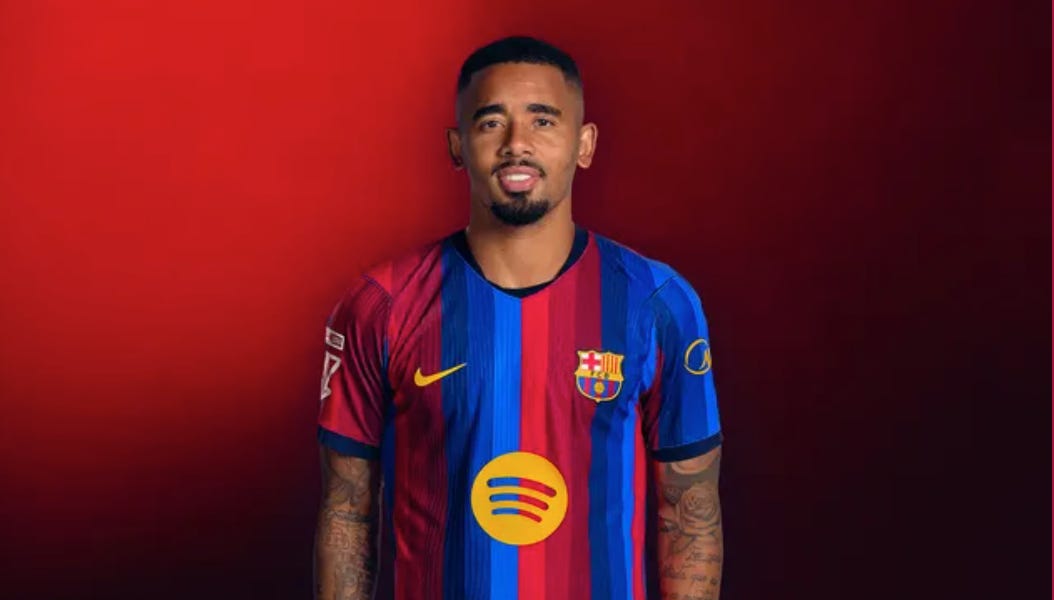
£8.6 million. €10 million fixed, with up to €4 million in add-ons and a 20% sell-on clause sitting with Arsenal. A three-year contract to 2029. That is the price for a player Arsenal signed for £45 million in 2022 and who could not get onto the pitch last season.
Gabriel Jesus arrived on deadline day, and Barca fans are excited and nervous about his signing in equal measure. They have every reason to be, given his injury record. With his kind of extensive injury list, any fan base would be worried. For now, however, none of us knows whether his knee will survive. Conjecturing feels opportunistic. What we do know is how he played under Pep.
So, let’s talk about what that version of him looked like, because it’s relevant.
The Pep version
Jesus arrived at Manchester City in 2017 as a teenager. He was not a poacher. Not a target man. He was a forward who could function as the point for a false nine, drop deep to combine, spin in behind and press like his life depended on it.
City under Pep pressed from the front more relentlessly than almost any team in Europe, and Jesus was frequently the trigger. He was the player who decided when the press was on, who cut passing lanes with his positioning rather than just his legs, and who forced centre-backs into the mistakes City’s midfield then hoovered up thirty yards further back. Watch the City sides of 2020 to 2022 and Jesus is rarely the loudest name in the highlight reel, but he was often the reason the ball was won back early in the first place.
That’s the profile Hansi Flick wants. Flick’s Barcelona side presses high, presses often and asks its forwards to do defensive work that a lot of strikers simply refuse to do. It’s not a coincidence that Flick himself said he was “a little surprised we had the opportunity to get him”, adding: “I really love him, I like his style to play football, it fits with our style.” He wasn’t talking about goals. He was talking about the pressing trigger City fans spent five years taking for granted.
The years since
In January 2025, two years into his Arsenal stint, Jesus suffered a serious knee injury in an FA Cup tie against Manchester United that wiped out most of the following year. ACL injuries are a nightmare for any footballer, but for Jesus, it was not the first incident.
He had four separate knee problems across three seasons before the big one even happened: a hundred days lost in 2022/23 alone, followed by a string of shorter flare-ups throughout 2023/24. This was not a freak accident that struck a previously durable player out of nowhere. It was a joint that kept breaking down in smaller ways before it broke down completely.
The big one, when it came, was as serious as knee injuries get: a cruciate ligament tear. Nearly eleven months out. Forty-six games missed. By the time last season rolled around, he was fourth in the pecking order behind Kai Havertz and Viktor Gyökeres, managing just three Premier League starts all season.
Three starts. For a player who was genuinely one of the best pressing forwards on the planet three years ago.
That is the risk. This isn’t a one-off setback to recover from. It’s a knee with a documented history of recurring trouble that culminated in a full ACL reconstruction. A serious injury like that does not just cost you months on the sidelines. It costs you the explosiveness that made the pressing profile work in the first place. The Jesus who triggered City’s press was doing it at a sprint, repeatedly, for ninety minutes. Whether that same engine survives a major reconstruction on top of three years of niggling knee trouble is not something anyone can promise Barça, least of all Jesus himself, however much he may want to.
To his credit, he isn’t hiding from it. Asked directly how he felt about being Barça’s plan B after the Álvarez pursuit collapsed, Jesus said plainly: “I’m not offended.” On the knee itself: “My knee and my body are fine, I’m ready to give my best.” That’s the right answer from a player who has clearly had the conversation about what this move actually is.
Where Flick can actually use him
Jesus is probably not going to get twenty consecutive league starts during which we all hope his knee holds up. He will mostly be a rotation option in exactly the matches where his pressing profile is most valuable and his minutes can be managed: midweek Champions League nights against opposition that likes to play out from the back, where an early, aggressive press from a front line that includes Jesus can disrupt a game before it starts; cup rounds against lower-table sides, where Barça need goals but can afford a slower recovery week on either side; second-half introductions in league games that are still open at the hour mark, when legs are tiring elsewhere on the pitch and a fresh, high-intensity presser can change a match’s rhythm in fifteen minutes without needing ninety; and games where Raphinha can be rested to save his hamstrings for the crucial Champions League fixtures.
What he won’t do is play as an auxiliary winger stretching the width or as a target man holding the ball up with his back to goal. Those were never his games, even at his City peak, and asking a rebuilding knee to do unfamiliar work is asking for trouble.
What he can bring, however, is a genuine second reading of a Champions League fixture list that currently has PSG waiting for us in the league phase. A forward capable of instigating a high press against elite opposition, even for sixty minutes rather than ninety, is not nothing. It’s a specific tool for specific nights.
Was this the marquee striker signing this squad needed? No, and I don’t think it’s controversial to say so, not with a genuine, reliable No. 9 still absent from this squad and January reportedly earmarked for exactly that search. But £8.6 million for a player whose ceiling, even diminished, was baptised in Pep’s pressing system is almost a risk-free piece of business. If the knee holds and Flick is disciplined about how he deploys him, Jesus can become a real weapon in specific matches rather than a reliable weekly starter. He can revive his career, give joy to countless fans and help Barca at the same time.
If it doesn’t hold, Barca will not have lost much, and Jesus will at least have had a second chance, which he deserves.
That’s not a thrilling verdict. It’s an honest one. Barcelona didn’t sign a superstar on deadline day. Barca signed a calculated bet on a player who used to be one of the best pressing forwards alive, at a price that reflects exactly how much risk that carries
Barcelona Pass €1 Billion in Revenue
The club confirmed its first billion-euro season this week. Let’s take a look at the debt structure behind it, and what actually funds it
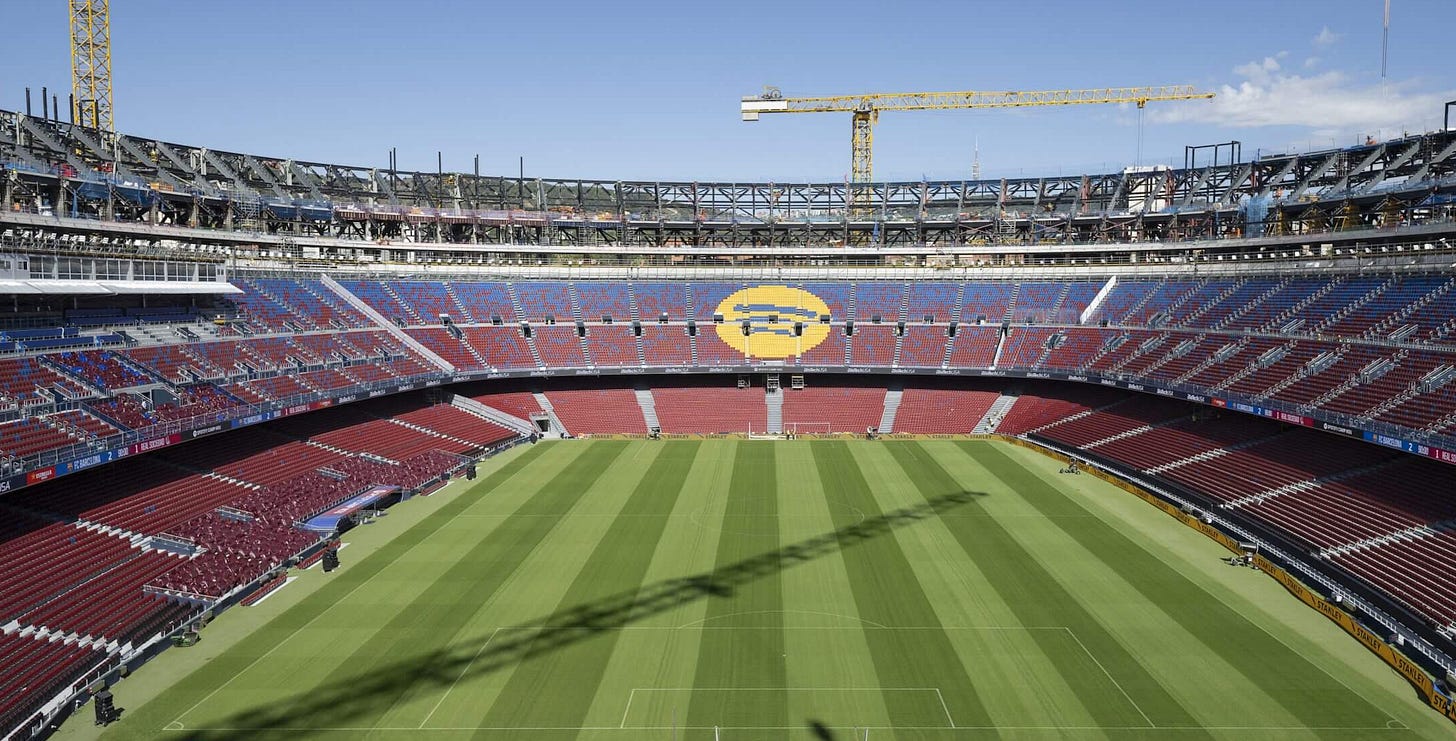
Barcelona’s revenue passed €1 billion in a single season for the first time in the club’s history. The club’s board confirmed the figure at a meeting on 3 September 2026 and convened the Ordinary General Assembly for 19 September 2026, when the full 2025/26 accounts will be presented to members. The audited figures, prepared by Crowe Global, are due to be published on the club’s website on 7 September.
The precise euro figure has not yet been released. “Exceeded €1 billion” is the club’s own wording, and no more specific number has been confirmed.
What drove the number
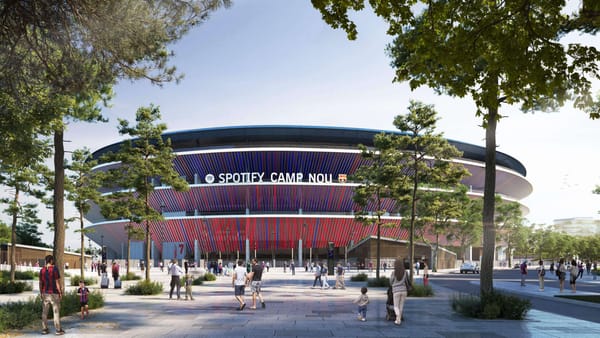
The club attributes the record primarily to stadium operations, following the men’s first team’s partial return to Spotify Camp Nou in November 2025, alongside continued growth in sponsorship income and record merchandise sales through the club’s licensing subsidiary. That income was generated while the team spent part of the season playing at Estadi Johan Cruyff and the Estadi Olímpic before the move, and with Camp Nou itself capped at roughly 42,000 seats rather than full capacity once matches resumed there.
That detail is the relevant sporting context, and it is the correct frame for this figure. Barcelona’s revenue is built overwhelmingly on the performance and visibility of the football product: broadcasting rights tied to results and competition reach, sponsorship priced against the size and engagement of the club’s following, ticketing and matchday income tied directly to stadium capacity and occupancy, and merchandising driven by first-team form and player profile. The stadium is not incidental to the number. It is the product’s primary point of sale, and it operated all season at a fraction of its intended capacity. The revenue record was set before the club’s main commercial asset was actually finished.
Barcelona’s audited revenue for the prior season, 2024/25, was €994 million (Table, row 1), an increase of €100 million on 2023/24. The club’s own budget for 2026/27, the season now starting, projects revenue surpassing €1.1 billion. The board’s own forecast has this season’s total continuing to rise, not levelling off.
The club also confirmed positive ordinary results for a third consecutive season, which it describes as meeting its objective of financial equilibrium. The ordinary result measures the recurring operating business, including ticketing, broadcasting, commercial income, wages and operating costs, separately from one-off items such as asset impairments or financing charges, which sit in the net result instead. Spanish financial reporting on the announcement notes that this may be the first time the club has crossed the billion-euro threshold without relying on “palancas”, the one-off asset and stake sales the club has used in previous seasons to balance its books. That claim has not yet been confirmed against the audited accounts, which are due on 7 September.
The debt
Barcelona’s total financial liabilities, according to the most recently published audited accounts (Annual Report 2024/25, year ended 30 June 2025), stood at €2,083.6 million (Table, row 6). Of that, €1,429.3 million was long-term and €654.3 million was short-term (Table, rows 7–8).
Two-thirds of the club’s total financial debt is not due for repayment in the near term.
The largest component of the long-term debt is the financing for the Espai Barça stadium project, run through a dedicated, regulator-approved securitisation vehicle, “Espai Barça, Fondo de Securización,” established on 24 April 2023 and approved by Spain’s securities regulator, the CNMV. At the close of the reporting period, the fund had issued €884 million in bonds and subscribed €491 million in loans, within a maximum financing envelope of up to €1,500 million for the project (Table, rows 9–11).
On 26 June 2025, the fund partially refinanced its structure, issuing €424 million in new bonds to replace most of the loans originally subscribed. The new bonds carry a lower average financing cost than the loans they replaced, with amortisation running between 2033 and 2050 (Table, row 12).
This is worth explaining precisely, because “bond” and “loan” are not interchangeable terms, and the distinction matters here. A bank loan remains a liability owed to a single lender until it is repaid; the bank carries the credit risk for the life of the loan. A bond is sold to the market: when the Espai Barça fund issues a bond, it sells that debt directly to institutional buyers, including pension funds, insurers and asset managers, who purchase it upfront in exchange for scheduled interest payments through to maturity. Once that sale is completed, the debt is held by those investors, not by a single creditor waiting for repayment. The €424 million issued in June 2025 has already been placed with buyers on that basis; the transaction is done, and what remains is the scheduled servicing of interest and principal through to the stated maturities. That is a structurally different position from a loan that a lender can call in or renegotiate at will.
The accounts state that the financing is intended to be repaid through the stadium’s own operating income: “the return of the financing is guaranteed, mainly, through the cash flows that the Espai Barça is estimated to generate once completed.” Barcelona’s external consultants project that the finished stadium will generate approximately €250 million a year in sponsorship, naming rights, ticketing, hospitality and VIP box income once the renovation is complete (Table, row 13). The accounts state that this income is earmarked to service the debt, even after accounting for further delays to the stadium’s return.
Net equity as of 30 June 2025 was negative €153 million, following extraordinary items including a €52 million impairment on the value of subsidiary Barça Produccions (Table, rows 14–15). Net debt under the criteria set by La Liga, which excludes Espai Barça-related debt, stood at €469 million, down from €559 million the year before (Table, row 16). Separate Spanish financial reporting on this week’s announcement states that Barcelona is expected to close the 2025/26 financial year with an overall net loss once Espai Barça financing costs are included, despite the positive ordinary result.
This is the same pattern that the 2024/25 accounts show directly, with a positive ordinary result of €2 million against a net loss after tax of €17 million (Table, rows 17–18), the gap driven almost entirely by non-recurring write-downs rather than football operations.
Analysis
Two figures from the same set of accounts can point in different directions without contradicting each other. The ordinary result measures whether the club’s recurring operations, including running the team, the stadium, and the sponsorship and merchandising business, generate a surplus in a given year; for three consecutive seasons, they have. The net result additionally includes the financing costs of a stadium project that is not yet complete, funded predominantly through long-dated bonds already sold to institutional investors on a repayment schedule running to 2050.
The revenue itself is a function of the sporting product: broadcasting value tracks competition performance, sponsorship value tracks visibility and results, and matchday income tracks a stadium that spent the entire season below its designed capacity. A billion-euro season produced under those conditions is a stronger commercial result than the same figure produced at full stadium capacity would be, because the club has not yet realised the revenue that the finished building is designed to generate. The 2026/27 budget projection of over €1.1 billion reflects that expectation directly.
The debt is real and material. €2.08 billion in total financial liabilities is a significant figure for any football club. But it is structured overwhelmingly as long-term, market-placed financing tied to a specific asset with a defined future income stream, rather than as a short-term liability against the club’s general operations.
Compiled financial data
Source: FC Barcelona, Annual Report 2024/25 — Consolidated Annual Accounts for the year ended 30 June 2025, audited. Figures in millions of euros unless stated. Page references are to the published PDF.
#   Metric                                                Figure                       Ref
--  ----------------------------------------------------  ---------------------------  ----------------
1   Operating income, 2024/25                             €994m (+€100m vs 2023/24)    p.227
2   Sponsorship income, 2024/25                           €259m (record, +22%)         p.227
3   Merchandising income, 2024/25                         €170m (record, +55%)         p.227
4   Revenue foregone (reduced-capacity stadium), 2024/25  ~€100m                       p.227
5   2025/26 budgeted revenue (board target)               €1,075m                      p.229
6   Total financial liabilities, 30 Jun 2025              €2,083.6m                    Note 14, p.300
7   — of which long-term (non-current)                    €1,429.3m                    Note 14, p.300
8   — of which short-term (current)                       €654.3m                      Note 14, p.300
9   Espai Barça fund — bonds issued                       €884m                        Note 14.1, p.303
10  Espai Barça fund — loans subscribed                   €491m                        Note 14.1, p.303
11  Espai Barça financing — max envelope                  up to €1,500m                Note 14.1, p.303
12  Jun 2025 refinancing — new bonds vs loans             €424m; amort. 2033-2050      Note 14.1, p.303
13  Projected annual income, completed Espai Barça        ~€250m/year                  p.255
14  Net equity, 30 Jun 2025                               -€153m                       p.229
15  Impairment on Barça Produccions, 2024/25              -€52m                        p.228
16  Net debt (LFP/La Liga criteria)                       €469m (vs €559m, 30 Jun 24)  p.228
17  Ordinary result, 2024/25                              +€2m                         p.228
18  Net result after tax, 2024/25                         -€17m                        p.228
19  EBITDA, 2024/25                                       €191m                        p.228
20  Espai Barça total project value                       €1.45bn                      p.147
21  Cumulative Espai Barça costs to 30 Jun 2025           €974.9m                      p.285
Two La Masia exits, and the bittersweet feeling around each
Héctor Fort and Marc Casadó both got real chances under Flick. Neither could hold onto one.

La Masia has given the game of football some absolute luminaries. That is undoubted. The 2007-born class alone handed Barcelona’s first team four regular starters and that is the story the academy gets to tell about itself.
It is a genuinely remarkable one.
Yet, making it to the first team remains the exception rather than the rule. For every five academy graduates who break through, ninety-five do not. Though they may miss the spotlight, many of these lesser-known players carve out successful careers at other clubs, finding fulfillment far from the hallowed turf of the Camp Nou.
This week Barcelona sold Héctor Fort permanently to Real Sociedad and loaned Marc Casadó to Deportivo de La Coruña. Both La Masia products. Both played first team football for Hansi Flick’s Barcelona.
Both are now gone. That is the more common La Masia story.
The story of Marc Casadó
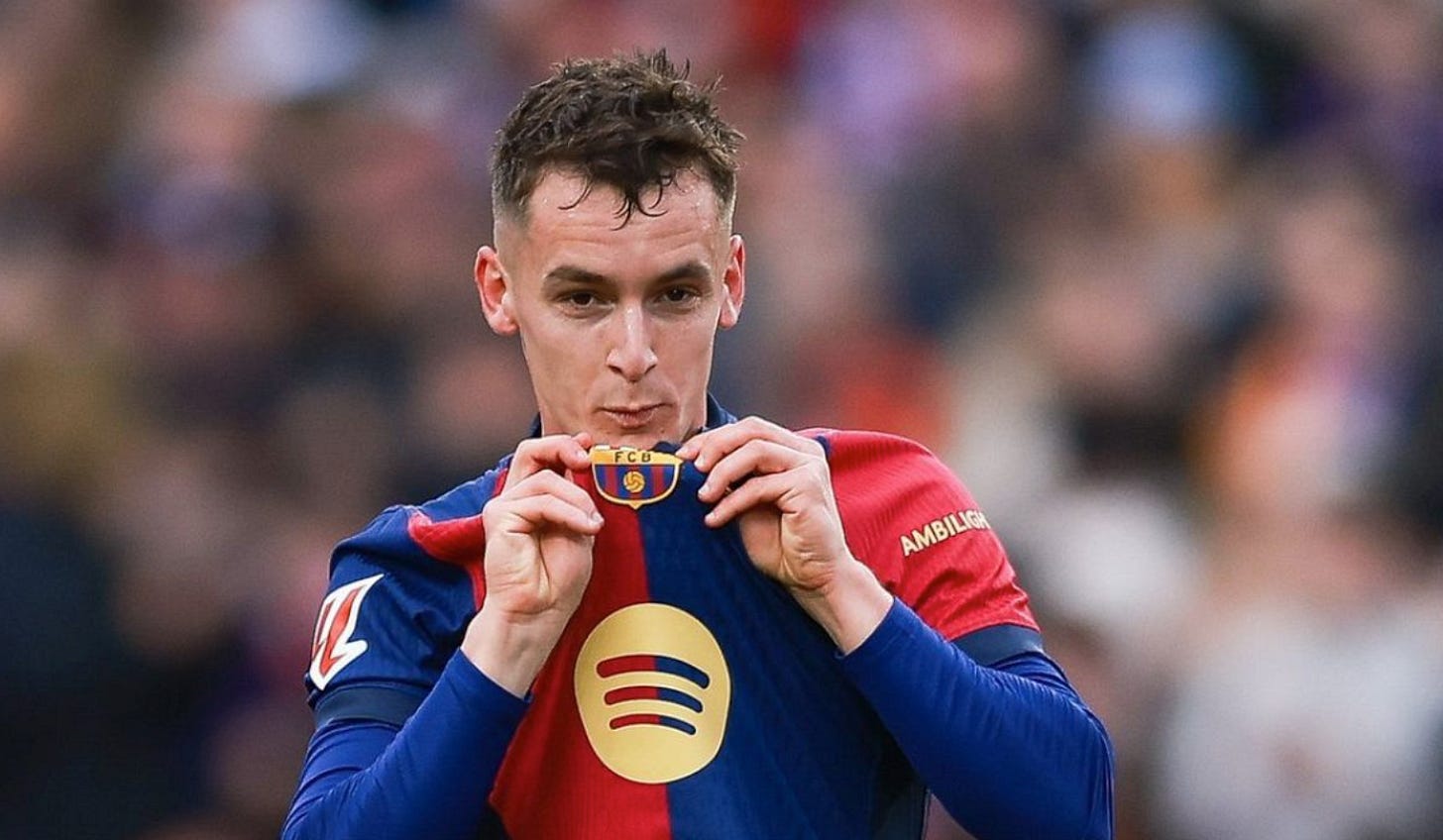
Casadó had a dream season with the first team in Hansi Flick’s first season. Devoid of starters and handicapped by injuries, Flick was forced to play him and he took that opportunity with both hands delivering some incredible games. For a moment (just for a moment), it almost felt like he had arrived. That he belonged. But there was always that paper trail, where the youth coaches had been explicit about what limits him.
Barça Atlètic coach Rafa Márquez, who worked with Casadó as he came through the academy, identified the issue directly: “His enthusiasm leads him to lose his bearings. He wants to cover too much space and leaves his zone. He needs to be more positional.” It is a specific description of a defensive midfielder whose primary defensive tool — was also the thing that pulled him out of the position his job required him to hold. Marc Casado did not lack the attributes. It’s just that the attributes come with a cost, which Flick’s system, which relies on a disciplined holding midfielder occupying a specific zone in front of the back line, has less patience for.
Casadó’s real value was never just the tackling. It was the connective work around it. He could receive on the half-turn under pressure and find the pass that broke a defensive line, not just recycle sideways. The numbers back that up: an average of close to 66 passes a game at better than 90% accuracy in league football, good enough to rank in the league’s top ten for actions won in opposition territory.
That is the profile of a midfielder doing far more than screening the back four. The same analysis points to the scanning before he received the ball, the constant small adjustments that opened passing lanes for his centre-backs, and a sense for third-man combinations that let him find space behind an opponent’s first line of pressure.
Barcelona’s counter-press depends on winning the ball back and moving it forward before the opposition can reorganise, and Casadó was a genuine asset there — quick, direct passes into space that released Lamine Yamal or Raphinha in behind.
But being energetic inside a system is different from controlling it. Casadó rarely beat a press by running through it. He preferred to recycle possession rather than carry the ball forward, and when he did try to dribble past a man, his approach was often predictable enough for defenders to anticipate and close him down. He could hold the ball a beat too long under pressure, inviting exactly the kind of trouble a holding midfielder is supposed to avoid, and he could be caught reacting a fraction late once a press was actually on. That combination — an elite defensive midfielder by output, but conservative and occasionally slow to react — is what made him useful without making him indispensable.
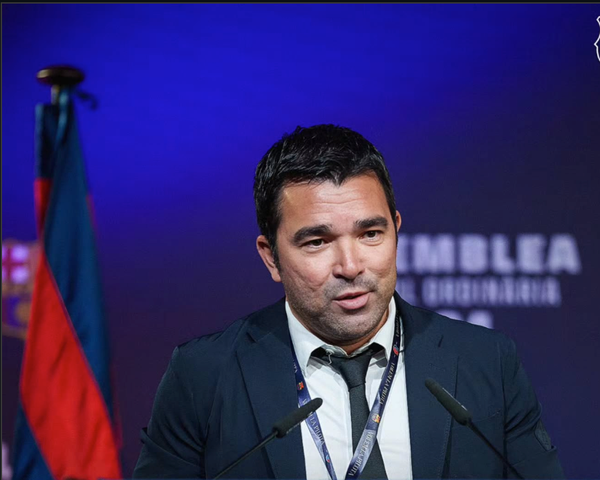
Layered on top of that tactical question was a much simpler roster mechanic. Barcelona signed Rodri from Manchester City on 18 August 2026, in a deal reported at €60 million, (excluding add-ons) on a four-year contract. Barcelona’s midfield was already “overbooked” with too many bodies in the same positional bracket, even before Rodri arrived. Fitting his reported wages inside Fair Play meant the club had to move players out. Casadó was one of the players who was told directly, that his path forward ran through another club. Sporting director Deco agreed a permanent sale to AS Monaco worth around €23 million in early June.
Casadó rejected it.
Barcelona wanted a clean sale and immediate funds. Instead, deadline day arrived with Casadó still at the club. The eventual outcome was a loan to Deportivo until 30 June 2027, with a €30 million buy option rather than a guaranteed fee.
Casadó addressed the situation himself at Barcelona’s airport on his way to Deportivo. Asked how the club had handled his departure, he said: “Ya hemos hablado con el club de cómo hemos gestionado las cosas y cómo lo han hecho ellos. Todos tenemos cosas que mejorar y todos hemos hecho cosas bien” — “We’ve already spoken with the club about how we’ve handled things and how they’ve done it. We all have things to improve, and we’ve all done things well.”
Casado is 22, with two La Liga titles, a Copa del Rey and two Spanish Super Cups from his time in the first team. He is not a fringe squad number being moved on. He is a title-winning contributor before the roster arithmetic and wage bill made the decision for everyone.
Héctor Fort
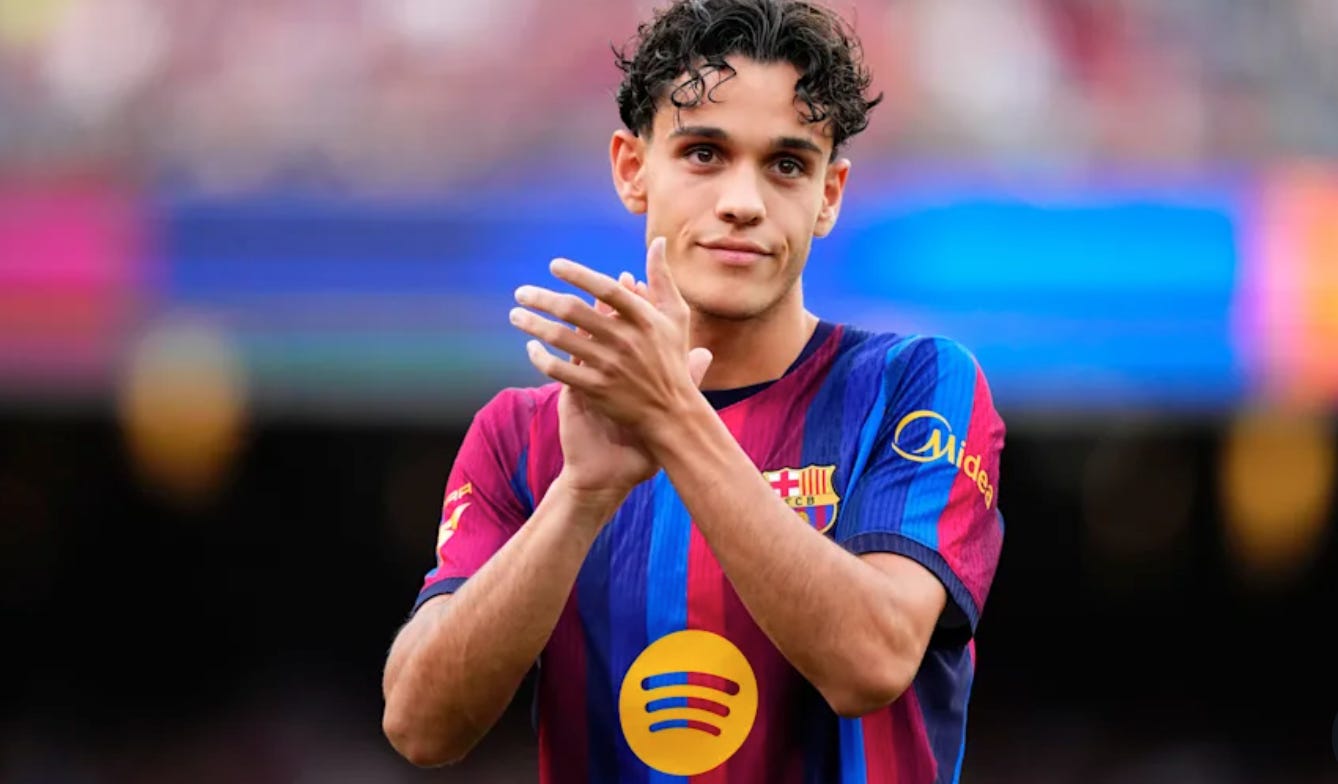
Fort’s case looked, for a long time, like a numbers problem without much tactical detail behind it. He was “unable to cement a place in the first team,” a phrase repeated across multiple outlets without much elaboration. Jules Koundé had held down right-back for Flick for most of the past two seasons. Alejandro Balde and Gerard Martín covered the left. There was genuine competition for a limited number of starting minutes, from players with senior international experience.
Fort, at 19 and 20, did not yet have that experience.
Fort’s clearest weapon is his delivery. Scouting notes on his game single out the weight and shape of his crossing — a looped, curling ball to the back post. That is a genuine route to goal, and it is not a small thing for a young full-back. Flick himself has praised the physical tools that go with it — “he is very quick and also has great technical quality” was the coach’s own description. He is also credited with controlling the ball well and reading situations intelligently, the product of a full La Masia education.
The gap is in how that talent gets used, and in what happens without the ball.
Fort’s instinct in possession is often to drift infield into the half-space rather than stay pinned to the touchline. This is useful in some structures, but it also causes a full-back who is supposed to provide width to get distracted. The result - an end product which still needs a bit of sharpening.
A CIES Football Observatory study of his early Barcelona appearances placed him in just the 33rd percentile for involvement in build-up play — a marginal figure for a full-back in Flick’s system. Defensively, the same technical profile left him short in a straight foot race or a physical duel. His defensive game needed more aggression and a stronger ability to hold his ground against quicker attackers. In Flick’s high defensive line, that could become a liability; especially when you have half a pitch to recover in a sudden transition.
That said, on loan at Elche last season, he had a great performance neutralising Real Madrid’s Álvaro Carreras. That match seemed to be a turning point. A plausible back up to Koundé at right-back. But it wasn’t to be mostly due to Eric Garcia’s adaptability in the first team in becoming Flick’s first choice as converted centre back.
This season, Barcelona structured Fort’s sale accordingly: an €8 million fee, with a buy-back clause worth €20 million — two and a half times the sale price. It’s Barca’s of keeping a contractual route back in case his form at Elche was the start of something rather than a one-off.
Fort and Casadó were good enough to train with the first team, good enough to play real minutes in matches that mattered, good enough to win trophies in Casadó’s case — and still not quite what the system required, at the moment a roster decision had to be made.
Márquez identified Casadó’s tactical flaw directly, and Rodri’s signing made the decision unavoidable. Fort’s case was quieter but just as specific: a build-up game and defensive duel record that was not yet ready for Flick’s demands.
Neither player was short on ability. Both had a real, identifiable edge — Casadó’s ball-winning and transitions, Fort’s crossing — that got them real minutes under a coach who does not hand those out for nothing. Both also had a specific, documented shortfall that made the roster decision easier once the numbers forced it. La Masia will give you a chance but converting it into a permanent place, is where the fortune sits.
Hamza Abdelkarim Is Barcelona’s Wild Card at No. 9. Will He Deliver?
He scored four preseason goals, then played four minutes in the league. The gap is a €15 million release clause Barcelona does not want to repeat.
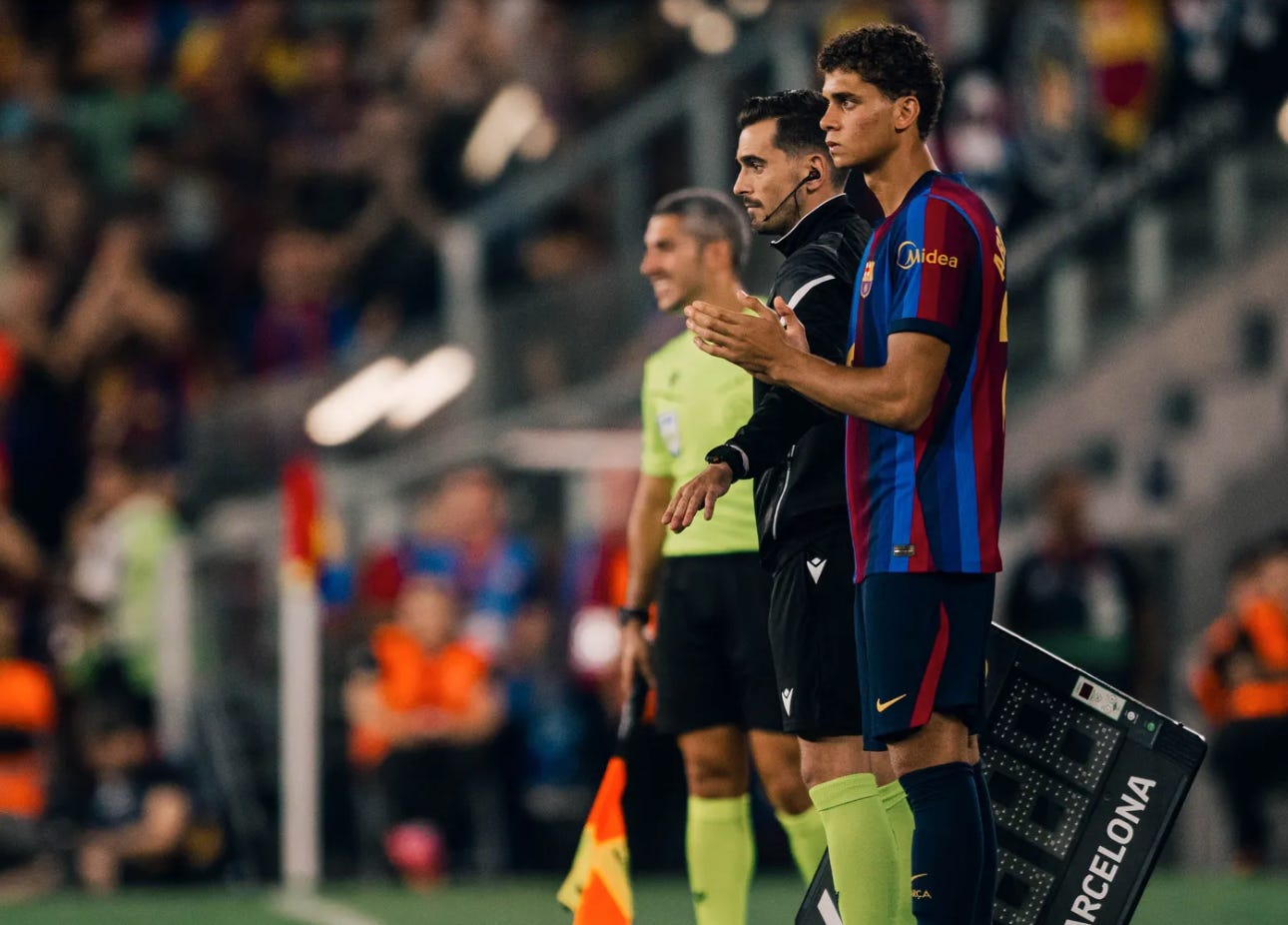
Barcelona already lost one talented teenager for a fraction of his worth this year. In January, Dro Fernández left for PSG on a release clause of just €6 million. Borussia Dortmund and Manchester City were also ready to trigger it. PSG ended up paying closer to €8.2 million once the deal was done, but that was still a discount forced by a contract Barcelona had let fall behind the player’s actual value. Hansi Flick called the exit a betrayal of sorts at the time: “If someone wants to play for Barcelona, they must live and breathe the club’s colours with their entire being.”
Hamza Abdelkarim’s release clause is €15 million. Barcelona wants it raised to €150 million. Until that gets sorted, the 18-year-old who outscored every other player at the club this preseason has barely featured.
The numbers
He scored four goals in preseason, more than any other Barcelona player and equal to what Lamine Yamal managed in the same fixtures a year earlier. That put him ahead of Ferran Torres. He scored a penalty and a rebound in a 2-2 draw with Birmingham City. He added a curled finish from a low cross in a 5-2 win over Basel and a goal against Al Ahly, the academy that produced him, in the Joan Gamper Trophy, which he did not celebrate.
Then the league season started, and he played four minutes across the first three matchdays.
At international level, the pattern is similar. Egypt’s coach called him into the senior World Cup squad with zero senior caps, ahead of an established forward in Mostafa Mohamed. Against Belgium, he came on in the 76th minute for Mohamed Salah, the player he has said he models his own game on, and became the youngest Egyptian and Arab player to appear in World Cup history. Against New Zealand, he came on late again, set up a teammate for a header that narrowly missed and made a defensive clearance in stoppage time as Egypt won a World Cup match for the first time in 92 years. Two tournament appearances, no goals, no assists, both off the bench. Hamza Abdelkarim’s ceiling is obvious, but the sample size needs more time to grow.
How he actually plays
Abdelkarim stands close to 1.85m, is right-footed and is physically built like an orthodox No. 9 in the box, according to a tactical analysis of his fit under Flick. He is not a wide forward who drifts inside, and he is not a false nine dropping deep to combine. He is a natural penalty-box striker, someone whose job is to attack crosses, occupy centre-backs and arrive in the right place to finish, rather than create the chance himself from twenty yards out.
That is a different profile from what Flick has available. Yamal offers width and directness from the right. Raphinha offers intensity and vertical running. But neither of them can win the ball in the air at the back post or finish off a low cross with one touch. A youth coach who worked with him for three years described him as a mix of “strength, speed, and intelligent finishing,” someone “good in the air” who “positions himself well in the box” and can “score from half a chance.” That is not a description of a talented kid who could play as a striker. It is a description of a specific kind of No. 9, and it is a type Barcelona’s current squad does not have.
The question Hamza will have to answer is about his pressing. Flick’s press starts with the striker: the centre-forward is the first man responsible for cutting off the opposition’s easiest pass out from the back, not a runner who waits for possession before doing any work. That is a demanding, repetitive job that many strikers do not enjoy and many others are not taught how to perform.
Flick’s own comments suggest he already rates Hamza’s finishing: “He had a great preseason and he’s improving every day in training. He scores goals, has a good attitude and a good mentality. He deserves to play and we want to give him opportunities to show his quality.”
That is a direct, public endorsement from a manager who has surprisingly given him only four minutes of league football.
The popular consensus is that Flick deliberately limited his minutes so that no team watching a standout performance would be tempted to trigger a €15 million clause while the market was still open. He was formally registered for Barcelona’s first-team La Liga squad on 26 August, after his preseason form but, more crucially, after the Álvarez move collapsed. A club that rates a player enough to register him for the season, then plays him for four minutes across three matches, is making a choice.
Abdelkarim is the only recognised out-and-out striker in the first-team squad. Everyone else in that forward line, whether Yamal, Olmo, Adeyemi, Raphinha, Fermín López or Bisiwu, is either a converted winger or midfielder asked to lead the line rather than a natural fit for it.
That context is what makes the release-clause adjustment plausible.
Barcelona is not short on evidence that Abdelkarim can score. What it does not want to do is lose him cheaply if he comes good.