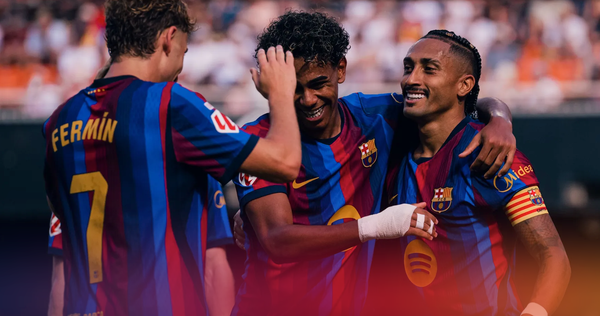
Deco Explains Barça’s Transfer Choices, Raphinha’s New Deal Takes Shape and Hamza’s Future Is Secured
Barça’s spending limit rises to €582.8 million as Deco outlines Flick’s recruitment priorities, weighs how to reward Raphinha and moves to protect Hamza with a €150 million release clause

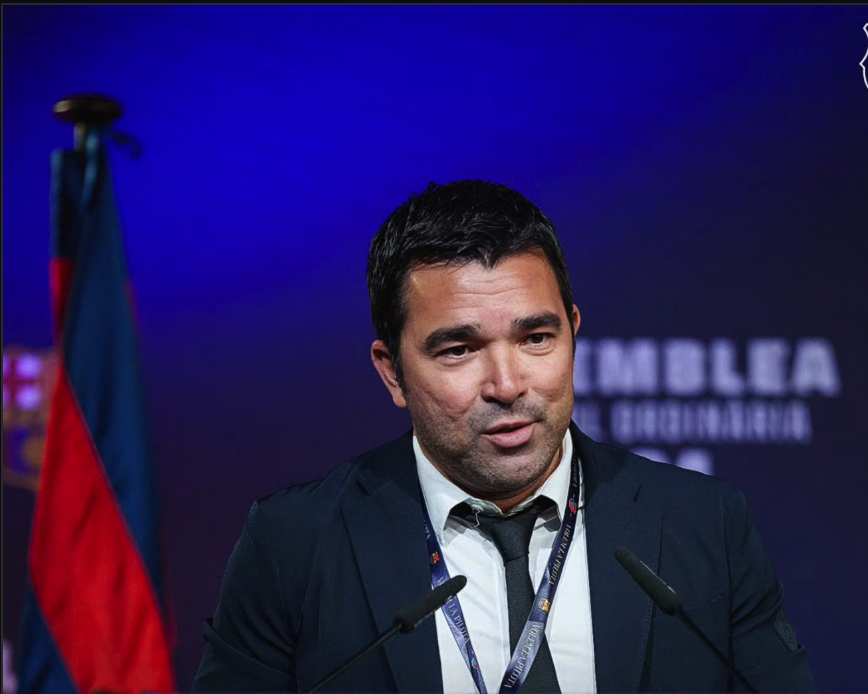
How Deco Is Quietly Changing Barcelona’s Sporting Direction
A fairly long Deco interview about the summer transfer window dropped this week in Spanish media. Given his rather behind the scenes style of working, I was quite curious to know what he had to say, mostly because transfer announcements don't really tell us why we chose the players we did, or what the coach thought was missing, or what happened when the first choice proved unavailable.
We mostly get boiler plate answers - but his interview was different. Fresh. Direct.
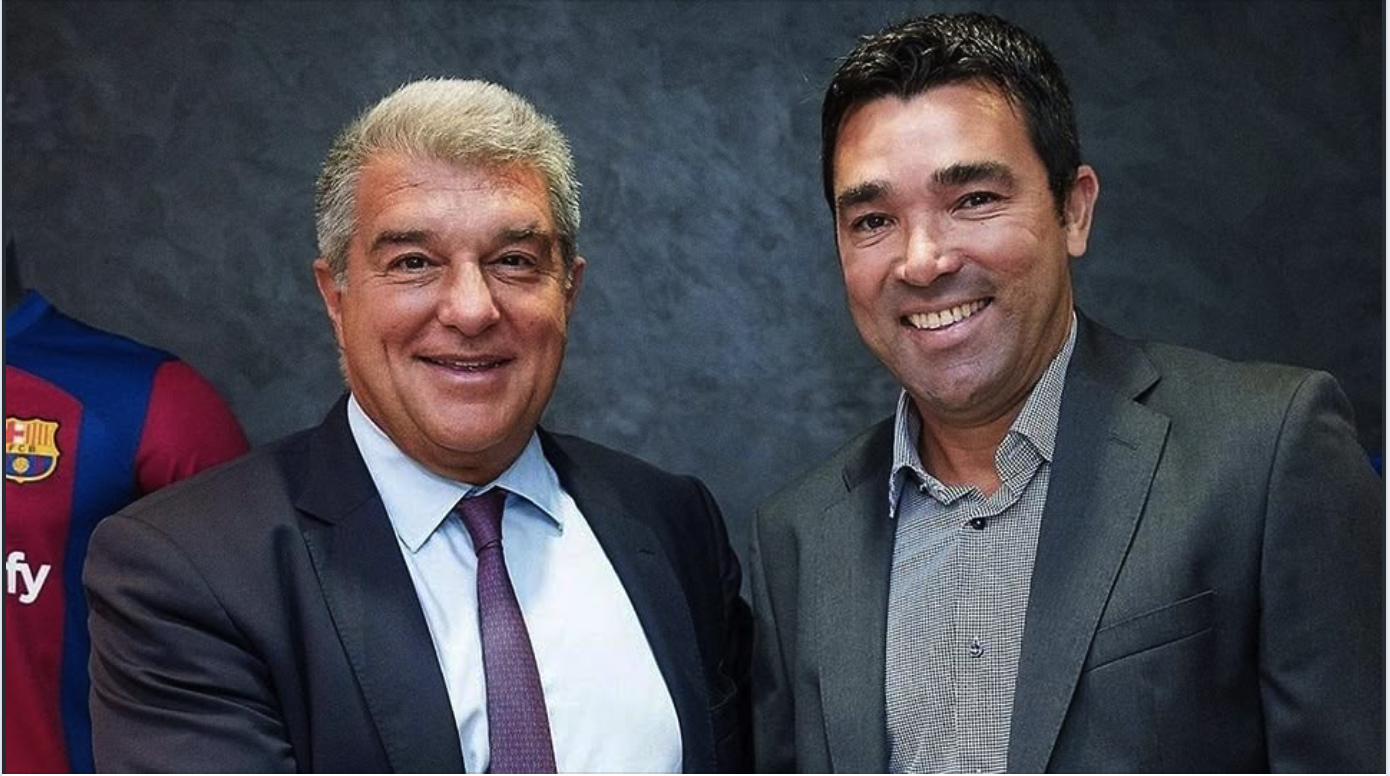
In his RAC1 interview, Deco discussed Julián Álvarez, Balde, Gabriel Jesus, Rashford, Gordon, Adeyemi, and plenty more, touching on how a small working group involving himself, Bojan, Flick, and LaPorta run the transfer operations of a 5 billion dollar football club.
I found a lot of parts quite interesting, because they give us something to work with beyond the usual declarations about signing great players for a great club. There is a footballing argument connecting several of these decisions.
There are also a few questions I think the season still needs to answer.
“We needed more intensity”
“We see every training session and analyse the team,” Deco explained. “We have a clear idea what we're looking for. One of the areas we struggled last season, without Raphinha, was that the team's energy dropped. It was lost. We needed more intensity. We analysed a lot of wingers. Signing someone from the Premier League is almost impossible, but [Flick] was clear with what he wanted and we worked on a deal from there.”
It is quite an admission. We expect to lose goals when an important forward is unavailable. But if losing him changes how aggressively the entire team plays, the dependence goes deeper than his individual output.
That helps explain Barca's choice of moving beyond Rashford, despite holding a purchase option after a 14-goal loan campaign. Deco was careful to acknowledge the contribution: “We are extremely grateful to Rashford. He contributed a lot last season, but our idea of play is much more linked to Anthony. His style fits with what the coach is looking for.”
A player can perform well and still leave a particular structural requirement unresolved.
The connection with Raphinha’s central role is especially interesting. If Raphinha moves towards midfield, the left winger needs to give the defence a reason to stay concerned about the space behind it. Otherwise, the back line can advance and squeeze the very area where Raphinha wants to receive.
A run beyond the full-back can create that hesitation. Follow the runner and space opens in front. Step towards the ball and risk being turned. This is where Gordon could help Raphinha without either player recording a goal or assist. The movement of one makes the positioning of the other more difficult to defend.
Then there is the pressure after Barça lose possession. A winger who approaches the defender while screening the inside pass can help direct the ball towards the touchline. That gives his teammates a clearer cue to advance. A winger who simply charges at the ball can leave the pass into midfield open. Suddenly, the midfielder has to jump forward, the full-back is deciding whether to follow, and the defence is dealing with the consequences.
As Deco put it: “In the case of Gordon, we saw that he was one of the figures we needed. When Raphinha wasn't on the pitch, the team lost energy and with him we could solve it. The big advantage we had is that the player wanted to come and he was able to put on pressure.”
Deco’s reasoning was crystal clear.
Gordon got selected because he made the next player’s decision easier. He could compensate for the energy fo the team to not drop
Bernardo and the cost of finding room
His explanation on Bernardo was equally insightful. “No era la posición que buscábamos.” It was not the position they were looking for. What stood out was how clearly he resolved the tension between admiring an elite profile and fitting him into an active squad:
“He wasn't what we were looking for in the end. I love him. He's one of the best in the world in his position. He wanted to come to Barça, but things didn't move forward because we have certain parameters. It wasn't just a financial issue, it was also about playing time. It's not up to me to say if he is going to play or not, that's the coach's decision. But he had a different perception to us after playing regularly at City. He wanted to play.”
Like plenty of culés, I get excited by technically gifted midfielders who can also dominate the penalty area. Finding room on a squad list often takes secondary priority cos in twitter banter we want all of them on the team sheet.
But the truth is that making Bernardo a starter would have blocked he progression on of a few La Masia kids who are the future of the club. But there were other tactical considerations as well.
Starting from the right would have meant sharing territory with Lamine. Moving inside would have changed the midfield combinations. Playing closer to the striker would have affected the balance of the team.
Imagine several gifted players showing for possession between the lines. If defenders follow them, combinations can open the game. If the opposition holds its positions, Barça might have plenty of players available for a pass without enough movement pushing the defence backwards. Someone still has to provide width, occupy the centre-backs, attack the box, and protect the spaces left behind.
That is why the promise of minutes matters. It commits the coach to accommodating a player regularly, including in matches where a different combination might work better.
Recruitment requires that discipline of considering what a signing would demand from everyone else. Ability deserves admiration; squad construction requires an additional calculation.
Julián, Jesus, and the changes along the way
Deco’s account of the pursuit of Julián Álvarez was direct about the mechanics of the market:
“We did things properly. We made an offer of 100 million euros to be paid in three installments and there was no response. They didn't want to sell the player... Barça did not pressure Julián Álvarez to publicly express his desire to leave Atlético de Madrid. It was his decision.”
He noted: “If Julián didn’t come, we had to look for a similar profile,” connecting that search to alternatives like Gabriel Jesus, while noting that the opportunity with Adeyemi had emerged earlier. He also offered a reality check on the central forward market: “Replacing Lewandowski is practically impossible.”
I found that useful because it leaves room for next summer to try for Alavraez once again. Barça wanted Álvarez. They did not get him this time . Hence, other decisions followed.
When Raphinha moves away from the centre-backs, they must decide whether to follow him. Step out and space opens behind. Stay put and he may help create an extra passing option nearer midfield. But his movement creates an opportunity. Someone has to use the space. If he drops, a teammate needs to run beyond. If he drifts into a channel, another player must remain available centrally. Alvarez would have fitted that profile. But this is also where Gabriel Jesus represented an alternative arrangement. He was not Alvarez, but he could press fanatically, occupy a defender, offer a target, and allow others to arrive around him. It gave Flick the armory against deep blocks, whereas Adeyemi slotted in to offer pure transitional disruption.
The idea around both players was to build squad depth to extent where Flick could use the available players on the bench to change a match when the initial approach failed.
Balde and the route back
“He has to fight for his place,” Deco said of Balde, while backing his long-term ceiling and acknowledging the road back from a lengthy hamstring absence. “We know his quality, but after long injuries, a player has to earn his minutes on the training pitch every single day.”
Fair enough. But what does winning that place mean in footballing terms?
The practical question concerns the combination on the left flank. If the winger holds the width—as Gordon does—the full-back can support underneath, offer an inside passing route, or remain positioned to defend a turnover. If the winger comes inside, an overlap can stretch the opposition again.
Both arrangements can work. Their value depends on the movements around them. An overlap might provide exactly the opening Barça need; it might also leave space exposed if the midfield cannot cover. For Balde, the challenge will be proving that he can execute the rest-defence and positional discipline that Flick demands from his full backs.
It remains to be seen if Balde can actually shift the narrative. His progress somewhat stalled in the past two years due to injuries and also some defencines which got highlighted in certain games. There is no question about his speed, creativity, dribbling capability, and ability to take on.
But his ability to assist the box strikers, pressing from the front line and minimising turnovers is a weakness. Not something he can't improve. But he has to be deliberate about it and work at it. In a club lie Barca where first team minutes are extremely competitive, Balde will find it hard to start from scratch again.
And while I truly want him to play for Barcelona and be incredibly successful, I won't be surprised if he is sold in the winter window with a buy back clause.
Deco's interview carried a lot of these unspoken insights.
When rotation becomes necessary and opponents adapt, we will have a clearer idea of whether Deco and Flick have built the functional depth that can help the team win in diificult away fixture knockout games inthe Champions League
Raphinha Has Earned a Better Deal. What Should Barça Offer Him?
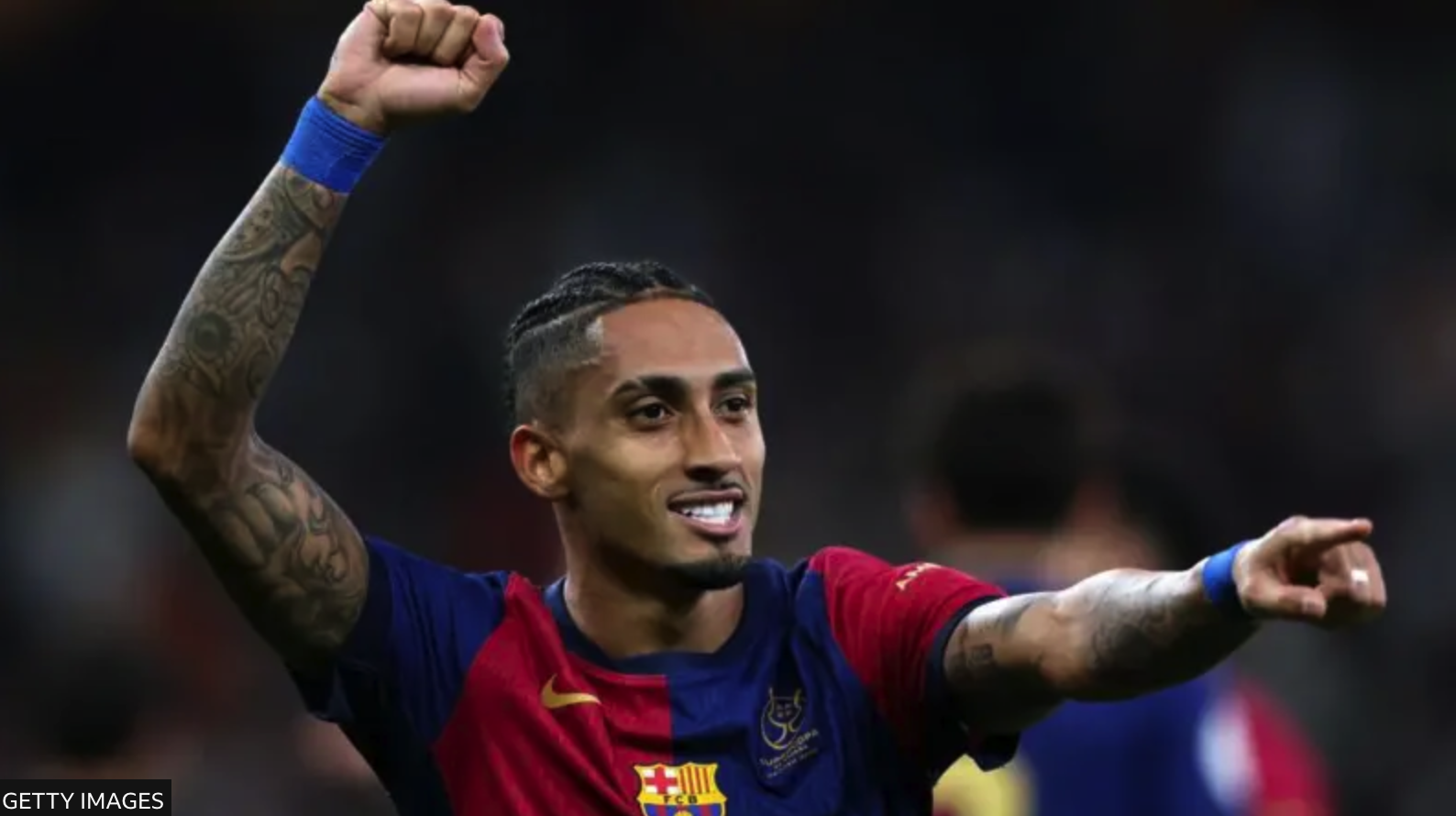
The Raphinha part of Deco’s interview interested me for a different reason from the transfer discussion. Here was a player already at the club, already under contract, and apparently happy to stay.
Yet Deco was talking about reviewing his terms.
“We don’t want imbalances,” Deco stated regarding dressing room wages. “When a player offers this level of commitment, leadership, and performance, the club has to recognize it. The captaincy strengthens him—he earned it.”
He even took aim at continental perceptions, calling it “outrageous that Pedri and Raphinha are not on the Ballon d'Or list” given their impact.
There is an obvious emotional response here. Raphinha is delivering, he has become central to Flick’s football, and the club recognises it. His existing deal runs until June 2028, following the extension finalized in May 2025. Barça therefore have time. This is not a player approaching the final months of his contract.
Deco’s reference to merit however suggests that recognition of evolving roles is part of the thinking and that the club can initiate a review because it sees a player’s growing importance and wants to settle his future before a negotiation becomes urgent. That seems sensible. Waiting until a contract is nearly finished can turn an ordinary decision about a valued player into a test of loyalty, leverage, and public sentiment.
Acting early should give Barça room to negotiate carefully. It should not become a reason to grant every possible guaranteed year immediately.
Eight goals and 3 assists in six matches. His double against Feyenoord also took him to 21 Champions League goals for Barça, placing him fifth on the club’s all-time European list behind only Messi (120), Rivaldo (25), Suárez (25), and Lewandowski (23).
Finishing runs change. A player can perform well and stop scoring for several fixtures. If the club builds the entire justification around a spectacular September, it leaves itself explaining the same contract during a quieter November.
The stronger argument concerns the responsibilities Raphinha can carry. In a central role, a forward who moves towards midfield can help create an extra passing option. A run across the defence can open a route for a teammate. Pressure on the first pass can prevent the midfield from having to retreat.Those contributions matter even when the final touch belongs to somebody else. Deco himself confirmed this when discussing Anthony Gordon.
The tactical change under Flick has brought Raphinha closer to the opposition’s goal while making use of his movement. His value lies in his ability to connect a few roles in that Barca frontline, that might otherwise be distributed across different players. That makes replacing him more complicated than finding someone with a similar goals total.
There is also history here that makes the contract discussion more interesting. Raphinha revealed that in 2024 he had seriously considered leaving Barca before an honest conversation with Flick persuaded him to stay, describing the coach’s tactical clarity as an important turning point.
That matters because a coach can change the conditions under which ability becomes useful. A clearer role, different teammates, and the confidence to repeat an action after it fails can alter what we see on the pitch.
He still has to perform the work. But it does create a responsibility for Barça. A renewal should fit the sporting plan over its duration, ensuring the surrounding tactical structure continues to support his strengths.
But then how do we price this? This is where I would separate two questions that often get bundled together.
- Does Raphinha merit improved terms now? I think there is a very strong case.
- How far into the future should Barça guarantee those terms? That requires a different judgment.
He turns 30 in December. His present contract already runs until he is 31 and a half. That is not a forecast of decline, and it would be lazy to treat it as one. It does mean that additional seasons extend the commitment into a different stage of his career.
Repeated acceleration, counter-pressing, and attacking runs are physically demanding. Experience can improve the timing of those actions, but the club still needs to consider workload, recovery, and how effectively the player could contribute if his minutes need managing.
A substantial current salary and a very long guarantee are separate choices. Barça could recognise his standing with an upgraded wage tier today while keeping any additional term beyond 2028 tied to appearances, starts, and performance triggers.
A balanced wage structure cannot mean that every important player earns the same. Contracts reflect different ages, negotiating circumstances, roles, and remaining years. Perfect equality is neither realistic nor helpful. The more useful standard is whether the differences are defensible to the dressing room.
If a club tells players that performance, pressing volume, and leadership matter, those things should have a visible bearing on how it treats them.
For Raphinha, the case for recognition is persuasive. He has helped make this team convincing. Agreeing on terms that reflect his status—while protecting the club’s flexibility as his physical workload evolves—would be a far more meaningful expression of confidence than simply offering the longest contract imaginable.
How Barça Rebuilt Their Spending Power
The €582.8 million squad-cost limit reflects years of painstaking work on wages, commercial turnover, and debt rescheduling. Understanding the recovery means looking beyond this summer’s headline €150 million jump.
For five years, La Liga’s squad-cost limit (Límite de Coste de Plantilla Deportiva or LCPD) has functioned as the defining structural constraint on Barcelona’s football. It dictated transfer windows, forced accounting contortions at registration deadlines, and turned squad management into an exercise in high-wire financial diplomacy.
When La Liga published its official squad-cost limits, lifting Barcelona's spending ceiling from €432.807 million to €582.769 million, the immediate reaction was to celebrate a €150 million leap.
We have seen elevated ceilings before. In the summer of 2022, emergency economic "levers" generated an artificial spike, followed shortly by a collapse back down to €204 million. This latest ascent rests on a fundamentally different foundation: a normalized wage-to-turnover ratio, record-setting commercial expansion, and long-term debt restructuring.
The progress is structural, but it has not been achieved in a vacuum—nor is it entirely devoid of balance-sheet engineering.
Five Years of Upheaval: The Regulatory Rollercoaster
The erratic swings of Barcelona’s spending cap since 2021 demonstrate why the composition of the recovery matters far more than any single snapshot:
Source: Official La Liga LCPD updates. The limit reflects permitted expenditure on wages, bonuses, amortizations, and academy costs, rather than the actual payroll.
The nadir of this cycle came in March 2022, when La Liga officially assigned Barcelona a negative spending limit of -€144.35 million. The league had calculated that the club's audited losses for the prior financial year exceeded initial estimates by roughly €242 million, leaving Barcelona as the only club in the top two divisions underwater. Under league regulations, a negative cap meant every euro spent on new registrations required saving or generating three to four times that amount under the restrictive penalty rules.
The massive swing from -€144 million in March 2022 to €656 million six months later illustrates the artificial impact of asset sales. It was never a direct measure of whether Barcelona were becoming richer or poorer in real time; it was the mathematical consequence of La Liga’s economic control model, which deducts accumulated losses and unpaid receivables directly from future operational spending room.
The Levers Bought Time; Operating Profit Restored Ground
The early levers were emergency measures designed to bring future value into the present in exchange for long-term equity and media revenues. The sporting logic was straightforward: letting the squad collapse into sporting irrelevance would permanently erode commercial appeal, matchday turnover, and UEFA prize revenue.
The drawback was that exceptional income masked an unsustainable core. In the 2022–23 campaign, sporting wage costs stood at €676 million, consuming 79% of ordinary revenues once television sales were excluded. An accounting surplus was achieved, but the underlying cost base remained dangerous.
The true test of those levers was whether the board would use the breathing space to reset internal commitments.
The subsequent turnaround proves that structural reform did take root:
- The Payroll Reset: By the close of the 2024–25 financial year, Barça reported that sports wages had dropped to 54% of ordinary operating revenue, well inside UEFA’s 70% sustainability ceiling. Projections for 2026–27 place that figure near 53%.
- Amortization Drainage: The departures of high-amortization legacies and the phased exits of veteran contracts systematically cleared the deferred obligations that clogged previous budgets.
- Wage Hierarchy Discipline: Deco’s public insistence that "we don't want imbalances" highlights an operational shift. Upgraded agreements for core performers like Raphinha, Pedri, or Lamine Yamal are calibrated against strict performance thresholds rather than open-ended baseline guarantees.
Revenue Diversification Beyond Traditional Limits
A club cannot cut its way to sustainable competitiveness; at some point, ordinary turnover must expand to carry the weight of an elite squad.
Barcelona’s commercial engine has provided that support:
- Record Ordinary Income: For the 2024–25 fiscal year, Barça posted €994 million in ordinary operating turnover, breaking the previous pre-pandemic benchmark.
- Retail and Merchandising Surge: Revenue from Barça Licensing & Merchandising (BLM) climbed 55% to €170 million in 2024–25, driven by direct-to-consumer international e-commerce and an expanded global retail footprint. In 2025–26, that figure climbed a further 22% to reach €208 million.
- Sponsorship Uplift: Total sponsorship revenues expanded from €259 million in 2024–25 to €265 million in 2025–26, underpinned by the enhanced terms of the renewed Nike agreement and global brand partnerships.
However, treating the €582.8 million limit as completely "lever-free" ignores the fine print. La Liga’s calculation incorporates proceeds from the forward commercialization of Spotify Camp Nou VIP hospitality packages and private boxes. While this monetizes physical infrastructure rather than selling off core media rights, it remains a mechanism that pulls future stadium hospitality receipts into current accounting periods.
Distinguishing between recurring ticket sales and advanced hospitality transactions does not diminish the turnaround; it ensures the recovery is evaluated realistically.
Rescheduling the Stadium Clock
The least publicized yet most consequential component of Barcelona’s stabilization occurred in institutional credit markets.
On June 27, 2025, FC Barcelona completed a €424 million bond issuance through Goldman Sachs to restructure more than 40% of the €1.45 billion Espai Barça debt package.
- Maturity Extension: Rather than facing a €424 million refinancing cliff in 2028, repayments were deferred to a staggered schedule running between 2033 and 2050.
- Contained Debt Service: The operation was locked in at an average cost of 5.19%, backed by Morningstar DBRS upgrading the club’s credit outlook from stable to positive.
Original Espai Barça Tranche:  [====== Due 2028: €424M ======]
Restructured Bond Facility:    [--- Grace Period ---] === Repaid 2033 to 2050 (5.19%) ===>
This restructuring uncoupled short-term football operations from construction debt service. The stadium is designed to generate roughly €247 million in incremental annual turnover once fully operational. Pushing capital repayments past 2033 ensures the asset begins paying for itself through matchday revenue before principal payments fall due.
From Crisis Management to Sporting Strategy
The significance of reaching €582.8 million is not that Barcelona can return to reckless spending; it is that the club has largely normalized its regulatory standing.
Decisions can increasingly be made on footballing terms. When Deco and Flick evaluate an acquisition like Anthony Gordon or weigh a contract extension for Raphinha, they are operating within an established budget rather than waiting for emergency board guarantees or last-minute regulatory dispensations.
The journey from -€144 million in 2022 to €582.8 million in 2026 was neither linear nor pure. It required financial engineering, painful squad pruning, commercial growth, and patient debt structuring.
The test now is maintaining that discipline: the same revenue expansion that rebuilt Barcelona’s spending power can easily be undone if the wage bill is allowed to drift ahead of ordinary income once again.
Why Barça Moved So Quickly to Rewrite Hamza Abdelkarim’s Contract
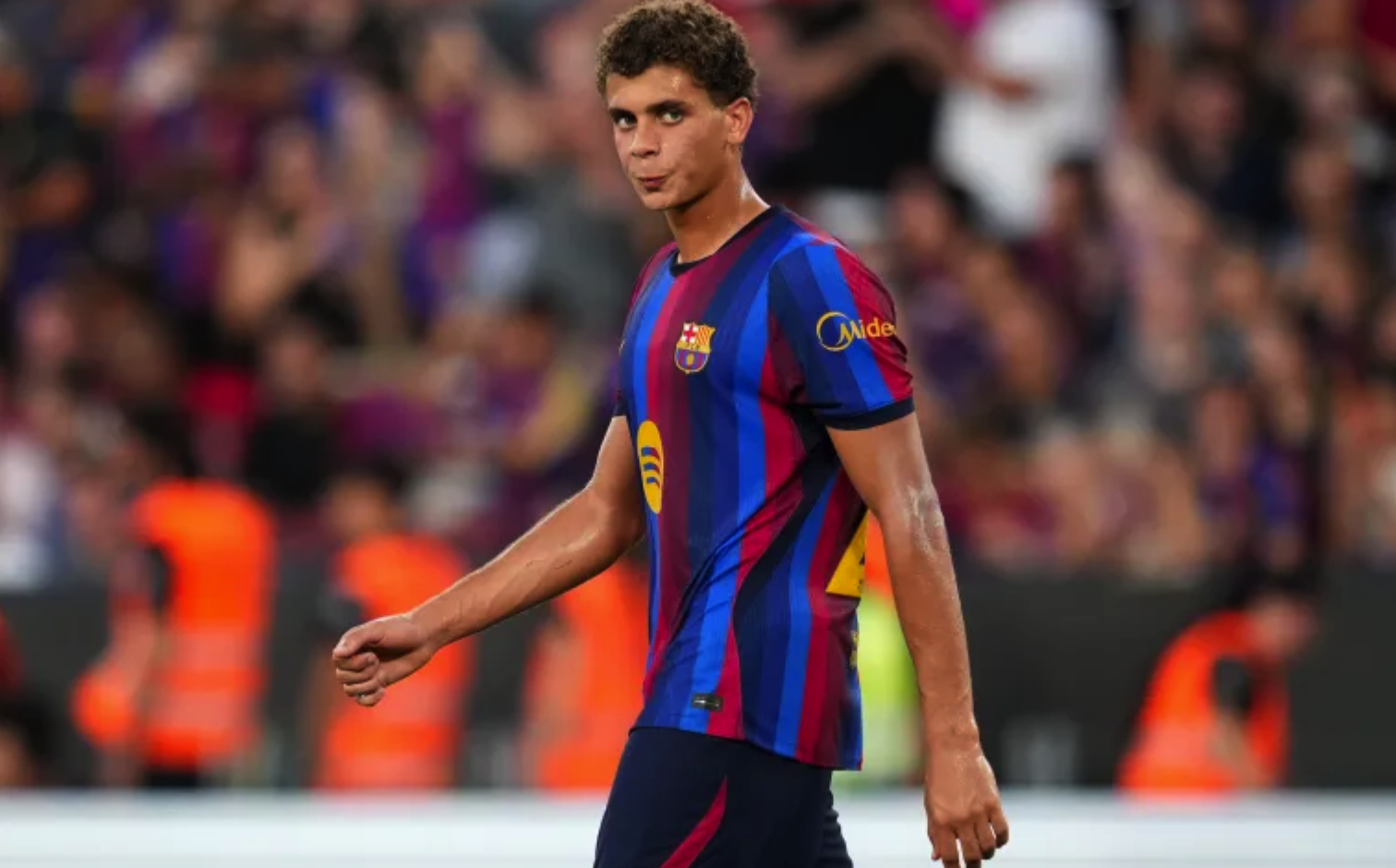
Hamza Abdelkarim had barely begun his permanent Barcelona career against Rayo but it was his preseason performance - (yes the same preseason no one cares about), his instinctive box finishing as an old school 9, that caught everyone's attention.
The box presence, the one touch finish, the poachers instinct.
When you play for Barcelona that attention goes far. Across agents clubs and other leagues.
In an era where traditional 9's are a rarity, Hamza teased to what a 9 can be during the preseason. This was great for the fans, but ironically it also became a cause of great concern for Barca who had purchased him for a mere €1.5 million and slapped a release clause of €15 million for the formalities.
The problem was that any competing club could pony up that amount and Hamza could be gone just like that. Barca had experienced the same with the likes of Dro Fernandez. They did not want to repeat the same mistake. Again.
The swift extension of his contract to June 2030 (even before he had played any games for the first team) reveals how modern recruitment moves in lockstep with on-pitch reality.
Considering his permanent transfer from Al Ahly was completed only this summer following a six-month loan, reopening terms this early is unheard off. His four preseason goals—finishing as the squad's leading summer scorer—was the obvious public catalyst, yet the deeper motivation lies in how quickly modern market economics could punish Barca for underpricing a breakthrough talent.
When Barcelona triggered their purchase option on Hamza following his stint with Juvenil A, they were securing an unpolished prospect. Preseason in the United States and Europe provided a far harsher stress test against elite competition, under Hansi Flick's direct gaze. The public saw the braces against Birmingham City and his sharpness in front of goal.
Flick, crucially, saw the training pitch:
“He scores goals, has a good attitude, and possesses a remarkable mentality. We see his continuous improvement in training every day and our intention is to give him opportunities.” — Hansi Flick
Preseason goals are notoriously fickle indicators of long-term success. Opponents field staggered fitness levels, tactical systems remain fluid, and rotational substitutions dilute intensity.
However, Deco and Flick did not need absolute certainty that Hamza would evolve into an undisputed world-class No. 9 before acting. They merely needed to recognize that his upward trajectory made an inexpensive departure a real and imminent hazard. Their internal assessment outpaced the original contract terms.
And the club moved decisively on this.
FC Barcelona announced an agreement extending the 18-year-old Egyptian striker's stay until June 30, 2030. His release clause increased tenfold, jumping from an accessible €15 million to €150 million.
The €150 million buyout clause creates immediate headlines, but no rival club is preparing a €150 million bid tomorrow. Adding a zero to an exit clause does not multiply a player's technical ability tenfold. What it alters is Barcelona's structural leverage:
- Closing the Predatory Window: In an inflated European market starved of dynamic central forwards, a €15 million release clause for an 18-year-old international who showed clinical form under Flick was an open invitation for Premier League or Bundesliga clubs.
- Protecting the Upside: It is easy to argue that selling an unproven teenager for €15 million represents a quick accounting profit. But if Barcelona proved correct in spotting his profile early, cashing out prematurely would represent sporting negligence.
The €150 million figure ensures that whatever happens next, Barcelona control the terms of his development.
Following the arrival of Gabriel Jesus to reinforce the central forward rotation alongside Raphinha and Lamine Yamal, immediate first-team starting berths are scarce. The sporting plan addresses this by keeping Hamza embedded in daily first-team training under Flick, while maintaining match sharpness with Albert Sánchez's Barça Atlètic squad.
Barcelona moved decisively to protect their asset on paper; the responsibility now pivots to the coaching staff to cultivate the player on the pitch.