Esteladas, Koundé, Xavi Espart, Livaković and the Champions League draw
A flag and a cancelled tribute, a draw that writes its own subplots, and a nineteen-year-old handed a shirt number that has been in a drawer since 2021

Barca Weekly
Ten thousand esteladas and one cancelled tribute
There was supposed to be a tribute at Camp Nou on Thursday night.
Eight Barcelona players had won the World Cup with Spain in July. The club had the names ready, the pitch-side ceremony planned and the first home league game of the season as the stage.
Then it scrapped the whole thing.
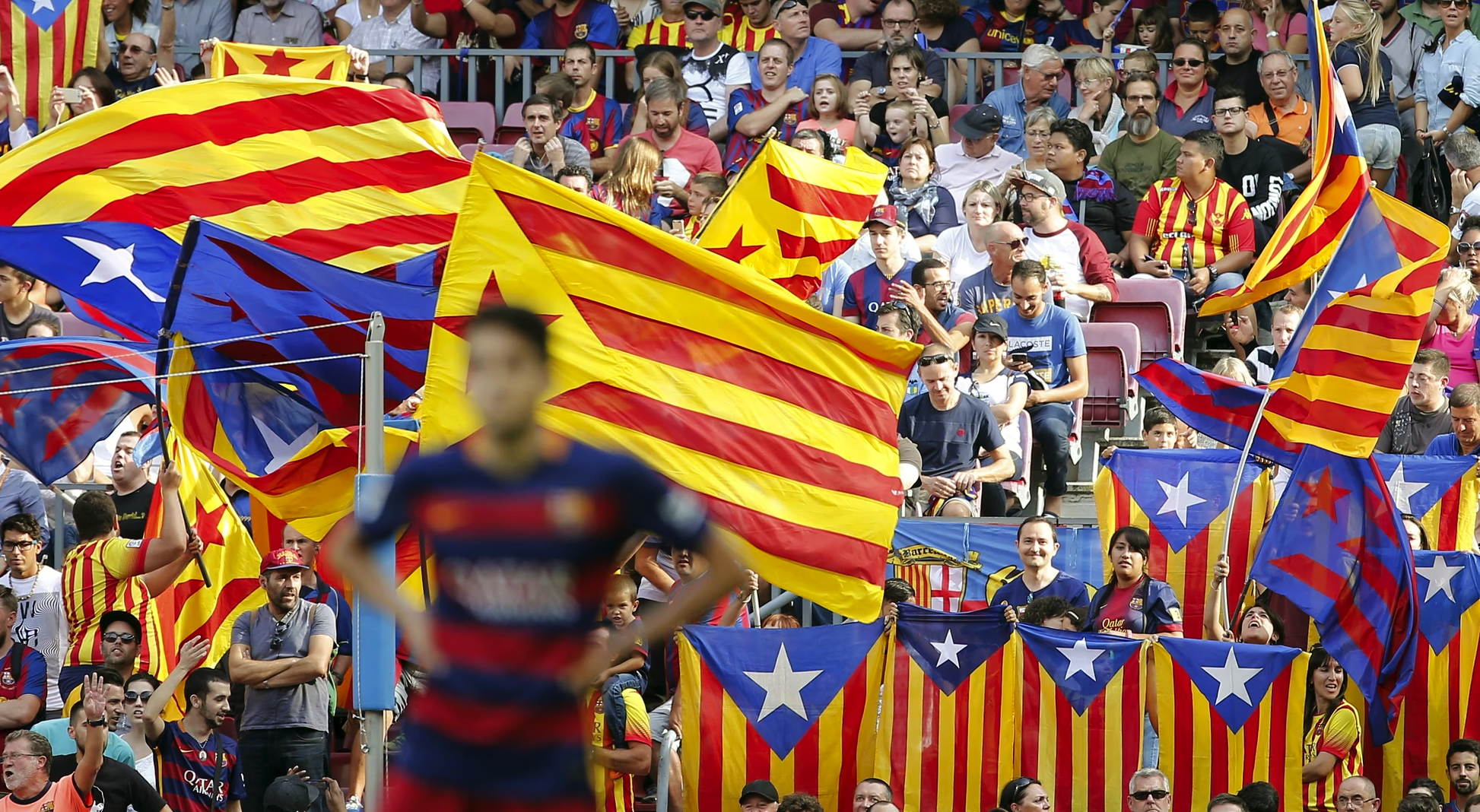
The reason lay in what had happened four days earlier. National Police had confiscated estelades—Catalan pro-independence flags—from Barça supporters entering the Martínez Valero in Elche. Officers then made baton charges after the queue broke up, according to ARA.
One supporter, a minor, had his flag taken. The confrontation ended with him on the ground and taken for medical treatment. He was then held overnight at an Elche police station before being released and told that he would testify remotely.
El Debate, citing COPE, carried the police account: the young man punched an officer during the confrontation, leading to his arrest. The two versions differ less on the sequence of events than on where the blame should fall.
The club’s statement on Monday condemned “the disproportionate use of force” against its members and supporters. It stated that “the estelada is a legal symbol and its display constitutes a legitimate exercise of freedom of expression” and could not, by itself, be treated as incitement to hatred or violence.
Al Jazeera reported that the club described the force used as “lacking the necessary justification,” while ARA said Laporta contacted the detained supporter directly.
Then came Thursday, and Barcelona cancelled the tribute to Spain’s World Cup winners entirely. Laporta said it was not “the most appropriate moment” and that “football must unite, not generate confrontations.”
As Moncloa reported in Spanish, he went further: Spain defines itself as a social democratic state, he said, and the estelada falls within the bounds of freedom of expression.
Read on its own, the decision looks unusual for a football club. Read against Barcelona’s history, it looks entirely in character.
Founded in 1899, the club became entangled in Catalan civic life very early in its history. In 1925, during the dictatorship of Miguel Primo de Rivera, supporters at Les Corts booed the Spanish national anthem. Barcelona’s civil governor subsequently ordered the club to close for six months, accusing people within it of promoting ideas contrary to the nation. Founder and president Joan Gamper was forced to relinquish his position and temporarily leave Spain.
Eleven years later, in August 1936, during the opening weeks of the Spanish Civil War, club president Josep Sunyol was captured by Nationalist forces while travelling near the Guadarrama front and executed without trial.
During Franco’s rule, when the public use of Catalan was suppressed across Spain, Camp Nou became one of the few large public spaces in the city where people could speak Catalan openly. The stadium functioned as a civic space because thousands could express a shared identity there that had little room elsewhere.
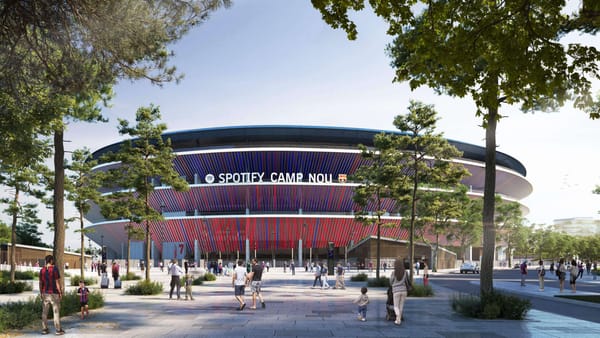
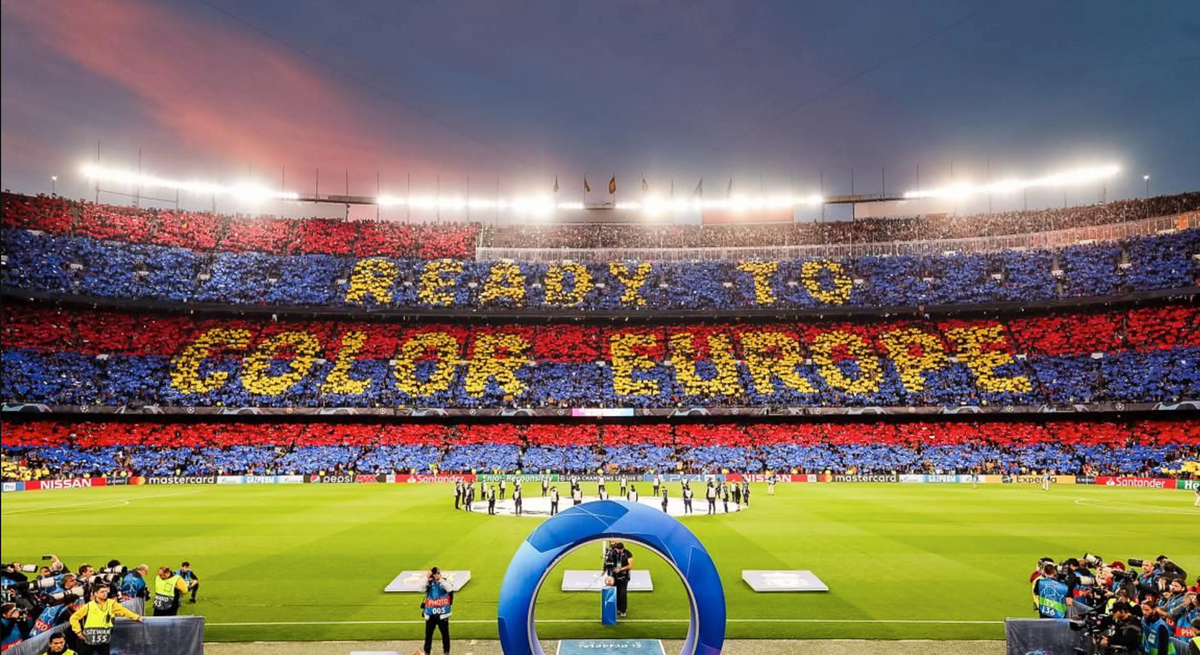
The phrase now written across the stadium seats belongs to this history. Club president Narcís de Carreras first used “més que un club” in his acceptance speech in January 1968 to describe what Barcelona meant beyond football.
Democracy returned to Spain in the late 1970s, and the club began displaying its Catalan identity openly rather than through code. When Catalonia held its independence referendum in 2017, Barcelona publicly supported Catalonia’s right to decide its political future.
Barça have never really separated their footballing identity from their Catalan one—either in eras when expressing it was dangerous or in eras when doing so might be commercially awkward.
Cancelling a celebration of eight of your own players who have just won a World Cup is more of a political message than sporting. Whether it reflects principle, habit or self-interest is for readers to decide. I am neither Spanish nor Catalan, so I do not claim a particularly strong personal view on this.
What the historical record does show, however, is that the decision is consistent with what the club has done, in one form or another, throughout much of its history.
Manchester City, Paris, and Cesc: the UCL is back
Eight opponents were drawn in Monaco on Thursday. The narrative writes itself
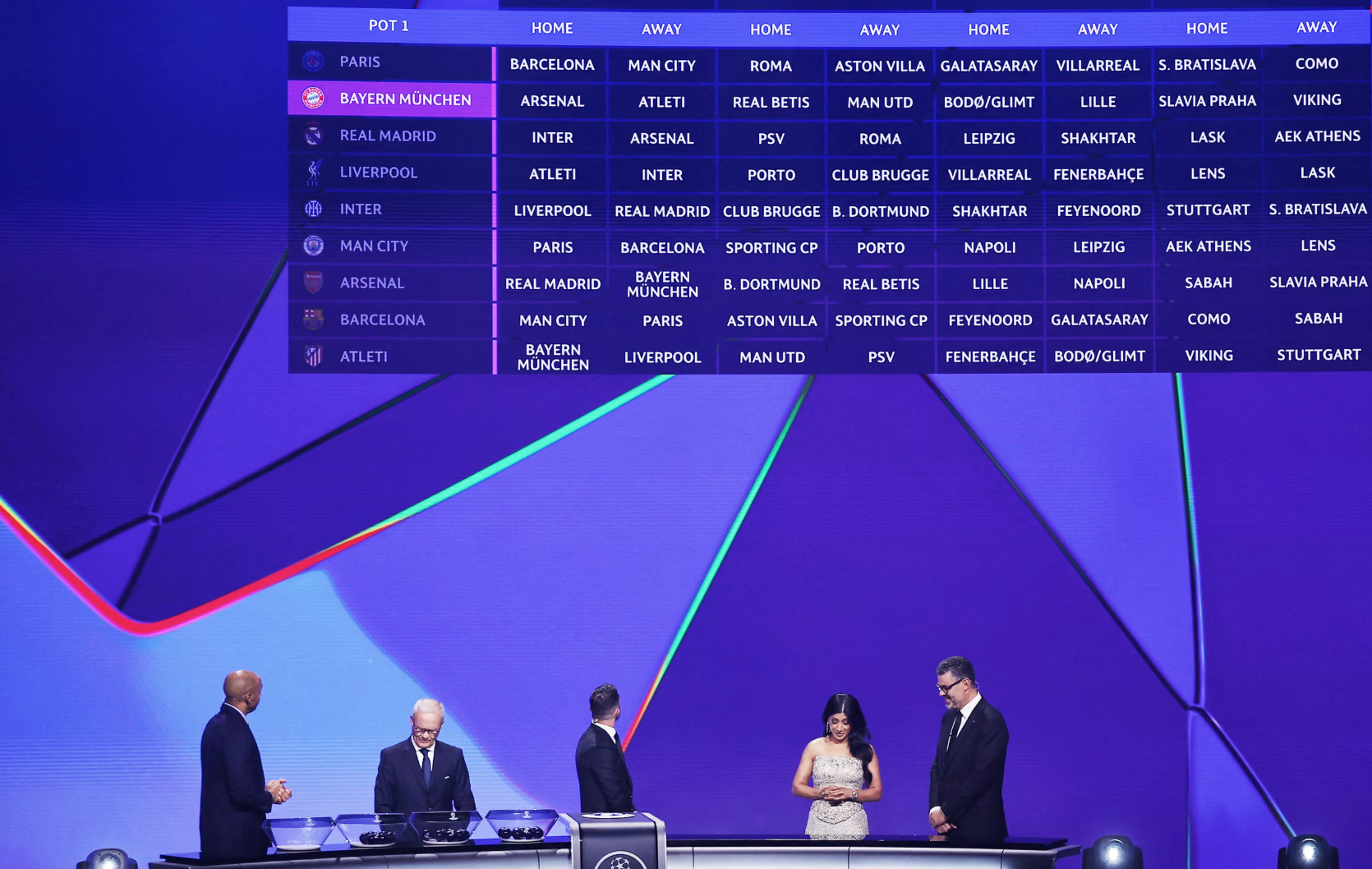
The 2026/27 Champions League league-phase draw was held at 6pm CEST on Thursday, 27 August, at the Grimaldi Forum in Monaco, with Barcelona seeded in Pot 1.
UEFA’s account confirmed Barcelona’s eight opponents: Manchester City, Aston Villa, Feyenoord and Como at home; Paris Saint-Germain, Sporting CP, Galatasaray and Sabah away.
The league phase runs from 8 September to 27 January. Barcelona begin at home to Feyenoord on 9 September, followed by Galatasaray away, PSG away, Aston Villa at home, Sabah away, Manchester City at home, Sporting away and Como at home.
So let’s frame the key narratives.
Rodri will not have to wait long to meet the club he left after seven stellar seasons. Seven years, 14 major honours, four consecutive Premier League titles and the goal that won Manchester City the 2023 Champions League final against Inter.
He will meet them again.
But this time at Camp Nou, wearing a different shirt and a different crest. He will go toe to toe with players who were his locker-room friends only a few weeks ago. The City supporters who worshipped him will watch their former hero trying to beat them.
The Etihad reunion will have to wait, because this is the league phase and there is no return fixture.
Such is the reality of the transfer market—and of football.
Then there is Paris, which may be worse.
Ferran Torres left for PSG this month in a deal reported to be worth around €50 million. Now Barça have to go to him.
PSG are comfortably the biggest test in the draw, and Barça supporters will want revenge for last season’s 2–1 defeat. Add Ferran’s comments about PSG being the ideal club at which to win his first Champions League, and there will be that slight sour aftertaste around the fixture.
Barcelona will travel to the Parc des Princes to face a centre-forward they sold only weeks earlier. The memories of Dembélé’s goals in the 2024 quarter-final have not entirely faded either.
The headlines will write themselves if Ferran scores.
Then there is the heart-warming one.
Como qualified for the Champions League for the first time in the club’s history, finishing fourth in Serie A on the final day of last season—above Milan and Juventus—just two years after winning promotion.
Under Cesc Fàbregas, they have completed one of European football’s more remarkable rises. Their previous appearance in an international competition came in the 1980/81 Mitropa Cup.
Now a La Masia boy who left as a teenager for Arsenal, returned and played three seasons for Barça will bring his own team to Camp Nou.
Expect the stadium to rise to its feet for that one.
And then there is Sabah.
Founded in 2017 and based in Masazır, outside Baku, Sabah won the Azerbaijani league last season and retained the domestic cup. They reached the Champions League league phase for the first time by beating Hapoel Be’er Sheva 5–2 after extra time in the second leg of their play-off, advancing 6–4 on aggregate.
They used the 30,000-capacity Tofiq Bahramov Republican Stadium for that match because their usual home, the Bank Respublika Arena, was too small for the occasion.
That is where Barcelona will have to go.
These nights are rarely easy in the Champions League.
That leaves the other four fixtures: Aston Villa at home, Feyenoord at home, Sporting CP away and Galatasaray away.
There is not one genuinely soft night among them. Unai Emery will relish the chance to torment us, while Galatasaray away is the kind of fixture that can make even seeded clubs look very ordinary. Barça will have to visit a stadium that does not observe the courtesy of treating atmosphere as mere backdrop.
Eight matches spread from September to late January, against opponents of wildly different quality, with a squad that has sold extensively to balance its books and still lacks a recognised centre-forward.
The old group stage often allowed you to sleepwalk through two fixtures and qualify anyway.
This format punishes that mentality.
Barça will find it tough this year. Finishing at the top of the league table will be extremely difficult. If you ask me, qualifying directly for the round of 16 without having to contest the play-offs would be a good outcome in itself.
Barcelona have been handed a set of fixtures full of irresistible stories. But stories are not points, and Flick will have to sweat it to make it.
Now we will find out whether a team without a nine can beat Manchester City and Aston Villa at home—or survive PSG, Sporting and Galatasaray away.
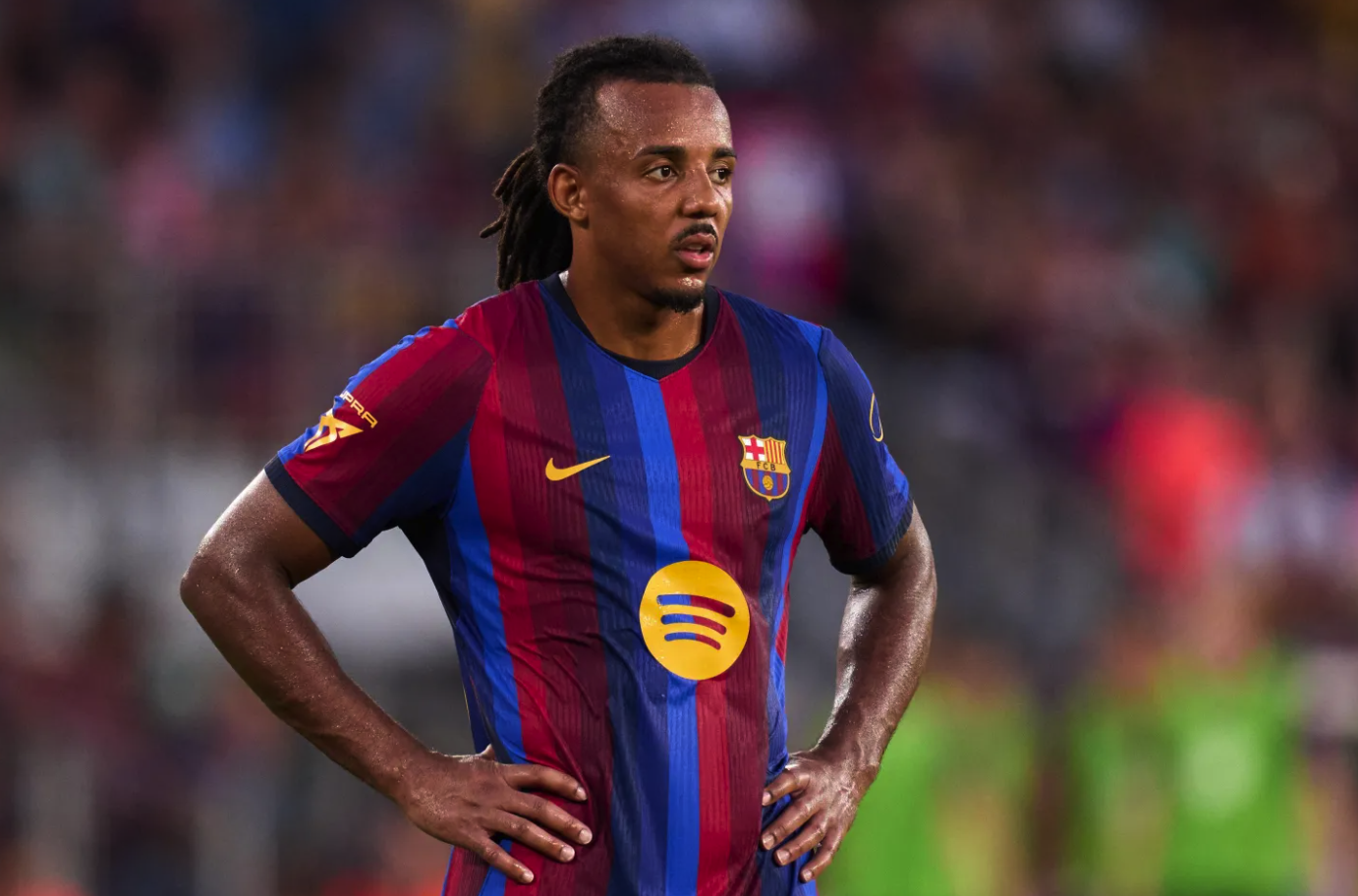
Jules Koundé has been told that he is the third choice
A France international with a contract until 2030 has spent the first week of the season watching a nineteen-year-old and a converted centre-back play in his position.
ric García said it out loud before the season began.
“The manager told me he’d like to try me at right back this year. It’s a position I’m happy in,” he told reporters after the Joan Gamper Trophy match on 19 August.
He was talking about his own career. But he was also talking about Jules Koundé’s.
The claim that Flick sat Koundé down and told him he was no longer the first-choice right-back originated with Catalunya Ràdio. Football España carried the report the following day, adding that Barcelona would consider offers of around €60 million. A return to centre-back would not guarantee Koundé a starting place either, with Pau Cubarsí and Gerard Martín reportedly ahead of him and Andreas Christensen another option.
By Friday, El Nacional was reporting interest from Chelsea, Manchester United and Tottenham, with Bayern Munich also monitoring the situation. The report suggested that a sale could help Barcelona pursue a centre-back such as Gonçalo Inácio or Castello Lukeba.
A second article published the same day claimed that Koundé had contacted his agent after the Athletic match and would consider offers approaching €70 million. It described him as feeling that he had been left “en un plano muy secundario”—in a very secondary role.
But let’s put the reporting to one side and look at the official team sheets.
Against Athletic Club on Thursday, Barcelona’s back four consisted of Xavi Espart, Gerard Martín, Pau Cubarsí and Eric García. Koundé was not among them.
Four days earlier at Elche, the back four consisted of Espart, Christensen, Gerard Martín and Eric García.
Two competitive matches. Two clean sheets. Seven goals scored. And the France international who has been Barcelona’s established right-back for most of his time at the club did not start either game.
That is difficult to ignore.
But Koundé is not being replaced by someone signed specifically to take his position. Eric García is, by his own admission, a centre-back whom Flick wants to use at full-back. Xavi Espart came through Barça Atlètic and was registered as a first-team player only this week. Gerard Martín has largely been a squad player.
None of them was signed to take Koundé’s shirt.
Flick appears to have decided that Koundé’s greatest defensive strength—defending large spaces one against one and overlapping at speed —is less valuable to this Barcelona side than having a player who is comfortable receiving under pressure and starting attacks from deep.
That is a tactical judgement. Once a manager has changed the hierarchy this clearly, it is rarely reversed quickly.
Koundé’s own performances last season also fell below the level he had reached the year before. Two seasons ago, he was arguably the best right-back in Spain, despite playing in a position he had never particularly wanted.
But last season’s Koundé did not consistently reach the elite level Barcelona expect. He has now reportedly been told where he stands. If the stories about him contacting his agent are accurate, he has not taken the news particularly well.
Clubs are allowed to move on from very good players before a serious decline begins. Historically, Barcelona have tended to do the opposite.
There is also the money. Capology estimates Koundé’s fixed gross salary at slightly more than €300,000 a week, making him one of Barcelona’s highest-paid players. El Nacional says the club no longer considers such a large salary easy to justify if he is going to spend significant time on the bench.
For what it is worth, I think Flick may be right about the football. But Barcelona might be wrong about the timing.
Playing Eric García at right-back is defensible. Playing a 19-year-old at left-back is defensible.
Doing both while considering the sales of Alejandro Balde and Marc Casadó—and simultaneously chasing a striker Atlético Madrid insist is not for sale—creates a very different problem.
By the end of the transfer window, this squad could have lost its established right-back, its first-choice left-back and a back-up midfielder without signing direct replacements for any of them.
This is a clearance sale to fund a mini squad rebuild.
The number 12 has been in a drawer since 2021, and Barcelona have just given it to a nineteen-year-old
Xavi Espart has started both league games at left-back, is worth about a million euros, and may be the most important player at the club this week
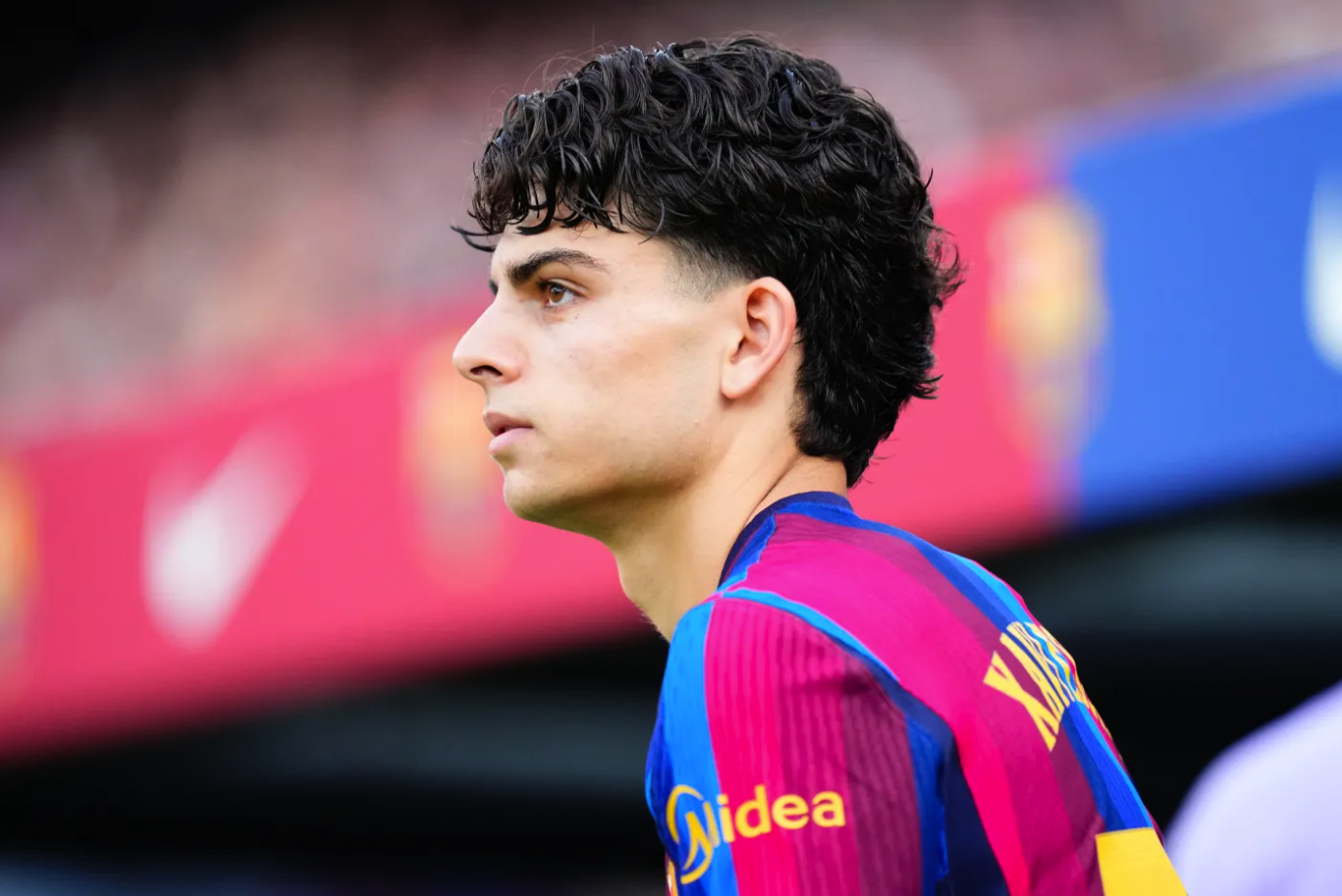
Barcelona confirmed on 27 August that Xavi Espart had been registered as a first-team player and would wear the number 12, a shirt that had had no takers since 2021/22. He is now “jugador, de pleno derecho, del primer equipo”—a first-team player in his own right—after “una gran pretemporada” and a more than notable performance in the opening league game at Elche.
He wore 42 on his debut last season and 36 at Elche. Now he is 12.
Born on 21 May 2007, Espart is 175cm tall, right-footed and under contract until June 2028. His estimated market value is €5 million. In the league this season, he has played 180 minutes across two matches, both of which he started, with one assist, an average rating of 7.94 and one yellow card. He also won the Under-19 European Championship with Spain in Wales this summer.
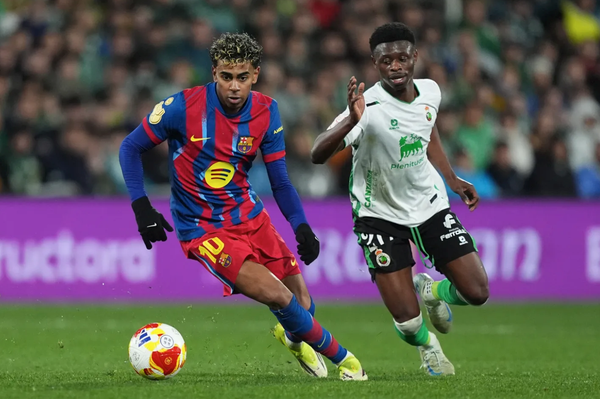
At Elche, Flick started Espart at left-back and left João Cancelo, a summer arrival, on the bench. Against Athletic Club four days later, Espart started again at left-back, in a back four completed by Gerard Martín, Pau Cubarsí and Eric García. Barcelona have played two competitive matches this season, and a 19-year-old has played every minute of both in a position that was not originally his natural one. The club describes him as a versatile full-back or midfielder. Football España says it was that versatility that did it: Flick can use him at right-back, left-back, defensive midfield or central midfield. The same reporting adds that he will receive an improved contract.
The club’s announcement lists the previous occupants of the number 12 shirt: Martin Braithwaite, Riqui Puig, Rafinha Alcântara, Jonathan dos Santos, Sergi Barjuan and Giovanni van Bronckhorst. It is a squad number. Two left-backs, three academy midfielders who were good enough to be there but not quite good enough to stay, and a Danish forward Barcelona signed in an emergency move and moved on before his contract ran out.
VAVEL put it well: “El 12 es un número que habla de él.”
Culemania reported that Barcelona were looking to raise roughly €100 million from selling three academy graduates, although a more realistic estimate put the figure closer to €77 million: Alejandro Balde at €40 million, with Manchester United interested and Jorge Mendes involved; Marc Casadó, listed at €40 million but likely to go for nearer €25 million; and Héctor Fort, who has since joined Real Sociedad for a reported €8.5 million.
All three were left out of the squad at Elche, and Deco still has until Tuesday night to conduct further business.
In the same seven days, Barcelona put a price on three La Masia graduates; they handed a first-team shirt to a fourth. El Nacional, writing about Jules Koundé’s unhappiness, named Espart directly as one of the players narrowing Koundé’s path back into Flick’s team.
A club does not accidentally squeeze a France international out of the team. Flick is playing Espart because Flick wants to play him.
Barcelona just signed their fourth serious goalkeeper in a year, and it might be the smartest thing they did all summer
Dominik Livaković is a World Cup semi-finalist with a four-year contract at Barcelona, and he may not play a single competitive minute this season.
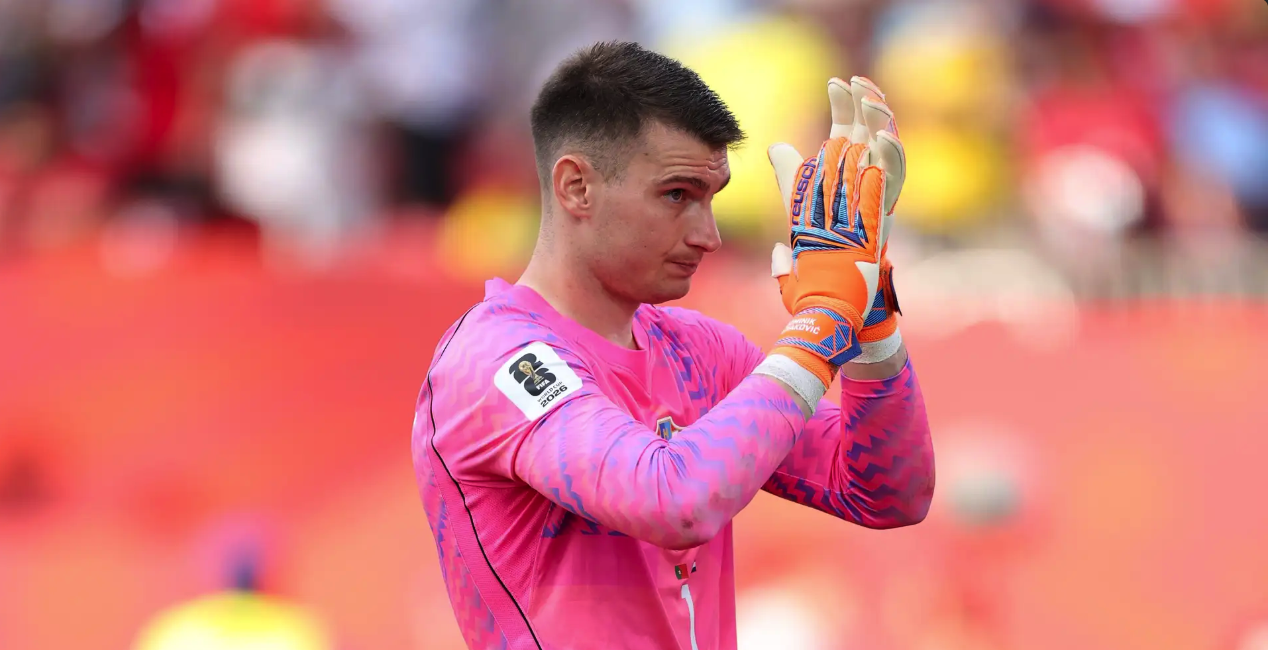
Barcelona now have four senior goalkeepers under contract until at least 2027: Joan García, Wojciech Szczęsny, Marc-André ter Stegen and, as of this week, Dominik Livaković. A club supposedly disciplined enough to sell three academy players in a single week to fund a striker has, at the same time, been quietly stockpiling goalkeepers.
Livaković joined from Fenerbahçe for a reported fixed fee of around €2 million, with up to a further €2 million in add-ons, on a four-year contract running until 30 June 2030. He is 31, a Croatia international, and the goalkeeper who became a household name at the 2022 World Cup after saving penalties against Japan and Brazil on the way to the semi-finals. He is not a project or a punt. He is one of the more experienced and proven goalkeepers available on the market this summer, and Barcelona bought him for the kind of fee that barely covers a squad player’s signing-on bonus.
The reason the fee is so low is also the reason this signing is interesting. The original plan was for Livaković to spend this season out on loan, continuing as a starter somewhere else, before joining Barcelona’s squad in 2027 once Szczęsny’s contract expired. Barcelona moved early to secure him rather than waiting another year for the succession to play out. Whether he remains with Flick’s squad this season or leaves on loan has not yet been confirmed. Either way, this is the story of a club buying certainty at a discount before somebody else could.
Marc-André ter Stegen, Barcelona’s former captain and second-highest foreign appearance-maker, with 423 games for the club, spent the second half of last season on loan at Girona. Flick had already made it clear that Joan García and Szczęsny were his goalkeepers, and Ronald Araújo was handed the captaincy in Ter Stegen’s place in January. Ter Stegen has since moved again, this time to Ajax on a season-long loan for 2026/27. Araújo himself is now also out on loan at Liverpool. The captain who lost the armband and the captain who replaced him have both left the building in the space of eight months.
That is the churn Livaković is arriving into. Szczęsny is in the final season of his Barcelona contract, a short-term, low-risk option retained to provide a safe pair of hands behind Joan García while the club worked out its longer-term goalkeeping plan.
Livaković is that plan. When Szczęsny’s deal runs out, Livaković can slot into the second-choice role, and Barcelona will not have to spend a transfer window scrambling to replace him. Asked directly whether he expected to play for the club this season, Livaković was coy: “We will see.” That is an honest answer from a goalkeeper whose immediate role has not yet been decided.
The club identified a succession plan for when a 36-year-old’s contract runs out and moved early for exactly the right profile at a knockdown fee. Different positions, different levels of urgency, but the same underlying discipline: buy the right player at the right moment, not just any available player because the position technically needs filling.
Even if Livaković never plays a competitive minute in a Barcelona shirt this season—or spends it elsewhere on loan—the club has still paid a small fee to remove much of the uncertainty surrounding its goalkeeping position through 2030. It has secured a proven international as long-term insurance behind Joan García rather than waiting until next summer and searching the market under pressure.
If Barcelona decide to keep him this season and either Szczęsny or Joan García picks up an injury, they will not be searching the market in January. They will already have the answer sitting in the dressing room.
This is what competent recruitment actually looks like most of the time: a much-needed position covered for a fee that reads like a rounding error on the balance sheet.
The Barça Weekly is weekly column on what happened in Barca this week, by Dev Das for BarcaFutbol.